
GLP-1 untuk Menopause: Kenaikan Berat Badan, Lemak Perut & Otot (2026)

Artikel ini hanya untuk informasi umum dan bukan pengganti nasihat, diagnosis, atau perawatan medis profesional. Selalu konsultasikan dengan tenaga kesehatan yang berkualifikasi untuk pertanyaan tentang kondisi medis.
Jawaban singkat
GLP-1 untuk menopause digunakan untuk mengatasi kenaikan berat badan dan lemak perut viseral yang sering menyertai masa transisi menopause — bukan untuk mengobati menopause itu sendiri. Obat seperti semaglutide (Ozempic, Wegovy) dapat menurunkan berat badan dan lemak perut, tetapi sebagian penurunannya berupa otot, sehingga protein dan latihan kekuatan sangat penting untuk melindungi otot dan tulang di usia paruh baya.
Masa transisi menopause mengubah bentuk tubuh.
Ketika estrogen menurun, lemak berpindah dari pinggul dan paha ke perut sebagai lemak viseral, pengeluaran energi saat istirahat menurun, dan kehilangan massa otot (sarkopenia) semakin cepat.
Dalam Study of Women's Health Across the Nation (SWAN), laju penambahan lemak menjadi dua kali lipat dan massa tanpa lemak mulai menurun pada awal masa transisi — meskipun laju kenaikan berat badan secara keseluruhan tidak berubah.
Bagi banyak perempuan, inilah pertama kalinya olahraga dan diet "tidak lagi berhasil" seperti dulu.
Itulah sebabnya agonis reseptor GLP-1 — semaglutide (Ozempic, Wegovy) dan obat ganda GIP/GLP-1 tirzepatide (Mounjaro, Zepbound) — kini sering dibicarakan di usia paruh baya.
Halaman ini menjelaskan apa yang dapat dilakukan obat tersebut untuk kenaikan berat badan saat menopause, risiko hilangnya otot yang harus Anda kelola secara aktif, bagaimana terapi hormon berperan, dan apa yang perlu dipantau.
Ini adalah edukasi, bukan resep.
01
Mengapa menopause mengubah berat badan dan bentuk tubuh Anda
Kenaikan berat badan saat menopause bukan sekadar soal "kemauan" — ini adalah perubahan biologis yang terukur, didorong oleh penurunan estrogen yang bertumpuk dengan proses penuaan.
Tiga perubahan yang paling penting:
Pergeseran lemak viseral adalah perhatian klinis utama: penelitian dari SWAN Heart Study mengaitkan peningkatan jaringan lemak viseral selama masa transisi menopause dengan risiko kardiovaskular yang lebih tinggi.
Jadi tujuan di usia paruh baya bukan hanya angka timbangan yang lebih rendah — melainkan lebih sedikit lemak viseral sambil mempertahankan otot dan tulang.
| Perubahan | Apa yang terjadi saat menopause | Mengapa penting |
|---|---|---|
| Penurunan estrogen | Lemak berpindah dari pinggul/paha ke perut | Memicu lemak viseral, yang lebih berisiko secara metabolik |
| Peningkatan lemak viseral | Lemak viseral naik ~8% per tahun dalam 2 tahun sebelum haid terakhir dan ~6% per tahun setelahnya (SWAN Heart) | Terkait dengan resistensi insulin dan risiko kardiovaskular |
| Kehilangan otot (sarkopenia) | Hilangnya estrogen mempercepat penurunan massa otot tanpa lemak | Menurunkan metabolisme istirahat, melemahkan dukungan tulang |
02
Apakah GLP-1 dapat membantu kenaikan berat badan saat menopause?
Ya — tetapi pahami apa yang diobati. Tidak ada GLP-1 yang disetujui FDA untuk "menopause." Obat-obat ini disetujui untuk diabetes tipe 2 dan pengelolaan berat badan kronis, dan banyak perempuan menopause memenuhi syarat atas dasar tersebut.
Di Indonesia, BPOM telah memberikan izin edar bagi tirzepatide (merek Mounjaro; diabetes tipe 2 sejak Februari 2026 dan manajemen berat badan sejak Juli 2026) serta semaglutide dan liraglutide; obat-obatan ini hanya boleh digunakan atas resep dan pengawasan dokter, dan keaslian produk dapat dicek di cekbpom.pom.go.id.
Karena GLP-1 memperlambat pengosongan lambung, menurunkan nafsu makan melalui otak, dan meningkatkan sensitivitas insulin, obat ini cenderung lebih banyak mengurangi massa lemak, termasuk lemak viseral dan ektopik — tepat pada depot yang membesar saat menopause.
Ada pula minat yang berkembang untuk memadukan GLP-1 dengan terapi hormon menopause (MHT/HRT): sebuah meta-analisis dari 107 uji coba menemukan bahwa terapi hormon mengurangi lemak perut sekitar 7%, dan dalam studi retrospektif kecil (16 perempuan yang menggunakan terapi hormon, 90 yang tidak), perempuan pascamenopause yang menggunakan terapi hormon kehilangan lebih banyak berat badan dengan semaglutide (sekitar 16% vs 12% pada 12 bulan).
Ini adalah keputusan individual dengan risiko dan manfaatnya sendiri — sebaiknya diambil bersama klinisi yang memahami menopause, bukan berdasarkan blog.

03
Risiko hilangnya otot yang harus Anda kelola
Ini adalah bagian terpenting untuk usia paruh baya.
Semua penurunan berat badan yang berarti — dari diet, GLP-1, atau operasi — mencakup sebagian massa tanpa lemak (otot), dan bukti dari uji acak menunjukkan bahwa terapi berbasis GLP-1 umumnya menyebabkan penurunan massa tanpa lemak sekitar 20–30% dari total berat badan yang hilang. Bergantung pada studinya, rentangnya lebih lebar — dari sekitar 15% atau kurang hingga 40–60% dari berat yang turun (Neeland dkk., 2024) — dan massa tanpa lemak mencakup organ, tulang, dan air, bukan hanya otot.
Pada menopause, hal ini terjadi di atas sarkopenia akibat estrogen yang sudah berlangsung.
Mengapa ini saling memperparah: otot yang lebih sedikit berarti metabolisme istirahat yang lebih rendah (membuat berat badan lebih sulit dipertahankan), dukungan yang lebih lemah bagi tulang (yang juga menipis seiring turunnya estrogen), serta berkurangnya kekuatan dan fungsi.
Menurunkan berat badan sambil kehilangan otot secara tidak proporsional dapat membuat Anda lebih ringan tetapi secara metabolik lebih buruk.
Langkah penanggulangannya sudah mapan dan sangat dianjurkan di usia paruh baya:
- Utamakan protein di setiap waktu makan untuk mendukung sintesis protein otot.
- Latihan kekuatan 2–3 kali per minggu — kebiasaan paling protektif untuk otot dan tulang.
- Turunkan berat badan secara bertahap, bukan drastis, untuk membatasi hilangnya massa tanpa lemak.
- Lindungi tulang dengan kalsium, vitamin D yang cukup, dan pemantauan dengan panduan klinisi.
- Pantau komposisi tubuh, bukan hanya berat badan, agar hilangnya otot terdeteksi sejak dini.
04
Hormon, hot flashes, dan gambaran yang lebih besar
Berat badan bukan satu-satunya faktor di usia paruh baya. Massa tanpa lemak yang lebih tinggi dikaitkan dengan lebih sedikit gejala vasomotor (hot flashes atau gejolak panas, dan keringat malam) dalam data SWAN, alasan lain mengapa mempertahankan otot penting melampaui metabolisme.
Jika Anda mempertimbangkan terapi hormon, pengelolaan berat badan, dan GLP-1 sekaligus, urutan dan kombinasinya harus disesuaikan secara individual.
GLP-1 menangani berat badan dan nafsu makan; MHT menangani gejala akibat estrogen dan mungkin sendiri dapat menekan penambahan lemak viseral.
Keduanya menyelesaikan masalah yang berbeda dan dapat saling melengkapi — di bawah bimbingan medis.
Ingat juga bahwa gambaran keamanan GLP-1 secara umum tetap berlaku di usia paruh baya: efek samping saluran cerna di sekitar perubahan dosis, serta risiko serius yang lebih jarang.
Baca panduan lengkap kami tentang efek samping GLP-1.

05
Apa yang perlu dipantau saat menggunakan GLP-1 di masa menopause
Di usia paruh baya, metrik yang tepat bergeser dari "berat badan" ke "komposisi tubuh dan fungsi." Pantau hal-hal berikut:
| Yang dipantau | Mengapa penting saat menopause | Seberapa sering |
|---|---|---|
| Berat badan dan lingkar pinggang | Lemak viseral adalah target sebenarnya | Mingguan |
| Komposisi tubuh (otot vs lemak) | Mendeteksi hilangnya otot yang tidak proporsional sejak dini | Bulanan / setiap pemindaian |
| Asupan protein | Melindungi otot selama penurunan berat badan | Harian |
| Sesi latihan kekuatan | Kebiasaan terbaik untuk melindungi otot dan tulang | 2–3×/minggu |
| Hot flashes / tidur / suasana hati | Tren gejala menopause | Mingguan |
| Penanda kesehatan tulang | Hilangnya estrogen menipiskan tulang | Sesuai klinisi |
| Efek samping saluran cerna | Toleransi & waktu penyesuaian dosis | Saat terjadi |
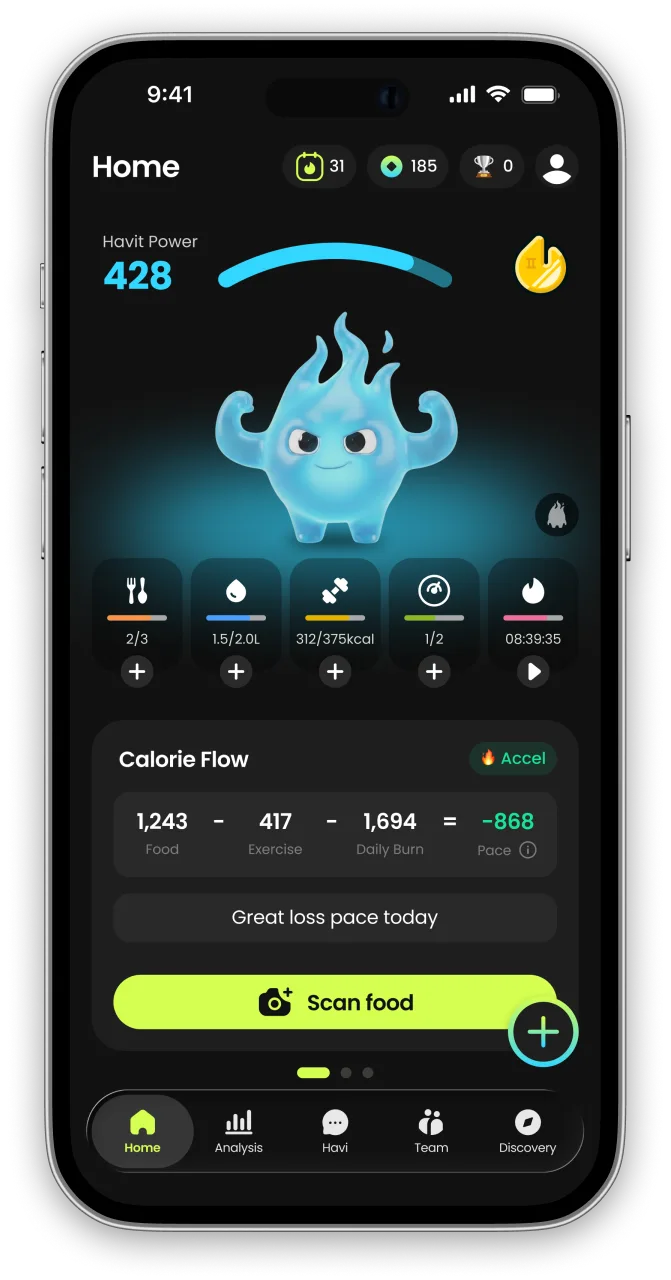
Aplikasi HAVIT membantu Anda mencatat berat badan dan lingkar pinggang dan protein dan latihan kekuatan sekaligus — sehingga Anda dapat memastikan Anda kehilangan lemak sambil mempertahankan otot, dan membawa data nyata ke janji temu menopause atau endokrinologi Anda. (HAVIT adalah pendamping pencatatan, bukan alat medis — selalu ikuti arahan klinisi Anda.)
Perempuan yang masalah berat badannya dimulai lebih awal akibat kondisi hormonal mungkin juga ingin membaca GLP-1 untuk PCOS, dan siapa pun yang sedang menimbang pilihan dapat memulai dengan kalkulator penurunan berat badan GLP-1.
06
Mengapa HAVIT — Obat + Perubahan Perilaku, dalam Satu Aplikasi
Obat GLP-1 dapat menurunkan berat badan secara bermakna — tetapi angka di timbangan hanyalah sebagian dari cerita.
Porsi yang berarti dari berat badan yang hilang dengan terapi GLP-1 dapat berasal dari jaringan tanpa lemak, bukan hanya lemak — perkiraannya berkisar dari sekitar 15% atau kurang hingga 40–60% di berbagai studi (Neeland et al., Diabetes, Obesity and Metabolism, 2024), dan hasilnya cenderung memudar setelah obat dihentikan kecuali kebiasaan baru menggantikannya.
Itulah sebabnya panduan terkemuka memandang obat sebagai satu bagian dari perawatan, bukan keseluruhannya: U.S. Preventive Services Task Force merekomendasikan agar orang dewasa dengan obesitas ditawari intervensi perilaku multikomponen yang intensif (USPSTF, Grade B).
HAVIT dibuat tepat untuk momen ini — satu aplikasi yang menyatukan pelacakan obat, komposisi tubuh, nutrisi dan protein, pembentukan kebiasaan harian, dan pelatih AI yang beradaptasi dengan Anda.
Di antara 1.090 pengguna GLP-1 kami sendiri, mereka yang paling konsisten mencatat membangun kebiasaan terkuat (lihat laporan kebiasaan GLP-1).
Kelola obatnya dan ototnya — bersamaan. Mulai dengan HAVIT →

Pertanyaan umum
Apakah GLP-1 disetujui untuk menopause?
Apakah GLP-1 menargetkan lemak perut saat menopause?
Apakah saya akan kehilangan otot dengan GLP-1 selama menopause?
Bisakah saya menggunakan GLP-1 bersama terapi hormon (HRT)?
Mengapa berat badan saat menopause sangat sulit diturunkan?
Apakah GLP-1 membantu mengatasi hot flashes?
Apakah GLP-1 aman setelah menopause?
Apakah berat badan saat menopause akan kembali jika saya berhenti?
Apa itu HAVIT?
HAVIT adalah mitra kesehatan berbasis AI yang berlandaskan ilmu metabolisme — menjaga otot Anda, membangunkan metabolisme, dan membantu Anda mempertahankan tubuh sehat tanpa efek yoyo dalam jangka panjang.
Berbeda dari aplikasi yang hanya menghitung kalori, HAVIT menghubungkan estimasi komposisi tubuh berbasis AI dengan makanan, hidrasi, tidur, langkah, siklus, suasana hati, dan obat GLP-1 dalam satu rutinitas harian — sehingga kemajuan diukur dari komposisi tubuh, bukan sekadar angka timbangan. Misi harian mengubah teknik perubahan perilaku yang sudah teruji menjadi tindakan kecil yang dapat diulang, dengan pengalaman para profesional yang sebelumnya bekerja di Juvis Diet, salah satu klinik metabolik terkemuka di Korea.
Dalam analisis internal HAVIT terhadap 1.090 pengguna GLP-1, mereka yang mencatat secara konsisten membangun kebiasaan lebih kuat dibanding pengguna umum. Baca Laporan Kebiasaan GLP-1
Di dalam aplikasi
- PELATIH AITahu apa yang harus dilakukan hari ini.
- NUTRISICatat makanan dalam hitungan detik.
- KOMPOSISI TUBUHLihat lebih dari sekadar berat.
- MISI HARIANBangun kebiasaan yang bisa Anda ulang.
- CHECK-IN HARIANCeritakan ke HAVI bagaimana hari ini.
- CATAT SEMUANYADari air hingga GLP-1
- PIKIRAN & PEMULIHANUntuk hari-hari saat tekad habis.


HAVIT dapat digunakan dengan atau tanpa obat GLP-1. Ini aplikasi kesehatan, bukan alat medis; hasil komposisi tubuh merupakan estimasi.

Lanjutkan di aplikasi
Kesehatan yang dipersonalisasi dengan data Anda sendiri


Referensi
- Abdominal viseral adipose tissue over the menopause transition and carotid atherosclerosis: the SWAN heart study doi.org
- Changes in body composition and weight during the menopause transition doi.org
- Increased viseral fat and decreased energy expenditure during the menopausal transition doi.org
- Adverse Changes in Body Composition During the Menopausal Transition and Relation to Cardiovascular Risk: A Contemporary Review doi.org
- The Influence of Glucagon-like Peptide-1 Receptor Agonists and Other Incretin Hormone Agonists on Body Composition doi.org
- Changes in lean body mass with glucagon-like peptide-1-based therapies and mitigation strategies doi.org
- Association of lean body mass to menopausal symptoms: The Study of Women's Health Across the Nation doi.org
- Meta-analysis: effect of hormone-replacement therapy on components of the metabolic syndrome in postmenopausal women doi.org
- Weight loss response to semaglutide in postmenopausal women with and without hormone therapy use doi.org
- WEGOVY (semaglutide) injection and tablets — Prescribing Information dailymed.nlm.nih.gov
- Siaran Pers BPOM HM.01.1.07.26.189 (4 Juli 2026): BPOM Dorong Akses Terapi Inovatif untuk Penanganan Penyakit Metabolik dengan Zat Aktif Tirzepatide pom.go.id


