Showing the English original — no translation yet for this language.
健康与疾病

GLP-1 for Menopause: Weight Gain, Belly Fat & Muscle (2026)

撰写 HAVIT Editorial Team审核 HAVIT Medical Advisory · Editorial Medical Review Board
Updated 2026-07-05· 5 min read

本文仅供一般信息参考,不能替代专业医疗建议、诊断或治疗。如有任何健康相关问题,请务必咨询合格的医疗专业人员。

Quick answer

GLP-1 for menopause is used to treat the weight gain and visceral belly fat that often accompany the menopause transition — not menopause itself. Drugs like semaglutide (Ozempic, Wegovy) can reduce weight and abdominal fat, but a portion of the loss is muscle, so protein and strength training are essential to protect midlife muscle and bone.

The menopause transition reshapes the body.

As estrogen declines, fat shifts from the hips and thighs toward the abdomen as visceral fat, resting energy expenditure falls, and muscle loss (sarcopenia) accelerates.

On average, women gain roughly 1–1.5 pounds per year through the transition, on top of normal aging, per the Study of Women's Health Across the Nation (SWAN).

For many women this is the first time exercise and dieting "stop working" the way they used to.

That is why GLP-1 receptor agonists — semaglutide (Ozempic, Wegovy) and the dual GIP/GLP-1 drug tirzepatide (Mounjaro, Zepbound) — have become a common midlife conversation.

This page explains what they can do for menopause weight gain, the muscle-loss risk you must actively manage, how hormone therapy fits in, and what to track.

It is education, not a prescription.

01

Why menopause changes your weight and shape

Menopause weight gain is not simply "willpower" — it is a measurable shift in biology driven by falling estrogen layered on aging. Three changes matter most:

The visceral-fat shift is the key clinical concern: research from the SWAN Heart Study links the rise in visceral adipose tissue across the menopause transition to greater cardiovascular risk.

So the goal in midlife is not just a lower number on the scale — it is less visceral fat while preserving muscle and bone.

02

Can a GLP-1 help menopause weight gain?

Yes — but understand what it treats. No GLP-1 is FDA-approved for "menopause." These drugs are approved for type 2 diabetes and chronic weight management, and many menopausal women qualify on those grounds.

Because GLP-1s slow gastric emptying, reduce appetite via the brain, and improve insulin sensitivity, they tend to preferentially reduce fat mass, including visceral and ectopic fat — exactly the depot that expands in menopause.

There is also emerging interest in pairing GLP-1s with menopausal hormone therapy (MHT/HRT): estrogen therapy is associated with reduced total and visceral adiposity, and some clinicians report better body-composition results when the two are combined than with either alone.

This is an individualized decision with its own risks and benefits — one to make with a menopause-literate clinician, not from a blog.

03

The muscle-loss risk you must manage

This is the most important section for midlife.

All meaningful weight loss — from dieting, GLP-1s, or surgery — includes some lean mass (muscle), and evidence from randomized trials indicates GLP-1-based therapies typically produce lean-mass reductions representing roughly 20–30% of total weight lost. In menopause, that lands on top of estrogen-driven sarcopenia that is already underway.

Why this compounds: less muscle means a lower resting metabolism (making weight harder to keep off), weaker support for bone (which is also thinning as estrogen falls), and reduced strength and function.

Losing weight while losing disproportionate muscle can leave you lighter but metabolically worse off.

The countermeasures are well established and non-negotiable in midlife:

  1. Prioritize protein at every meal to support muscle protein synthesis.
  2. Strength-train 2–3 times per week — the single most protective habit for muscle and bone.
  3. Lose weight gradually, not crash-fast, to limit lean-mass loss.
  4. Protect bone with adequate calcium, vitamin D, and clinician-guided monitoring.
  5. Track body composition, not just weight, so muscle loss is caught early.

04

Hormones, hot flashes, and the bigger picture

Weight is not the only midlife lever.

Higher lean body mass is associated with fewer vasomotor symptoms (hot flashes and night sweats) in SWAN data, another reason muscle preservation matters beyond metabolism.

If you are considering hormone therapy, weight management, and a GLP-1 together, the sequencing and combination should be individualized.

A GLP-1 addresses weight and appetite; MHT addresses estrogen-driven symptoms and may itself blunt visceral-fat gain.

They solve different problems and can be complementary — under medical guidance.

Also remember the general GLP-1 safety landscape still applies in midlife: gastrointestinal side effects around dose changes, and the rarer serious risks.

Review our full GLP-1 side effects guide, and if muscle is your priority, our note on protecting it during weight loss.

05

What to track on a GLP-1 in menopause

In midlife the right metrics shift from "weight" to "body composition and function." Track these:

What to trackWhy it matters in menopauseHow often
Weight and waistVisceral fat is the real targetWeekly
Body composition (muscle vs fat)Catch disproportionate muscle loss earlyMonthly / per scan
Protein intakeProtects muscle during weight lossDaily
Strength sessionsThe top muscle- and bone-protective habit2–3×/week
Hot flashes / sleep / moodMenopause symptom trendWeekly
Bone-health markersEstrogen loss thins bonePer clinician
GI side effectsTolerability & dose timingAs they occur

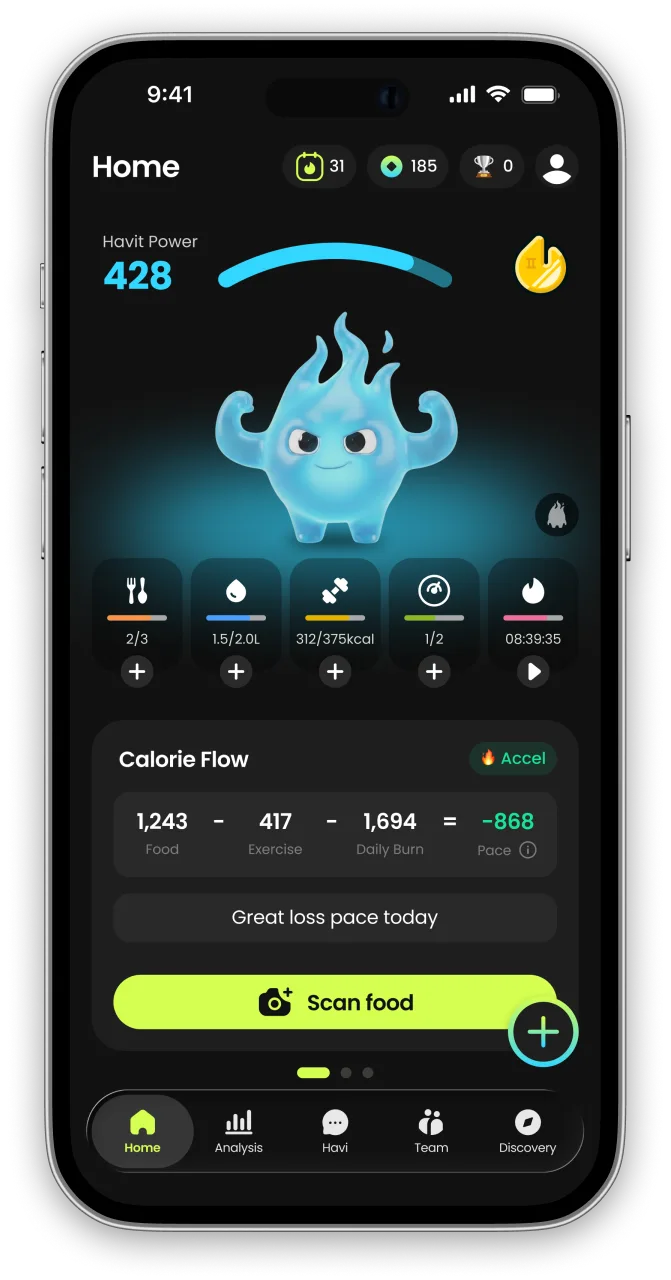
Logging weight and waist and protein and strength together is exactly what the Havit app makes effortless — so you can confirm you are losing fat while holding onto muscle, and bring real data to your menopause or endocrinology appointment. (Havit is a tracking companion, not a medical device — always defer to your clinician.)

Women whose weight struggles began earlier with a hormonal condition may also want GLP-1 for PCOS, and anyone weighing options can start with the GLP-1 weight-loss calculator.

06

Why HAVIT — Medication + Behavior Change, in One App

GLP-1 medications can meaningfully reduce weight — but the number on the scale is only part of the story.

Roughly 20–40% of the weight lost on GLP-1 therapy can come from lean (muscle) tissue rather than fat (Neeland et al., Diabetes, Obesity and Metabolism, 2024), and results tend to fade once the medication stops unless new habits take their place.

That's why leading guidance treats medication as one part of care, not the whole: the U.S. Preventive Services Task Force recommends that adults with obesity be offered intensive, multicomponent behavioral interventions (USPSTF, Grade B).

HAVIT is built for exactly this moment — one app that unites medication tracking, body composition, nutrition and protein, daily habit-building, and an AI coach that adapts to you.

Across our own 1,090 GLP-1 users, the most consistent trackers built the strongest habits (see the GLP-1 habit report).

Manage the medicine and the muscle — together. Start with HAVIT →

Why menopause changes your weight and shape

ChangeWhat happens in menopauseWhy it matters
Estrogen declineFat redistributes from hips/thighs to the abdomenDrives visceral fat, which is metabolically riskier
Visceral fat riseDeep abdominal fat can climb from ~5–8% to ~10–15% of body weightLinked to insulin resistance and cardiovascular risk
Muscle loss (sarcopenia)Estrogen loss speeds decline in lean muscleLowers resting metabolism, weakens bone support

FAQ

Is a GLP-1 approved for menopause?
No. No GLP-1 is FDA-approved to treat menopause. They are approved for type 2 diabetes and chronic weight management, and many menopausal women qualify on those grounds. Using a GLP-1 for menopause-related weight gain works through the weight/metabolic indication, not a menopause approval.
Does a GLP-1 target menopause belly fat?
It can help. GLP-1s tend to preferentially reduce fat mass, including the visceral abdominal fat that expands as estrogen falls. Because visceral fat is the metabolically risky depot, reducing it is a meaningful midlife goal — but pair it with muscle-protecting habits.
Will I lose muscle on a GLP-1 during menopause?
Some muscle loss is expected — roughly 20–30% of total weight lost is typically lean mass — and it compounds menopause-related sarcopenia. Prioritizing protein, strength training 2–3 times weekly, and gradual weight loss are essential to protect muscle and bone.
Can I take a GLP-1 with hormone therapy (HRT)?
Often, yes, and some clinicians combine them. Estrogen therapy is linked to less total and visceral fat, and combined results may exceed either alone. This is an individualized decision with its own risks and benefits — make it with a menopause-literate clinician.
Why is menopause weight so hard to lose?
Falling estrogen shifts fat to the abdomen, lowers resting energy expenditure, and accelerates muscle loss, so the strategies that worked earlier stop working. SWAN data show women gain about 1–1.5 lb per year through the transition on top of aging.
Does a GLP-1 help hot flashes?
Not directly. GLP-1s treat weight and appetite, not vasomotor symptoms. However, higher lean body mass is associated with fewer hot flashes in SWAN data, so protecting muscle while losing fat may help indirectly. Hormone therapy is the targeted treatment for hot flashes.
Is a GLP-1 safe after menopause?
The safety profile is the same as at any age — mainly gastrointestinal side effects around dose changes, with rarer serious risks. The midlife-specific priority is protecting bone and muscle during weight loss and monitoring with a clinician. It is not a menopause-specific drug.
Will menopause weight come back if I stop?
It can. As with any weight treatment, stopping often leads to regain, and the underlying menopause biology persists. The muscle- and bone-protective habits — protein and strength training — remain valuable whether or not you continue the medication.

Havit 是什么?

Havit 是一款在减重同时保住肌肉的 AI 健康伙伴。

和只计算热量的追踪器不同,Havit 把 AI 身体成分估算与饮食、水分、睡眠、步数、生理周期、情绪、GLP-1 用药记录整合成同一套每日流程,因此进度看的是身体成分,而不只是体重秤上的数字。每日任务把已验证的行为改变技巧拆成小而可重复的行动,并融入韩国代表性代谢诊所 Juvis Diet 出身专家的经验。

在 Havit 自行分析的 1,090 位 GLP-1 使用者数据中,持续记录的人比一般用户建立了更稳固的习惯。 阅读 GLP-1 习惯报告

无论是否使用 GLP-1 药物都可以使用 Havit。这是一款健康类应用,不是医疗器械;身体成分结果为估算值。

HAVIT

Continue in the App

Personalized wellness with your own data

Download on the App StoreGet it on Google Play

References

  1. Study of Women's Health Across the Nation (SWAN Heart) — Abdominal Visceral Adipose Tissue Over the Menopause Transition and Carotid Atherosclerosis. PMC. pmc.ncbi.nlm.nih.gov
  2. Increased visceral fat and decreased energy expenditure during the menopausal transition. PMC. pmc.ncbi.nlm.nih.gov
  3. Adverse Changes in Body Composition During the Menopausal Transition and Relation to Cardiovascular Risk (review). PMC. pmc.ncbi.nlm.nih.gov
  4. The Influence of GLP-1 Receptor Agonists and Other Incretin Agonists on Body Composition (lean-mass ~20–30% of weight loss). PMC. ncbi.nlm.nih.gov
  5. Association of Lean Body Mass to Menopausal Symptoms: SWAN. PMC. pmc.ncbi.nlm.nih.gov
  6. Mayo Clinic — Menopause weight gain: Stop the middle-age spread. mayoclinic.org
  7. FDA — WEGOVY (semaglutide) Prescribing Information. accessdata.fda.gov
  8. Endocrine Society — Menopause and Bone Loss / midlife metabolic health (patient library). endocrine.org
  9. All medical claims above were verified against the cited peer-reviewed studies, FDA label, and major clinics as of mid-2026. Evidence is evolving and labels are updated periodically — confirm current details with your clinician.*

Related articles

胃酸反流的真正元凶:为什么抗酸药经常治标不治本
缺铁、缺B12、缺叶酸:同样是贫血,症状和治疗为什么完全不同?
如何追踪自身免疫病发作诱因:一份系统性的规律识别指南
自身免疫性胃炎与B12缺乏:悄然通向恶性贫血的隐秘之路

开始更聪明的体重管理

减重、保住肌肉、养成健康习惯 — 一个 AI 应用全搞定。

Download on the App StoreGet it on Google Play

免费下载,含应用内购买。