
Efek Samping Orforglipron: Mual, Peringatan (2026)

Artikel ini hanya untuk informasi umum dan bukan pengganti nasihat, diagnosis, atau perawatan medis profesional. Selalu konsultasikan dengan tenaga kesehatan yang berkualifikasi untuk pertanyaan tentang kondisi medis.
Jawaban singkat
Efek samping orforglipron yang paling umum bersifat gastrointestinal — mual, diare, sembelit, dan muntah — yang bergantung pada dosis, cenderung paling berat sekitar setiap kenaikan dosis, dan biasanya mereda seiring tubuh beradaptasi. Risiko yang jarang tetapi serius mencakup peringatan utama (boxed warning) untuk tumor sel C tiroid serta pankreatitis dan penyakit kandung empedu, yang memerlukan perawatan medis segera.
Orforglipron adalah molekul generik — agonis reseptor GLP-1 molekul kecil non-peptida oral yang diminum sekali sehari, dikembangkan oleh Eli Lilly dan disetujui oleh FDA pada 1 April 2026 untuk penanganan berat badan kronis pada orang dewasa dengan obesitas, atau kelebihan berat badan disertai setidaknya satu kondisi terkait berat badan, bersama dengan diet rendah kalori dan peningkatan aktivitas ([siaran pers FDA][4]; [Eli Lilly][3]).
Ini adalah pil GLP-1 pertama yang dapat diminum kapan saja sepanjang hari, dengan atau tanpa makanan atau air — berbeda dengan semaglutide oral (Rybelsus, pil Wegovy), yang harus diminum saat perut kosong ([label DailyMed][1]).
Seperti agonis reseptor GLP-1 lainnya, orforglipron bekerja terutama dengan memengaruhi sinyal nafsu makan dan memperlambat pencernaan, itulah sebabnya efek sampingnya yang paling umum berkaitan dengan pencernaan.
Halaman ini adalah pembahasan mendalam tingkat molekul tentang profil efek samping tersebut.
Untuk seluruh golongan obat ini, lihat pusat informasi efek samping GLP-1 kami.
Perlu dicatat: per Juli 2026 orforglipron disetujui FDA di AS, sedangkan status di Indonesia belum dapat kami pastikan — periksa informasi terbaru di BPOM (cekbpom.pom.go.id) sebelum mempertimbangkannya.
01
Efek samping orforglipron yang paling umum
Dalam uji coba terkontrol plasebo, reaksi gastrointestinal adalah efek samping orforglipron yang paling sering dilaporkan, dan jelas bergantung pada dosis — angkanya meningkat seiring dosis pemeliharaan.
Menurut label yang disetujui FDA, reaksi merugikan yang terjadi pada ≥5% pasien tercantum di bawah ini, dibandingkan dengan plasebo untuk setiap dosis pemeliharaan (5,5 mg, 9 mg, dan 17,2 mg) ([label DailyMed][1]).
| Reaksi merugikan | Plasebo | 5,5 mg | 9 mg | 17,2 mg |
|---|---|---|---|---|
| Mual | 10% | 26% | 34% | 35% |
| Sembelit | 9% | 20% | 27% | 24% |
| Diare | 11% | 21% | 23% | 25% |
| Muntah | 4% | 13% | 21% | 24% |
| Dispepsia (gangguan pencernaan) | 4% | 12% | 16% | 13% |
| Nyeri perut | 7% | 13% | 14% | 14% |
| Sakit kepala | 7% | 8% | 9% | 9% |
| Distensi perut | 3% | 7% | 9% | 8% |
| Kelelahan | 4% | 6% | 7% | 9% |
| Eruktasi (sendawa) | 1% | 6% | 8% | 8% |
| GERD (refluks) | 2% | 6% | 6% | 7% |
| Flatulens | 2% | 5% | 6% | 6% |
| Rambut rontok | 2% | 4% | 4% | 5% |
02
Rincian efek samping orforglipron
(Sumber: label orforglipron (FOUNDAYO) yang disetujui FDA melalui [DailyMed][1]. Angka berlaku untuk dosis pemeliharaan; pengalaman setiap orang berbeda-beda.)
Label juga mencatat bahwa reaksi merugikan gastrointestinal berat terjadi pada sekitar 3% orang yang menggunakan orforglipron dibandingkan sekitar 1% pada plasebo ([label DailyMed][1]).
Secara keseluruhan, efek GI ini biasanya ringan hingga sedang, mengelompok di sekitar setiap peningkatan dosis, dan umumnya mereda seiring tubuh beradaptasi.
Mual akibat orforglipron
Mual adalah efek samping orforglipron yang paling umum, dilaporkan pada 26% hingga 35% orang tergantung dosis, dibandingkan 10% pada plasebo ([label DailyMed][1]).
Mual cenderung muncul atau memburuk segera setelah mulai menggunakan obat atau naik satu tahap dosis, lalu mereda saat tubuh menyesuaikan diri.
Karena mual bergantung pada dosis, peningkatan dosis bertahap dalam label dirancang untuk membatasinya.
Cara meredakan yang banyak digunakan meliputi makan dalam porsi lebih kecil dengan lemak lebih rendah, makan perlahan dan berhenti pada rasa kenyang pertama, serta menyesap cairan sepanjang hari.
Jika mual mengganggu, sampaikan kepada dokter yang meresepkan, jangan mengubah dosis sendiri.
Muntah dan diare (risiko dehidrasi)
Muntah (13% hingga 24%) dan diare (21% hingga 25%) lebih jarang daripada mual tetapi membawa kekhawatiran khusus: dehidrasi ([label DailyMed][1]).
Karena orforglipron juga dapat menekan nafsu makan dan rasa haus, Anda mudah kurang minum.
Muntah atau diare yang terus-menerus hingga Anda tidak bisa menahan cairan adalah alasan untuk menghubungi dokter, sebagian karena dehidrasi berat dalam kasus yang jarang dapat menyebabkan cedera ginjal akut (lihat efek serius di bawah).
Sembelit
Sembelit dialami sekitar 20% hingga 27% orang yang menggunakan orforglipron dibandingkan 9% pada plasebo, akibat melambatnya motilitas usus ([label DailyMed][1]).
Langkah-langkah standar — lebih banyak serat, cairan yang cukup, dan bergerak secara teratur — biasanya membantu.
Namun, sembelit yang disertai kram hebat, kembung, dan muntah dapat menandakan sumbatan usus dan harus segera diperiksa.
Efek umum lainnya
Orang juga melaporkan gangguan pencernaan (dispepsia), nyeri perut, sakit kepala, kembung (distensi perut), kelelahan, sendawa (eruktasi), refluks asam (GERD), dan perut berangin (flatulens) ([label DailyMed][1]).
Sebagian besar ringan. Rambut rontok dilaporkan pada sekitar 4% hingga 5% orang dibandingkan 2% pada plasebo; seperti GLP-1 lainnya, hal ini umumnya dikaitkan dengan perubahan berat badan yang cepat dan bukan efek langsung obat, dan biasanya bersifat sementara.

03
Berapa lama efek samping orforglipron berlangsung?
Bagi kebanyakan orang, efek samping gastrointestinal yang umum bersifat sementara. Karena orforglipron dimulai dari dosis rendah dan dinaikkan paling cepat setiap 30 hari, efek samping cenderung mengelompok di sekitar setiap peningkatan dosis lalu mereda dalam beberapa minggu berikutnya seiring tubuh beradaptasi ([label DailyMed][1]).
Itulah alasan label menggunakan jadwal titrasi selama beberapa minggu yang dimulai dari dosis awal rendah yang non-terapeutik, bukan langsung ke dosis pemeliharaan.
Pola yang bergantung pada dosis pada tabel di atas — lebih banyak mual, muntah, dan sembelit pada dosis pemeliharaan yang lebih tinggi — adalah alasan mengapa peningkatan bertahap itu penting.
Jika suatu gejala berat atau tidak kunjung mereda, itu tanda untuk berkonsultasi dengan dokter yang meresepkan; mereka mungkin menahan dosis Anda pada tahap saat ini lebih lama atau menurunkannya. Jangan mengubah dosis sendiri tanpa arahan medis — halaman ini bersifat edukatif, bukan saran dosis.
04
Efek samping serius dan peringatan orforglipron
Hal-hal ini kurang umum tetapi penting, dan itulah sebabnya orforglipron hanya tersedia dengan resep dan di bawah pengawasan medis.
Semuanya diambil dari label yang disetujui FDA ([DailyMed][1]; [PDF label FDA][2]).
Pankreatitis akut
Label memperingatkan bahwa pankreatitis akut telah dilaporkan pada penggunaan agonis reseptor GLP-1.
Tanda klasiknya adalah nyeri perut hebat yang menetap — sering di perut bagian atas, kadang menjalar ke punggung — dengan atau tanpa muntah.
Arahannya tegas: hentikan obat dan segera cari perawatan medis. Jika pankreatitis terkonfirmasi, orforglipron tidak boleh dimulai kembali ([label DailyMed][1]).
Penyakit kandung empedu dan batu empedu
Label memperingatkan adanya penyakit kandung empedu akut, termasuk batu empedu (kolelitiasis), dan sebagian kasus memerlukan operasi ([label DailyMed][1]).
Tanda peringatannya meliputi nyeri di perut kanan atas, demam, kulit atau mata menguning (jaundice), dan tinja berwarna seperti tanah liat.
Pengosongan lambung yang tertunda dan risiko anestesi/aspirasi
Orforglipron memperlambat pengosongan lambung sebagai bagian dari cara kerjanya.
Karena makanan dapat tertahan lebih lama di lambung, ada risiko yang jarang berupa aspirasi paru selama anestesi atau sedasi dalam — kekhawatiran pada golongan obat ini yang telah disorot FDA untuk obat GLP-1 ([Pharmacy Times][10]). Beri tahu dokter bedah dan tim anestesi bahwa Anda menggunakan orforglipron sebelum operasi atau prosedur apa pun dengan sedasi.
Jangan gunakan orforglipron bersama agonis reseptor GLP-1 lainnya ([label DailyMed][1]).
Peringatan utama (boxed warning): tumor sel C tiroid
Orforglipron memiliki peringatan utama (boxed warning) FDA yang paling kuat untuk tumor sel C tiroid, berdasarkan temuan pada hewan pengerat; apakah hal ini berlaku pada manusia belum ditentukan ([label DailyMed][1]; [PDF label FDA][2]).
Orforglipron dikontraindikasikan pada siapa pun dengan riwayat pribadi atau keluarga karsinoma tiroid meduler (MTC) atau sindrom Neoplasia Endokrin Multipel tipe 2 (MEN 2), dan pada siapa pun yang diketahui memiliki hipersensitivitas serius terhadapnya.
Laporkan benjolan di leher, kesulitan menelan, suara serak, atau sesak napas.
Hipoglikemia, cedera ginjal, reaksi alergi, dan retinopati
Secara tunggal, orforglipron membawa risiko hipoglikemia yang relatif rendah, tetapi risikonya meningkat bila dikombinasikan dengan insulin atau sulfonilurea — dokter Anda mungkin menyesuaikan obat-obatan tersebut ([label DailyMed][1]).
Muntah atau diare berat dapat menyebabkan dehidrasi dan cedera ginjal akut. Label juga mencatat kemungkinan reaksi hipersensitivitas (alergi) serius, dan — pada penderita diabetes tipe 2 — komplikasi retinopati diabetik, sehingga pemantauan mata yang dianjurkan diperlukan.
Jika Anda memakai pil KB: label Foundayo AS menyarankan beralih ke metode non-oral atau menambah metode penghalang selama 30 hari setelah mulai dan 30 hari setelah setiap kenaikan dosis.

05
Kapan harus mencari perawatan: tabel tanda bahaya orforglipron
| Gejala / tanda bahaya | Kemungkinan penyebab | Yang harus dilakukan |
|---|---|---|
| Nyeri perut hebat yang menetap (dapat menjalar ke punggung), ± muntah | Pankreatitis akut | Hentikan orforglipron dan segera cari perawatan darurat |
| Nyeri perut kanan atas, demam, jaundice, tinja seperti tanah liat | Penyakit kandung empedu / batu empedu | Segera hubungi dokter Anda |
| Muntah/diare berkelanjutan; tidak bisa menahan cairan; urine sedikit, pusing | Dehidrasi → kemungkinan cedera ginjal akut | Hubungi dokter Anda; cari perawatan jika berat |
| Sembelit berat disertai kembung, kram, dan muntah | Kemungkinan sumbatan usus / ileus | Cari pemeriksaan medis |
| Benjolan di leher, kesulitan menelan, suara serak, sesak napas | Tanda peringatan sel C tiroid | Hubungi dokter Anda |
| Gemetar, berkeringat, bingung, jantung berdebar cepat (terutama dengan insulin/sulfonilurea) | Hipoglikemia | Atasi gula darah rendah; hubungi dokter Anda |
| Ruam, pembengkakan wajah/bibir/tenggorokan, sulit bernapas | Reaksi alergi serius | Hubungi layanan gawat darurat |
Jika ragu, hubungi dokter Anda atau layanan gawat darurat — tabel ini hanyalah panduan, bukan pengganti penilaian profesional.
Di Indonesia, darurat medis dapat menghubungi 119; untuk konseling kesehatan jiwa atau darurat bunuh diri, hubungi 119 ext. 8 (Healing119, Kemenkes).
06
Status izin edar dan akses di Indonesia
Rujukan label pada halaman ini adalah label FDA Amerika Serikat.
Status orforglipron (Foundayo) di Indonesia belum dapat kami pastikan; periksa informasi terbaru di BPOM (cekbpom.pom.go.id) sebelum mempertimbangkannya, dan jangan membeli dari penjual daring yang tidak resmi.
Biaya dan akses: di Indonesia, obat GLP-1 diperoleh dengan resep dokter melalui apotek berizin.
Apakah obat tertentu ditanggung JKN/BPJS Kesehatan bergantung pada indikasi dan Formularium Nasional yang berlaku, jadi tanyakan kepada dokter atau fasilitas kesehatan Anda.
Harga berbeda antar apotek, jadi bandingkan hanya di apotek resmi.

07
Cara praktis mengurangi efek samping orforglipron
Karena efek samping orforglipron bergantung pada dosis dan mengelompok di sekitar setiap kenaikan dosis, sebagian besar dapat diatasi.
Berikut adalah langkah umum untuk meredakan keluhan, bukan instruksi dosis — dosis Anda ditentukan oleh dokter yang meresepkan.
- Patuhi tahapan peningkatan dosis. Jadwal titrasi ada justru untuk membatasi efek samping GI; jangan pernah terburu-buru naik ke dosis lebih tinggi sendiri.
- Makan dalam porsi lebih kecil, lebih sering, dan rendah lemak, dan berhenti pada tanda kenyang pertama.
- Minum cukup sepanjang hari — ini paling penting saat muntah atau diare, ketika risiko dehidrasi meningkat.
- Batasi makanan berminyak, digoreng, dan sangat manis, yang cenderung memperburuk mual.
- Tambah serat dan tetap aktif untuk mengatasi sembelit.
- Utamakan protein dan penurunan berat badan bertahap untuk melindungi otot selama perubahan berat badan yang cepat.
- Manfaatkan keunggulan pil harian. Orforglipron dapat diminum kapan saja sepanjang hari, dengan atau tanpa makanan atau air, sehingga Anda dapat membangun rutinitas yang konsisten dan sesuai jadwal Anda ([label DailyMed][1]).
- Catat gejala, dosis, dan makanan, dan laporkan gejala tanda bahaya segera, jangan menunggunya berlalu.
Karena orforglipron adalah pil oral sekali sehari dan bukan suntikan mingguan, efek samping dapat berubah dari hari ke hari di sekitar setiap kenaikan dosis.
Catatan harian sederhana tentang apa yang Anda rasakan, kapan Anda minum obat, dan apa yang Anda makan membuat percakapan dengan dokter Anda jauh lebih bermanfaat.
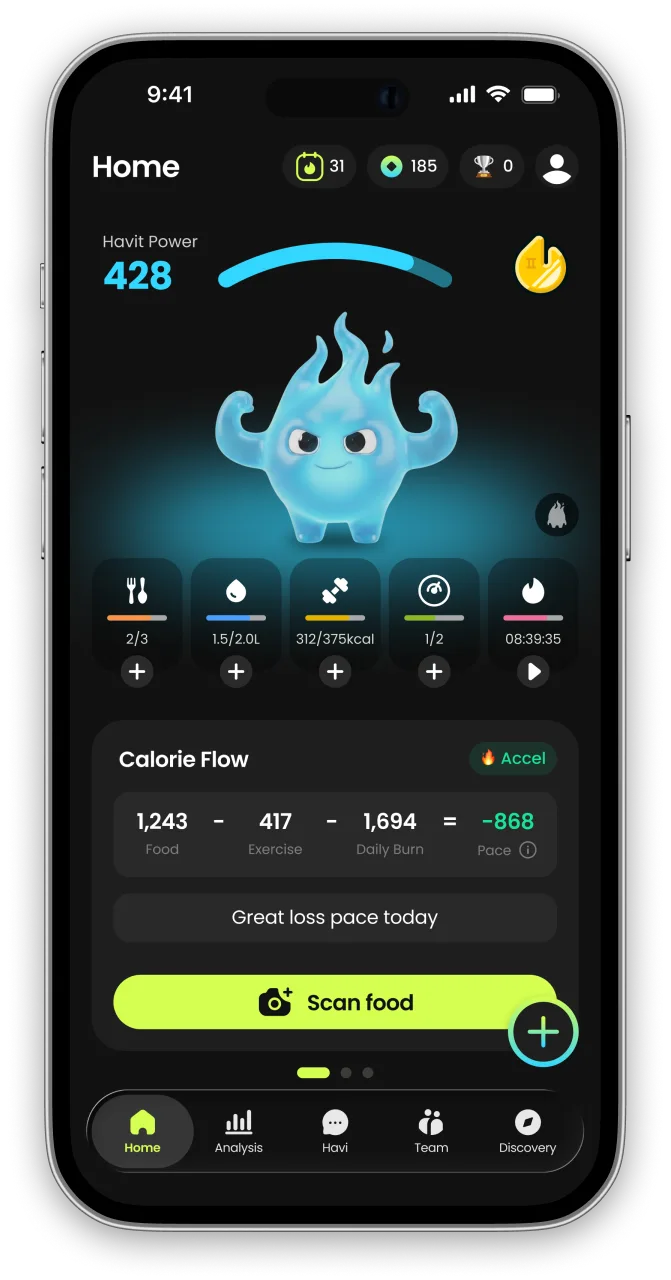
Inilah yang dirancang aplikasi HAVIT agar mudah dilakukan.
08
Mengapa HAVIT — Obat + Perubahan Perilaku, dalam Satu Aplikasi
Obat GLP-1 dapat menurunkan berat badan secara bermakna — tetapi angka di timbangan hanyalah sebagian dari cerita.
Proporsi massa tanpa lemak dari berat badan yang turun selama terapi GLP-1 berkisar dari 40–60% pada beberapa uji coba hingga 15% atau kurang pada uji coba lain — dan massa tanpa lemak mencakup organ, tulang, dan cairan, bukan hanya otot (Neeland et al., Diabetes, Obesity and Metabolism, 2024), dan hasilnya cenderung memudar setelah obat dihentikan kecuali kebiasaan baru menggantikannya.
Itulah sebabnya panduan terkemuka memandang obat sebagai satu bagian dari perawatan, bukan keseluruhannya: U.S. Preventive Services Task Force merekomendasikan agar orang dewasa dengan obesitas ditawarkan intervensi perilaku multikomponen yang intensif (USPSTF, Grade B).
HAVIT dibuat untuk momen seperti ini — satu aplikasi yang menyatukan pelacakan obat, komposisi tubuh, nutrisi dan protein, pembentukan kebiasaan harian, dan pelatih AI yang menyesuaikan diri dengan Anda.
Pada 1.090 pengguna GLP-1 kami sendiri, mereka yang paling konsisten mencatat membangun kebiasaan terkuat (lihat laporan kebiasaan GLP-1).
Kelola obat dan otot — bersama-sama. Mulai dengan HAVIT →
Pertanyaan umum
Apa saja efek samping orforglipron yang paling umum?
Berapa lama efek samping orforglipron berlangsung?
Apakah orforglipron sama dengan Foundayo?
Efek samping serius apa yang perlu saya waspadai pada orforglipron?
Apakah orforglipron menyebabkan rambut rontok?
Apakah efek samping orforglipron memburuk pada dosis yang lebih tinggi?
Apakah orforglipron tersedia di Indonesia?
Apakah saya perlu memberi tahu dokter bedah bahwa saya menggunakan orforglipron?
Apa itu HAVIT?
HAVIT adalah mitra kesehatan berbasis AI yang berlandaskan ilmu metabolisme — menjaga otot Anda, membangunkan metabolisme, dan membantu Anda mempertahankan tubuh sehat tanpa efek yoyo dalam jangka panjang.
Berbeda dari aplikasi yang hanya menghitung kalori, HAVIT menghubungkan estimasi komposisi tubuh berbasis AI dengan makanan, hidrasi, tidur, langkah, siklus, suasana hati, dan obat GLP-1 dalam satu rutinitas harian — sehingga kemajuan diukur dari komposisi tubuh, bukan sekadar angka timbangan. Misi harian mengubah teknik perubahan perilaku yang sudah teruji menjadi tindakan kecil yang dapat diulang, dengan pengalaman para profesional yang sebelumnya bekerja di Juvis Diet, salah satu klinik metabolik terkemuka di Korea.
Dalam analisis internal HAVIT terhadap 1.090 pengguna GLP-1, mereka yang mencatat secara konsisten membangun kebiasaan lebih kuat dibanding pengguna umum. Baca Laporan Kebiasaan GLP-1
Di dalam aplikasi
- PELATIH AITahu apa yang harus dilakukan hari ini.
- NUTRISICatat makanan dalam hitungan detik.
- KOMPOSISI TUBUHLihat lebih dari sekadar berat.
- MISI HARIANBangun kebiasaan yang bisa Anda ulang.
- CHECK-IN HARIANCeritakan ke HAVI bagaimana hari ini.
- CATAT SEMUANYADari air hingga GLP-1
- PIKIRAN & PEMULIHANUntuk hari-hari saat tekad habis.


HAVIT dapat digunakan dengan atau tanpa obat GLP-1. Ini aplikasi kesehatan, bukan alat medis; hasil komposisi tubuh merupakan estimasi.
Lanjutkan di aplikasi
Kesehatan yang dipersonalisasi dengan data Anda sendiri


Referensi
- DailyMed (U.S. National Library of Medicine) — FOUNDAYO (orforglipron) tablet label: boxed warning, indication, adverse reactions, titration, and warnings. [dailymed.nlm.nih.gov][1]
- U.S. FDA — orforglipron (FOUNDAYO) approved prescribing information (PDF). [accessdata.fda.gov][2]
- Eli Lilly and Company — "FDA approves Lilly's Foundayo (orforglipron), the only GLP-1 pill …" approval press release (April 1, 2026). [investor.lilly.com][3]
- U.S. FDA — news release: approval of the first new molecular entity under the National Priority Voucher program. [fda.gov][4]
- Eli Lilly — patient guidance on a missed dose of Foundayo (orforglipron). [medical.lilly.com][5]
- ATTAIN-1 phase 3 trial (72 weeks, obesity) — New England Journal of Medicine. [nejm.org][6]
- Eli Lilly / NEJM — ATTAIN-1 weight-loss results release. [lilly.gcs-web.com][7]
- ClinicalTrials.gov — orforglipron obesity study NCT05869903. [clinicaltrials.gov][8]
- Foundayo (Eli Lilly) — how to take Foundayo: once daily, any time, with or without food or water. [foundayo.lilly.com][9]
- Pharmacy Times — FDA adds delayed gastric emptying as an adverse event on GLP-1 labeling (class context). [pharmacytimes.com][10]
- Semua klaim medis di atas diverifikasi terhadap label FDA/DailyMed dan materi Eli Lilly. Orforglipron disetujui FDA di AS; status di luar AS perlu diperiksa pada regulator setempat per pertengahan 2026. Label diperbarui secara berkala — konfirmasi detail terbaru dengan dokter Anda dan informasi peresepan resmi.
- [1]: dailymed.nlm.nih.gov
- [2]: accessdata.fda.gov
- [3]: investor.lilly.com
- [4]: fda.gov
- [5]: medical.lilly.com
- [6]: nejm.org
- [7]: lilly.gcs-web.com
- [8]: clinicaltrials.gov
- [9]: foundayo.lilly.com
- [10]: pharmacytimes.com
- BPOM RI — Siaran Pers: BPOM Dorong Akses Terapi Inovatif untuk Penanganan Penyakit Metabolik dengan Zat Aktif Tirzepatide (4 Juli 2026), checked 2026-10-16 pom.go.id
- BPOM RI — Cek Produk BPOM (basis data registrasi produk), checked 2026-10-16 cekbpom.pom.go.id
- Kemenkes RI — Akses Darurat Medis 119 Kini Bisa Melalui SATUSEHAT Mobile (5 Okt 2024), checked 2026-10-16 kemkes.go.id
- Healing119 (Kemenkes RI) — konseling kesehatan jiwa dan darurat bunuh diri: 119 ext. 8, checked 2026-10-16 healing119.id

