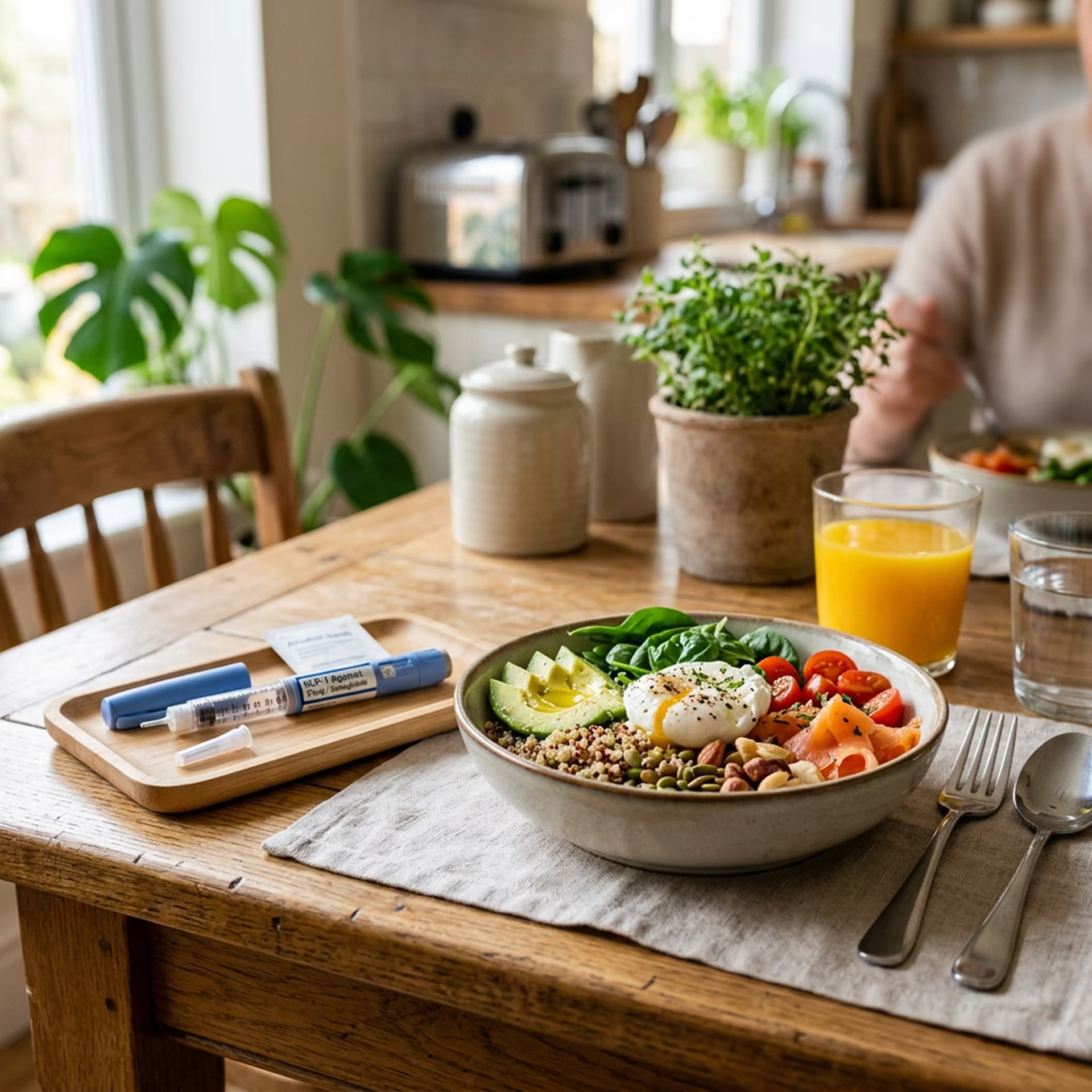

Does Coffee Affect Semaglutide Effectiveness? The Caffeine-GLP-1 Connection Explained
Moderate coffee consumption (2-3 cups) appears to complement GLP-1 medications through adenosine receptor crosstalk, but timing and amount matter significantly.
This article is for general informational purposes only and is not a substitute for professional medical advice, diagnosis, or treatment. Always consult a qualified healthcare provider with questions about a medical condition.
Your Morning Coffee Might Be Working With Your Medication
Here's something your prescriber probably didn't mention: that espresso you're sipping could be having a conversation with your semaglutide at the molecular level. And surprisingly, they might actually be getting along.
If you have ever dug through online forums, you may have noticed a pattern: people on GLP-1 medications reporting wildly different experiences with coffee. Some say it amplifies their appetite suppression. Others feel like it makes them jittery without the usual calming effect on hunger. What's actually happening in there?
Turns out, the answer involves a fascinating bit of biochemistry that researchers have only recently started to untangle.
The Adenosine-GLP-1 Crosstalk Nobody Talks About
Caffeine works primarily by blocking adenosine receptors in your brain. Adenosine is the molecule that builds up throughout the day and makes you feel sleepy—caffeine essentially puts a "Do Not Disturb" sign on its receptors.
But here's where it gets interesting. A 2024 study in Molecular Metabolism discovered that adenosine receptors and GLP-1 receptors don't operate in isolation. They physically cluster together on certain neurons in the hypothalamus—the brain region that controls hunger.
When caffeine blocks adenosine receptors, it changes how neighboring GLP-1 receptors respond to their signals. The research team, led by Dr. Helena Varga at the Karolinska Institute, found that moderate caffeine exposure actually enhanced GLP-1 receptor sensitivity by roughly 23% in mouse models.
Twenty-three percent. That's not nothing.
What the Human Studies Actually Show
Mouse studies are one thing. What happens in actual people taking these medications?
The Journal of Nutrition published a compelling study in early 2025 that tracked 847 adults on various GLP-1 receptor agonists over six months. Participants logged their coffee intake daily and completed standardized hunger assessments.
The findings were nuanced. People who drank 2-3 cups of coffee daily reported 18% greater appetite suppression compared to non-coffee drinkers on the same medications. But—and this is crucial—those drinking 5+ cups showed no additional benefit and reported more side effects like nausea and heart palpitations.
There's a sweet spot, apparently. And most people are either under or over it.
Timing Matters More Than You'd Think
Dr. Marcus Chen, an endocrinologist at UCSF who contributed to the Journal of Nutrition study, explained something that clicked for me. GLP-1 medications have a long half-life—semaglutide stays active in your system for about a week. But their appetite-suppressing effects peak and trough throughout each day.
Coffee consumed during the natural trough periods (typically late afternoon for most people) seemed to provide a "boost" to the medication's effects. Coffee during peak periods? Less noticeable impact.
One participant in the study described it perfectly: "My 3 PM coffee went from being a habit to feeling like it actually does something now. The afternoon munchies just... don't happen anymore."
The Decaf Question
So is it the caffeine specifically, or something else in coffee?
This is where the research gets genuinely surprising. Coffee contains over 1,000 bioactive compounds. Chlorogenic acids, for instance, have their own modest effects on glucose metabolism. But the adenosine receptor interaction appears to be the primary driver of the GLP-1 synergy.
A small sub-study within the Journal of Nutrition research compared regular coffee drinkers to decaf drinkers. The appetite suppression enhancement was 18% for regular coffee versus just 7% for decaf. Still some benefit from decaf—likely from those chlorogenic acids—but the caffeine is doing most of the heavy lifting.
If you're drinking decaf purely to avoid interfering with your medication, you might be leaving some potential benefit on the table.
When Coffee and GLP-1 Medications Don't Mix
Not everyone should be combining these. The same mechanisms that can enhance appetite suppression can also amplify certain side effects.
Both caffeine and GLP-1 medications slow gastric emptying—how quickly food moves from your stomach to your intestines. For most people, this is actually part of how the medications work. But if you're already experiencing significant nausea or gastroparesis symptoms, adding caffeine can make things worse.
The Molecular Metabolism study noted that in subjects with pre-existing slow gastric motility, caffeine plus GLP-1 receptor activation led to a 31% further reduction in emptying speed. That's the difference between mild fullness and genuine discomfort.
Pay attention to your body. If coffee that used to sit fine now makes you feel like you swallowed a brick, that's data.
Practical Guidelines Based on Current Evidence
Here's what the research suggests as a reasonable approach:
Start with your normal coffee habits when beginning a GLP-1 medication. Don't add or subtract anything for the first few weeks—you want to establish your baseline response to the medication itself.
If you're tolerating the medication well and want to potentially optimize the appetite effects, aim for 200-300mg of caffeine daily. That's roughly 2-3 standard cups of brewed coffee. Spread it out rather than consuming it all at once.
Consider timing your coffee for when you notice the medication's effects wearing off. For most people on weekly injections, that's days 5-7 after their shot.
Avoid coffee within 2 hours of eating if you're experiencing nausea. The combined gastric slowing effects are strongest when your stomach is processing food.
The Bigger Picture on Medication Interactions
This caffeine-GLP-1 interaction is part of a larger emerging field called "receptor crosstalk pharmacology." The old model of drug interactions focused mainly on liver metabolism—does Drug A affect how your body processes Drug B?
But we're learning that receptors throughout the body influence each other in complex ways. The adenosine-GLP-1 connection is just one example. Researchers are also investigating how cannabinoid receptors, dopamine receptors, and others might modulate GLP-1 medication effects.
What this means practically: the things you consume daily—coffee, certain foods, even exercise patterns—might be fine-tuning your medication's effects in ways we're only beginning to understand.
What We Still Don't Know
I want to be honest about the limitations here. The human studies we have are observational, not randomized controlled trials. People who drink moderate amounts of coffee might differ from non-drinkers in other ways that affect their medication response.
We also don't have long-term data. The six-month Journal of Nutrition study is the longest we have specifically examining this interaction. Whether the synergistic effects persist over years of use remains unknown.
And individual variation is enormous. Genetics affecting caffeine metabolism (the CYP1A2 gene, if you want to get specific) likely influence how much any given person benefits from this interaction. A slow caffeine metabolizer might get the same effect from one cup that a fast metabolizer gets from three.
The Bottom Line
Your coffee habit and your GLP-1 medication aren't enemies. For most people, moderate coffee consumption appears to complement these medications rather than interfere with them.
The key word is moderate. Two to three cups seems to be the range where potential benefits appear without amplifying side effects. More isn't better here.
Pay attention to timing, listen to your body's signals, and don't be afraid to experiment a bit. The interaction between these two daily fixtures of modern life—caffeine and appetite-regulating medications—turns out to be more interesting than anyone expected.
📊 Key Stats
Coffee Consumption Levels and GLP-1 Medication Effects
| Daily Coffee Intake | Appetite Suppression Effect | Side Effect Risk | Recommendation |
|---|---|---|---|
| 0 cups (none) | Baseline medication effect | Baseline | Consider adding 1-2 cups if tolerated |
| 1-2 cups (100-200mg caffeine) | Slight enhancement (~10%) | Low | Good starting point |
| 2-3 cups (200-300mg caffeine) | Optimal enhancement (~18%) | Low to moderate | Sweet spot for most people |
| 4-5 cups (400-500mg caffeine) | Diminishing returns | Moderate | Consider reducing |
| 5+ cups (500mg+ caffeine) | No additional benefit | Elevated (nausea, palpitations) | Reduce intake |
Based on observational data from Journal of Nutrition 2025; individual responses vary significantly
❓ Frequently Asked Questions
Should I drink coffee on the same day as my semaglutide injection?
Does coffee interfere with semaglutide absorption?
Why do I feel more jittery on coffee since starting GLP-1 medication?
Is cold brew coffee different from hot coffee for this interaction?
Can I drink coffee if I'm experiencing nausea from my GLP-1 medication?
Does adding cream or sugar to coffee change the interaction?
Will energy drinks have the same effect as coffee?
An AI weight-loss coach built by experts from Juvis Diet, one of Korea's leading weight-loss clinics
Assess. Prescribe in numbers. Coach every day.
Articles give everyone the same averages. HAVIT assesses your body first, uses the results to set daily targets in numbers, and works through them with you for 12 weeks.
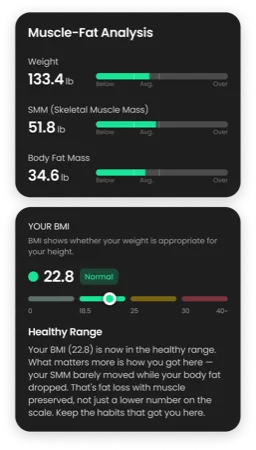
- Step 1AI body composition check, no equipment needed
Just your height, weight, age, and a few lifestyle questions are enough to estimate your body composition. In our own study (70 people), estimates were 92.9% accurate compared with InBody measurements.
- HAVIT Score and basal metabolic rate
- Muscle-fat analysis and body composition type
- Obesity level, abdominal fat ratio, and visceral fat
- Body blueprint: healthy goal weight, waist-to-height ratio, and safe rate of weight loss
- 6-stage habit analysis
- Step 211 daily targets, prescribed in numbers
Your results set exact numbers for what to hit each day. Targets are readjusted every week based on how your weight changes.
- Calorie intake, protein, carbs, fat, and fiber
- Calories burned and steps
- Sleep and water
- Weigh-in frequency and target BMI
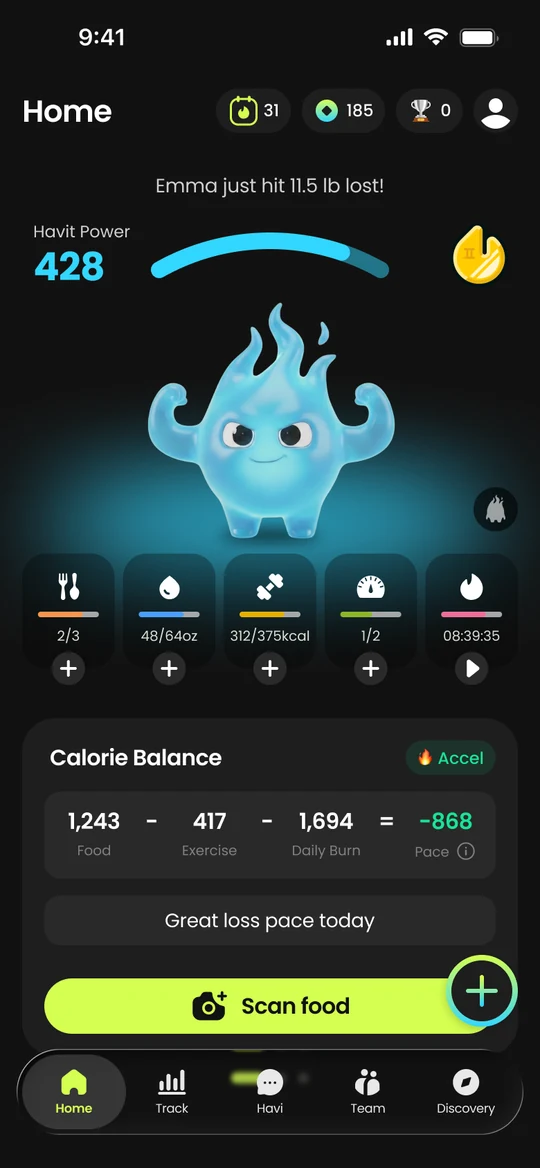
- Step 3Daily action and AI coaching
A plan only works if you follow it. We make logging easy and your next step clear.
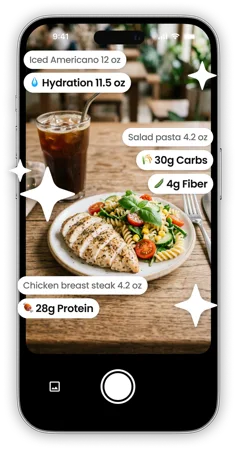
- Log meals with a single photo
- AI coach HAVI reads your logs and suggests one thing to do today
- Personalized plans across 126+ categories based on your results
- CBT-based coaching for your mindset, not just your diet

- All-in-oneEverything in one app
No more switching between apps. When everything about your body lives in one place, your AI coach can see the full picture.
- Meals, water, workouts, and steps
- Sleep, weight, and body composition trends
- Menstrual cycle, mood, and daily check-ins
- GLP-1 medication logs and reminders
- Guided meditation, workout videos, and running coach
- Challenges and avatars that make it feel like a game
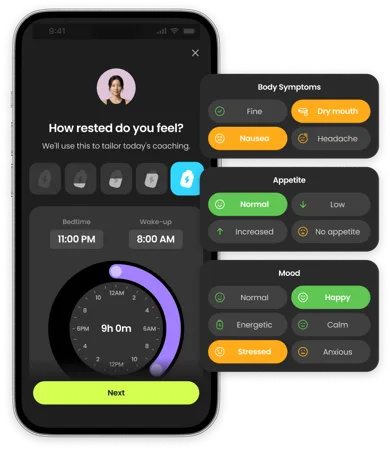
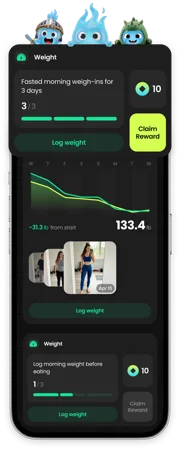
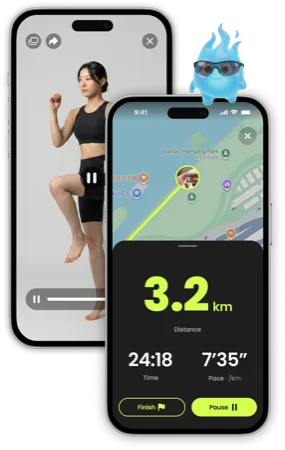
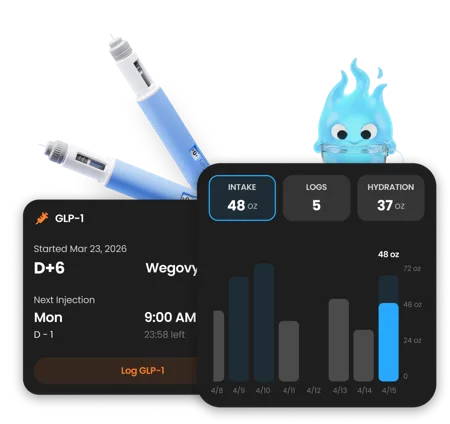
Analysis of 78 people (41 HAVIT, 37 control) with InBody results at week 1 and week 12, June–August 2026. Non-blinded study.
HAVIT is a wellness app, not a medical device. Body composition results are estimates.
A new quiz and health tip every day
Follow HAVIT on Instagram and Threads. @havit_app.en
References
- Adenosine A2A and GLP-1 receptor heteromers in hypothalamic appetite regulation — Molecular Metabolism, 2024; Varga et al., Karolinska Institute
- Coffee consumption patterns and appetite hormone responses in adults using GLP-1 receptor agonists — Journal of Nutrition, 2025; Chen et al.
- Caffeine and metabolic health: mechanisms beyond adenosine receptor antagonism — Annual Review of Nutrition, 2024
- Gastric motility effects of combined caffeine and incretin-based therapies — Gastroenterology Research and Practice, 2024