Switching from Ozempic to Wegovy: The Complete Dose Equivalence Guide for 2026
Same molecule, different dosing—switching between semaglutide brands requires careful timing and dose matching to avoid gaps in coverage or doubled-up side effects.
This article is for general informational purposes only and is not a substitute for professional medical advice, diagnosis, or treatment. Always consult a qualified healthcare provider with questions about a medical condition.
Your Pharmacy Just Called: Now What?
The voicemail says your Ozempic is backordered for six weeks. Or maybe your insurance suddenly decided Wegovy is preferred. Either way, you're staring at two medications that contain the exact same molecule—semaglutide—wondering why switching feels so complicated.
Here's the thing most people don't realize: Ozempic and Wegovy aren't interchangeable the way generic ibuprofen swaps for Advil. The doses don't line up neatly. The titration schedules differ. And getting it wrong means either losing weeks of progress or spending three days hugging your toilet.
I've spent the past month going through the current FDA prescribing information for both pens and published expert guidance on switching between GLP-1 medications. What follows is everything your prescriber probably doesn't have time to explain in a 15-minute appointment.
Why the Same Molecule Needs Different Approaches
Semaglutide is semaglutide. The molecule doesn't care whether Novo Nordisk stamped "Ozempic" or "Wegovy" on the pen. But the FDA approved these medications for different purposes, which created different dosing structures.
Ozempic maxes out at 2.0 mg weekly for type 2 diabetes management. Wegovy goes up to 2.4 mg weekly for chronic weight management. That 0.4 mg difference matters more than it sounds—it's a 20% increase in drug exposure. (The current U.S. Wegovy label also allows up to 7.2 mg weekly for adults who have tolerated 2.4 mg for at least 4 weeks and need additional weight reduction, but 2.4 mg remains the standard maintenance dose.)
The titration schedules also diverge significantly. Ozempic moves from 0.25 mg to 0.5 mg after four weeks, then offers 1.0 mg and 2.0 mg options. Wegovy has five distinct steps: 0.25, 0.5, 1.0, 1.7, and 2.4 mg, each lasting four weeks.
Both prescribing labels list the same absolute bioavailability for subcutaneous semaglutide (89%), with peak levels reached 1 to 3 days after a dose. The delivery mechanism is essentially identical. What differs is the clinical context and the dose ceiling.
The Dose Equivalence Math You Actually Need
Let's get specific. If you're on Ozempic 0.5 mg and switching to Wegovy, you'd match to Wegovy 0.5 mg. Simple enough.
But what if you're stable on Ozempic 1.0 mg and your goal is weight management at the higher Wegovy doses? There's no official conversion protocol for this—expert consensus on switching GLP-1 medications recommends an individualized approach—but prescribers generally take one of two approaches.
Option one: Direct match at 1.0 mg Wegovy, then continue the standard titration upward (1.0 → 1.7 → 2.4 mg) with four weeks at each step. This is the conservative path.
Option two: If you've been on Ozempic 1.0 mg for more than 12 weeks with excellent tolerability, some clinicians will start Wegovy at 1.7 mg directly. This shortcut isn't part of the Wegovy label's titration schedule, so it's a judgment call based on your history with the drug.
The trickiest scenario? Switching from Ozempic 2.0 mg to Wegovy. There's no direct equivalent. You're either stepping down to match at 1.7 mg (temporarily reducing your dose) or jumping to 2.4 mg (a 20% increase). There's no published trial of this exact switch, so prescribers usually weigh how well you've tolerated 2.0 mg—especially GI side effects—before choosing 2.4 mg.
Timing Your Switch: The 7-Day Rule
Here's where people mess up most often. Both medications have a half-life of approximately one week. That sounds like you could just swap on your normal injection day.
You can. But there's nuance.
A practical rule is to switch on your regularly scheduled injection day, maintaining the same day of the week you've established. If you took Ozempic on Thursdays, your first Wegovy shot should be Thursday.
What you absolutely cannot do: take your last Ozempic dose and then start Wegovy three days later because your new prescription arrived early. That's not switching—that's stacking. You'll effectively double your semaglutide exposure for that week, and your GI tract will make you regret it.
If there's a gap—say your Ozempic runs out on Thursday but Wegovy won't arrive until Monday—a short delay is generally safer than compressing the interval. Take your Wegovy on Monday, then shift your regular injection day to Mondays going forward. (Ozempic's label allows the weekly injection day to be changed as long as doses are at least 2 days apart, and Wegovy's label advises restarting at a lower dose if 2 or more consecutive doses are missed.)
Going the Other Direction: Wegovy to Ozempic
Insurance changes cut both ways. Sometimes people need to switch from Wegovy back to Ozempic, usually because their coverage shifted or they're traveling somewhere Wegovy isn't available.
This direction is generally simpler because you're stepping down in maximum dose potential. If you're on Wegovy 2.4 mg, you'll need to accept that Ozempic 2.0 mg is the ceiling—a 17% reduction in weekly semaglutide.
There's little published data on this exact switch. The closest evidence is the SUSTAIN FORTE trial in type 2 diabetes, where semaglutide 2.0 mg lowered HbA1c and weight only slightly more than 1.0 mg over 40 weeks (−2.2 vs. −1.9 percentage points; −6.9 vs. −6.0 kg). So stepping down to a nearby lower dose may lead to modest changes in weight or glucose.
These aren't dramatic changes, but they're real. If you're switching for logistical reasons and plan to switch back eventually, knowing this helps set expectations.
For patients on Wegovy 1.7 mg, the switch to Ozempic presents an interesting choice. You can match at Ozempic 1.0 mg (a step down) or jump to Ozempic 2.0 mg (a step up). A common conservative approach is to match at 1.0 mg first, then titrate to 2.0 mg if needed after at least four weeks—the minimum step interval in Ozempic's label.
What About Switching to Completely Different GLP-1s?
The semaglutide-to-semaglutide switch is straightforward compared to switching between different molecules entirely. But it's worth addressing since supply issues sometimes force broader changes.
Tirzepatide (Mounjaro/Zepbound) is not semaglutide. It's a dual GIP/GLP-1 agonist with different pharmacokinetics. Each drug has its own dosing in its prescribing information, and there is no established dose equivalence between semaglutide and tirzepatide.
If you need to switch from Ozempic or Wegovy to tirzepatide, you're essentially starting a new medication. Tirzepatide's prescribing information starts at 2.5 mg once weekly for 4 weeks, and prescribers usually begin there regardless of your previous semaglutide dose, then titrate up based on response and tolerability.
Switching to liraglutide (Saxenda/Victoza) is similarly a restart situation. Liraglutide is daily, not weekly, with completely different dosing. The transition requires a full re-titration.
Managing Side Effects During the Switch
Even with perfect dose matching, some people experience a temporary uptick in side effects when switching brands. Expert consensus on switching GLP-1 medications notes that gastrointestinal side effects can occur or recur after a switch, but they are typically transient.
The theory? Minor differences in excipients (the inactive ingredients) or injection site absorption patterns. Nothing clinically significant, but enough to notice.
Practical strategies that help:
Eat smaller meals for the first week after switching. Your GI system is recalibrating, even if the drug is technically the same.
Stay hydrated aggressively. Semaglutide-related nausea worsens with dehydration, and the stress of switching sometimes makes people forget their water intake.
Don't change your injection site location during the switch. If you've been using your abdomen, stick with your abdomen. Introducing a new variable (like switching to your thigh) makes it harder to identify what's causing any new symptoms.
If nausea persists beyond two weeks at an equivalent dose, that's worth a conversation with your prescriber. It might indicate the need for a temporary dose reduction.
Documentation That Makes Your Life Easier
Before switching, gather these specifics:
Your current dose and how long you've been on it. "I've been on Ozempic 1.0 mg for four months" is the kind of detail that helps your prescriber make better decisions.
Your injection day and approximate time. Consistency matters for maintaining stable drug levels.
Any side effects you've experienced and how you've managed them. If you know that taking your shot after dinner reduces nausea, that's relevant information.
Your weight trajectory. Not because weight is the only metric that matters, but because it helps establish whether your current dose is working and whether the switch should aim to maintain or escalate.
If you're using these medications for diabetes management, it's worth having a recent A1C or fasting glucose on record. A baseline before switching helps identify any drift that might occur during the transition.
When Switching Isn't Actually Necessary
Sometimes people assume they need to switch when they actually don't.
Scenario: You're on Ozempic for diabetes, but you'd also like the weight management benefits of higher doses. You don't necessarily need Wegovy. Ozempic 2.0 mg is FDA-approved and provides substantial weight loss benefits, even though that's not its primary indication.
Scenario: Your pharmacy says Wegovy is out of stock, but they have Ozempic. If you're at 1.0 mg or below on Wegovy, a temporary switch to Ozempic at the matching dose maintains your coverage without the complexity of a formal brand change.
Scenario: You've heard Wegovy "works better" for weight loss. At equivalent doses, the clinical outcomes are essentially identical. The molecule doesn't know which label is on the pen. Wegovy's advantage is purely the higher maximum dose, not superior efficacy milligram-for-milligram.
The Conversation to Have With Your Prescriber
Come prepared with specific questions:
"Based on my current Ozempic dose and how long I've been on it, what's the appropriate starting dose for Wegovy?"
"Should I expect any adjustment period, and what symptoms would warrant contacting you?"
"If I experience increased side effects, is there a protocol for temporarily reducing my dose, or should I push through?"
"How will we monitor whether the switch is working—follow-up appointment, lab work, or just checking in if there's a problem?"
Switching works best as a shared decision. Your prescriber has the clinical knowledge, but you have the lived experience of how these medications affect your body. Both matter.
Looking Ahead: What 2026 Might Change
The GLP-1 landscape is evolving rapidly. Novo Nordisk has hinted at new semaglutide formulations, including an oral version with improved bioavailability. Other manufacturers are developing semaglutide biosimilars that could hit the market in the next few years.
Each new option will create new switching questions. The principles, though, will remain consistent: match doses where possible, maintain timing, monitor for unexpected responses, and document everything.
For now, the Ozempic-to-Wegovy switch (and vice versa) is the most common scenario, and the dosing steps for both products are clearly laid out in their prescribing information. It's not complicated once you understand the logic. Same molecule, different packaging, careful attention to the details.
📊 Key Stats
Semaglutide Dose Equivalence: Ozempic vs. Wegovy
| Ozempic Dose | Wegovy Equivalent | Transition Notes |
|---|---|---|
| 0.25 mg | 0.25 mg | Direct match; standard titration starting point |
| 0.5 mg | 0.5 mg | Direct match; second titration step |
| 1.0 mg | 1.0 mg | Direct match; can continue Wegovy titration to 1.7 mg after 4 weeks |
| 2.0 mg | 1.7 mg or 2.4 mg | No direct match; 1.7 mg is step-down, 2.4 mg is 20% increase |
| N/A | 2.4 mg | Wegovy-only dose; no Ozempic equivalent available |
Based on the dose strengths and titration steps in the FDA prescribing information for Ozempic and Wegovy; not an official conversion chart. All transitions should maintain the same injection day of the week.
❓ Frequently Asked Questions
Can I switch from Ozempic to Wegovy on the same day my prescription runs out?
Will I experience worse side effects when switching between semaglutide brands?
I'm on Ozempic 2.0 mg—what Wegovy dose should I start with?
Is there any clinical difference between Ozempic and Wegovy at the same dose?
What if I miss a dose during the switching process?
Can I switch from Wegovy to tirzepatide (Mounjaro/Zepbound) using dose equivalence?
Should I expect any weight changes when switching from Wegovy 2.4 mg to Ozempic 2.0 mg?
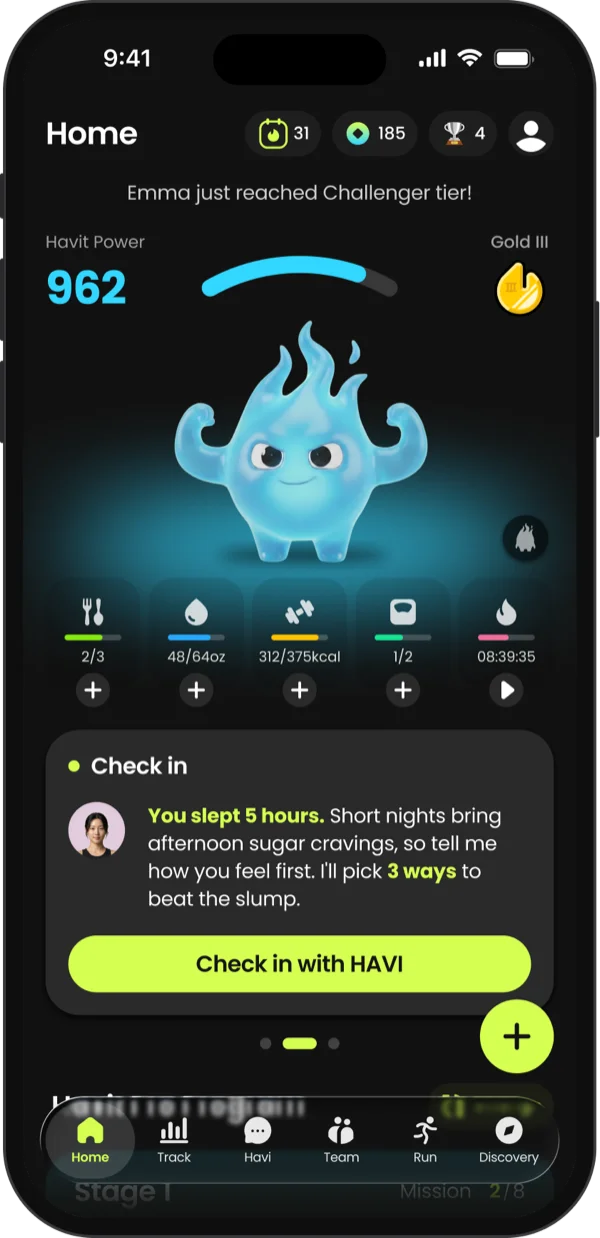
What is HAVIT?
HAVIT is an AI health partner built on metabolic science — it protects your muscle, wakes up your metabolism, and helps you keep a healthy, rebound-free body for the long run.
Unlike calorie-only trackers, HAVIT connects AI body-composition estimates, nutrition, hydration, sleep, steps, cycle, mood, and GLP-1 medication in one daily routine — so progress is measured by body composition, not just the number on the scale. Daily missions turn established behavior-change techniques into small repeatable actions, drawing on expertise from professionals formerly at Juvis Diet, one of Korea’s leading metabolic clinics.
In HAVIT’s own analysis of 1,090 GLP-1 users, people who logged consistently built stronger habits than the general user base. Read the GLP-1 Habit Report
Inside the app
- AI COACHA coach that reads your day.
- WORKOUT & RUNNINGFrom home workouts to your next run.
- NUTRITIONLog meals in seconds.
- BODY INSIGHTSSee more than weight.
- DAILY MISSIONSBuild habits you can repeat.
- DAILY CHECK-INTell HAVI how today feels.
- TRACK EVERYTHINGFrom water to GLP-1
- MIND & RECOVERYFor the days willpower runs out.


HAVIT works with or without GLP-1 medication. It is a wellness app, not a medical device; body-composition results are estimates.

Continue in the App
Personalized wellness with your own data


References
- Switching between GLP-1 receptor agonists in clinical practice: Expert consensus and practical guidance — International Journal of Clinical Practice, 2021
- Once-Weekly Semaglutide in Adults with Overweight or Obesity — New England Journal of Medicine, 2021 (STEP 1)
- Efficacy and safety of once-weekly semaglutide 2·0 mg versus 1·0 mg in patients with type 2 diabetes (SUSTAIN FORTE): a double-blind, randomised, phase 3B trial — The Lancet Diabetes & Endocrinology, 2021
- WEGOVY (semaglutide) Prescribing Information — Novo Nordisk, U.S. FDA label (revised 06/2026)
- OZEMPIC (semaglutide) Prescribing Information — Novo Nordisk, U.S. FDA label (revised 05/2026)
- ZEPBOUND (tirzepatide) Prescribing Information — Eli Lilly, U.S. FDA label (revised 08/2026)
- 의약품안전나라 (MFDS drug information search) — Ministry of Food and Drug Safety, Korea