
Why You Crash at 2 PM (And 7 Science-Backed Fixes That Aren't Coffee)
Your 2 PM crash stems from circadian biology and blood sugar shifts—bright light, strategic movement, and meal timing can fix it without caffeine.
This article is for general informational purposes only and is not a substitute for professional medical advice, diagnosis, or treatment. Always consult a qualified healthcare provider with questions about a medical condition.
That 2 PM Wall Is Real, and It's Not Your Fault
You know the feeling. It's 2:17 PM, you're staring at your screen, and the words have started swimming. Your eyelids feel like they've gained ten pounds each. You're not lazy. You're not even sleep-deprived (well, maybe a little). What you're experiencing has a name in sleep science: the post-lunch dip. And here's the thing—it would happen even if you skipped lunch entirely.
If you have ever assumed your afternoon crashes meant you needed more willpower. Or more espresso. Turns out, you were fighting against roughly 200,000 years of human evolution. Not a fair fight.
The Two Biological Forces Tanking Your Afternoon
Your afternoon energy crash isn't one problem. It's two problems wearing a trench coat.
The first culprit is your circadian rhythm. Your internal clock creates natural alertness peaks and valleys throughout the day, and there's a programmed dip that hits most people between 1 PM and 3 PM. A 2025 study in Chronobiology International tracked 847 adults and found that core body temperature drops an average of 0.3°C during this window—a physiological signal that your body interprets as "time to rest." This happens whether you eat lunch or not. It happens on weekends. It happens on vacation.
The second force is postprandial somnolence—fancy words for "food coma." When you eat, blood flow redirects to your digestive system. Your parasympathetic nervous system activates. And if your meal was heavy in refined carbohydrates, your blood glucose spikes and then crashes, taking your focus with it. The same Chronobiology International research found that meals exceeding 800 calories amplified afternoon drowsiness by 34% compared to lighter meals.
When these two forces align—your circadian dip plus post-meal physiology—you get that wall.
Why Coffee Is a Band-Aid (Not a Solution)
Look, this isn't an anti-coffee argument. Plenty of people enjoy a cup or two. But using caffeine to bulldoze through your afternoon slump creates a predictable problem: it disrupts your sleep that night, which makes tomorrow's slump worse, which requires more caffeine, which disrupts sleep further.
Researchers at the Sleep Research Centre in Loughborough found that caffeine consumed at 2 PM still had measurable effects on sleep architecture at midnight—reducing deep sleep by 12-15% even in people who claimed they "slept fine." You might fall asleep okay, but the quality suffers.
The real question isn't how to mask the slump. It's how to actually shift the underlying biology.
Light Exposure: Your Brain's Natural Espresso
Here's something wild: your alertness system runs partly on light. Specialized cells in your eyes (called intrinsically photosensitive retinal ganglion cells, but let's just call them "alertness sensors") detect bright light and send wake-up signals directly to your brain's master clock.
A 2024 study in the Journal of Sleep Research tested afternoon light exposure on 156 office workers experiencing regular post-lunch dips. The intervention was simple: 20 minutes of bright light (1,000+ lux) between 1 PM and 2 PM. The results weren't subtle. Subjective alertness improved by 27%, and objective performance on attention tasks improved by 19%.
For context, typical indoor office lighting sits around 300-500 lux. Outdoor shade on a cloudy day? About 1,000-2,000 lux. Direct sunlight hits 10,000-100,000 lux.
The practical takeaway: eat lunch outside when possible. If that's not realistic, sit near a window during your slump window or invest in a light therapy lamp for your desk. Even 10 minutes helps.
Strategic Movement (Emphasis on Strategic)
Exercise boosts alertness. You knew that. But timing and intensity matter more than you might think.
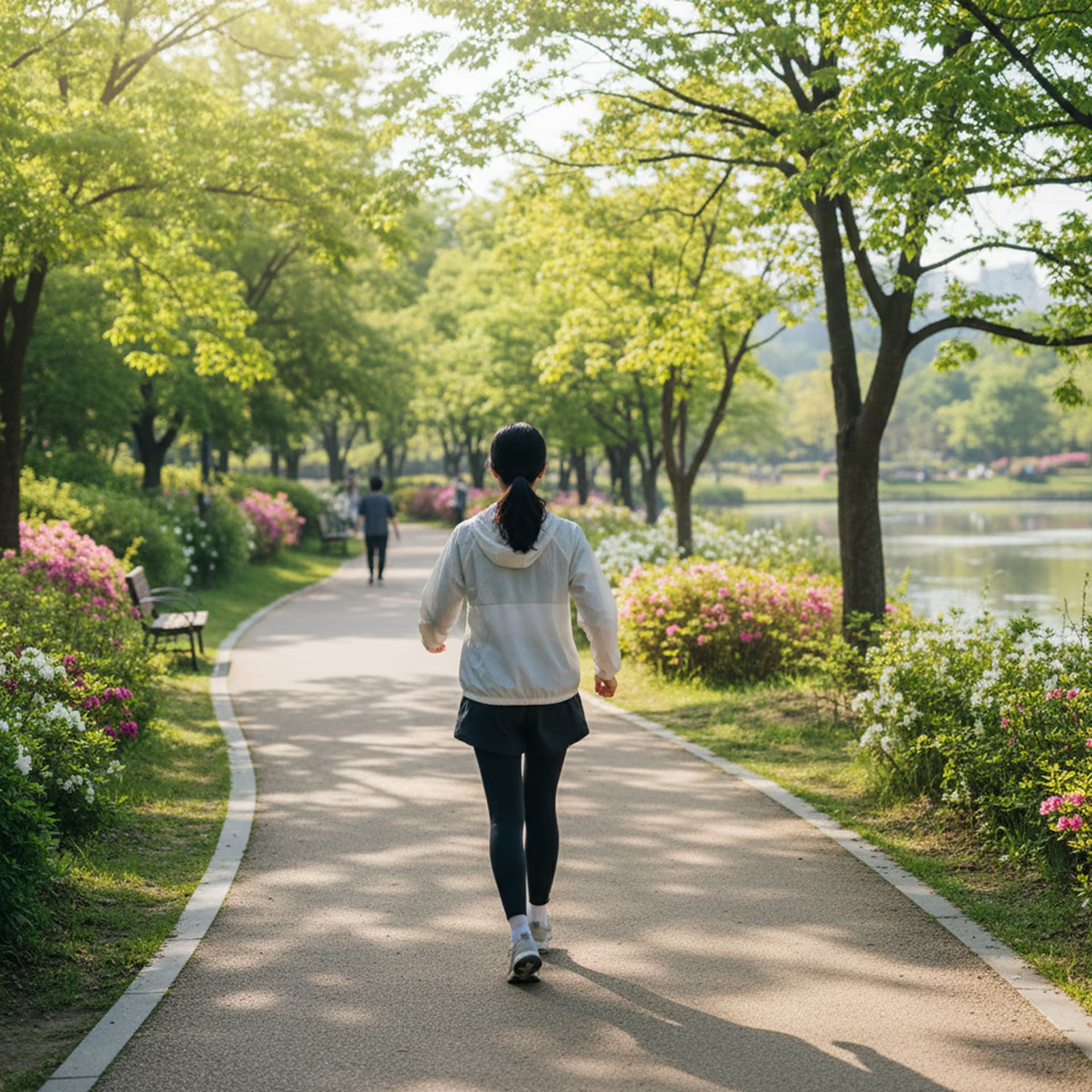
The Journal of Sleep Research review found that moderate-intensity movement (think: brisk walking, not HIIT) for just 10 minutes during the 1-3 PM window increased afternoon alertness scores by 23%. High-intensity exercise actually performed worse in this window—it triggered a compensatory fatigue response in some participants.
The sweet spot seems to be movement that elevates your heart rate to 100-120 BPM for 10-15 minutes. A walk around the block. Taking stairs instead of the elevator. A quick dance break in your living room if you work from home. (No judgment. Plenty of people do this.)
Some people build a routine around this: set a 1:30 PM alarm and walk to a coffee shop three blocks away, without even buying coffee, just walking there and back. Fifteen minutes, 1,200 steps, and afternoon productivity can transform.
Meal Composition: The 40-30-30 Approach
What you eat for lunch matters as much as how much you eat.
High-glycemic meals (white bread, sugary drinks, processed snacks) create rapid blood glucose spikes followed by crashes. Your body responds to falling blood sugar by releasing adenosine—the same drowsiness chemical that caffeine blocks. So that sandwich on white bread with a soda is essentially a sleep-inducing cocktail.
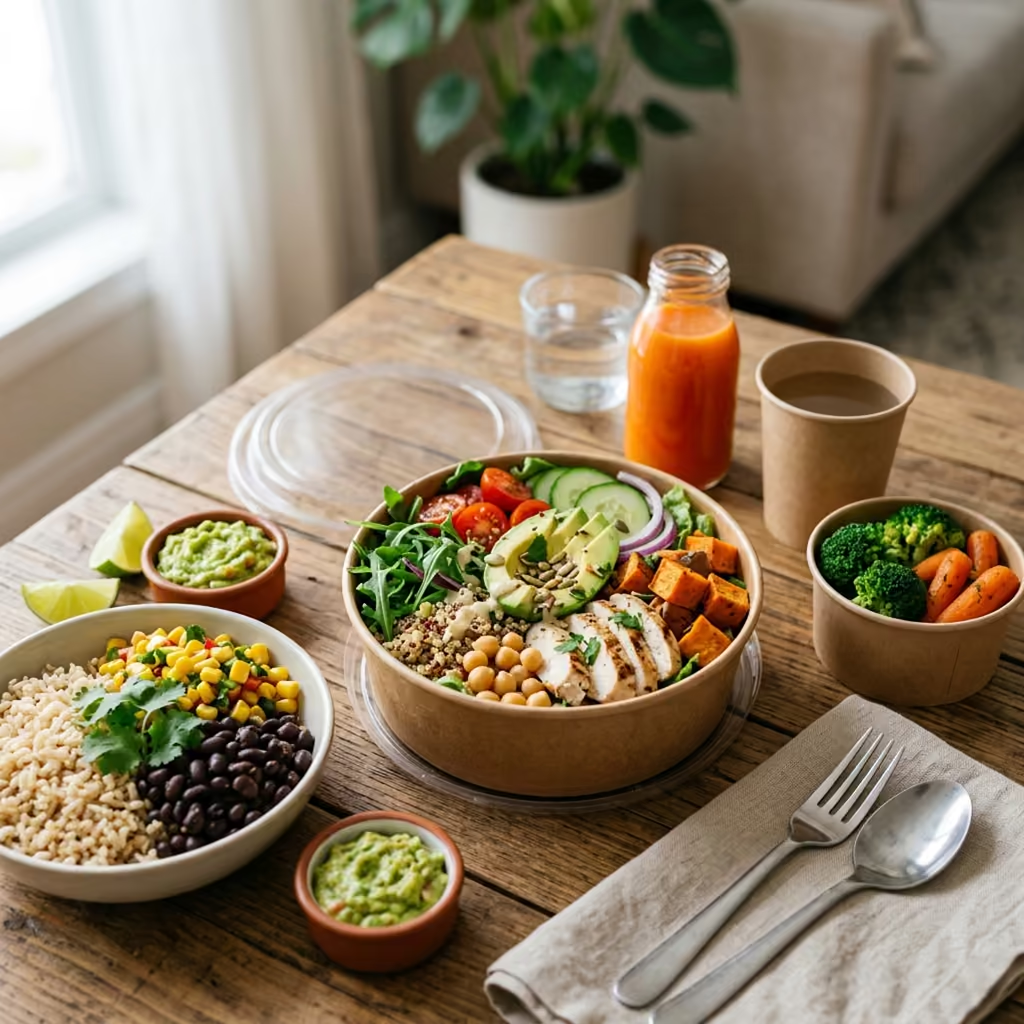
The research points toward a macronutrient balance that minimizes post-meal drowsiness: roughly 40% complex carbohydrates, 30% protein, 30% healthy fats. This combination slows glucose absorption and maintains steadier energy.
In practical terms: swap white rice for quinoa or brown rice. Add protein (chicken, fish, legumes, eggs) to every lunch. Include fats from avocado, nuts, or olive oil. Keep total calories between 500-700 for your midday meal.
One study participant switched from a bagel with cream cheese (roughly 450 calories, 70% refined carbs) to a grain bowl with salmon and vegetables (550 calories, balanced macros). Same calorie range. Completely different afternoon.
Temperature Manipulation: The Cold Trick
Remember how your core body temperature drops during the afternoon dip? You can counteract this with strategic cold exposure.
Splashing cold water on your face triggers the dive reflex—an autonomic response that increases alertness and heart rate. Holding a cold drink against your wrists or neck has a similar (though milder) effect. Some people keep a small fan at their desk specifically for the 2 PM window.
This isn't about dramatic ice baths. A 2024 pilot study found that even holding hands under cold running water for 30 seconds produced measurable improvements in subjective alertness. The effect lasted about 45 minutes.
It's not glamorous. But it works.
The 20-Minute Nap (If You Can Swing It)
I know, I know. Most people can't nap at work. But if you have any flexibility—if you work from home, have a private office, or get a lunch break in your car—a short nap is remarkably effective.
The key word is short. Sleep researchers consistently find that naps under 20 minutes improve afternoon alertness without causing sleep inertia (that groggy, disoriented feeling from waking mid-sleep-cycle). The Journal of Sleep Research meta-analysis found 15-20 minute naps improved afternoon cognitive performance by 31%—more than any other single intervention.
Set an alarm. Don't negotiate with yourself. Twenty minutes, not thirty.
If actual sleep isn't possible, even "quiet rest" with eyes closed in a dim environment for 10 minutes provides about half the benefit. Your brain doesn't need to fully sleep to recover some alertness.
Combining Interventions: The Stack Effect
Here's where it gets interesting. These interventions aren't competing—they're complementary. Stacking multiple approaches produces better results than any single intervention alone.
The most effective combination from the research: light exposure + movement + meal composition adjustment. Participants who implemented all three saw afternoon alertness improvements of 41%, compared to 19-27% for single interventions.
A realistic daily protocol might look like this: eat a balanced lunch (500-700 calories, 40-30-30 macros), take a 15-minute outdoor walk immediately after (combining light and movement), and keep a cold water bottle at your desk for the 2-3 PM window. No supplements. No expensive gadgets. No caffeine.
What About Supplements and "Energy" Products?
You'll find endless products marketed for afternoon energy: B-vitamins, ginseng, green tea extract, various adaptogens. The research on most of these is... underwhelming.
B-vitamins only improve energy if you're deficient (most people eating a varied diet aren't). Ginseng shows modest effects in some studies but takes weeks of consistent use. Green tea extract is basically just caffeine in a different package.
The interventions with the strongest evidence—light, movement, meal timing, temperature, short naps—are free. They work with your biology instead of trying to override it. And they don't create dependency or tolerance.
Save your money.
Building Your Personal Anti-Slump Protocol
Everyone's circadian rhythm is slightly different. Some people hit their wall at 1 PM; others don't feel it until 3 PM. Your job, eating schedule, and sleep patterns all influence the timing and severity.
Spend one week tracking when your energy dips hit. Note what you ate, when you ate it, and how severe the slump feels on a 1-10 scale. Patterns will emerge.
Then experiment systematically. Try light exposure for a week. Add movement the next week. Adjust your lunch composition. See what moves the needle for your specific biology.
The goal isn't to eliminate the afternoon dip entirely—that's fighting evolution. The goal is to soften it enough that it doesn't derail your day.
📊 Key Stats
Caffeine-Free Afternoon Slump Interventions Compared
| Intervention | Time Required | Alertness Improvement | Duration of Effect | Accessibility |
|---|---|---|---|---|
| Bright light exposure (1000+ lux) | 10-20 minutes | 27% | 2-3 hours | Moderate (needs outdoor access or lamp) |
| Moderate walking | 10-15 minutes | 23% | 1-2 hours | High |
| Balanced meal composition | No extra time | 15-20% | 3-4 hours | High |
| Cold water exposure | 30 seconds-2 minutes | 10-15% | 30-45 minutes | Very high |
| Short nap (15-20 min) | 20-25 minutes | 31% | 2-4 hours | Low (requires private space) |
| Combined protocol | 20-30 minutes | 41% | 3-4 hours | Moderate |
Effectiveness data compiled from Journal of Sleep Research 2024 and Chronobiology International 2025
❓ Frequently Asked Questions
Does the afternoon slump happen even if I skip lunch?
How bright does light need to be to improve alertness?
Why does high-intensity exercise work worse than moderate exercise for afternoon alertness?
How long should an afternoon nap be to avoid grogginess?
Can I just drink decaf coffee for the ritual without the caffeine problems?
What's the ideal lunch composition to minimize afternoon drowsiness?
Do energy supplements like B-vitamins or ginseng actually help?
An AI weight-loss coach built by experts from Juvis Diet, one of Korea's leading weight-loss clinics
Assess. Prescribe in numbers. Coach every day.
Articles give everyone the same averages. HAVIT assesses your body first, uses the results to set daily targets in numbers, and works through them with you for 12 weeks.
- Step 1AI body composition check, no equipment needed
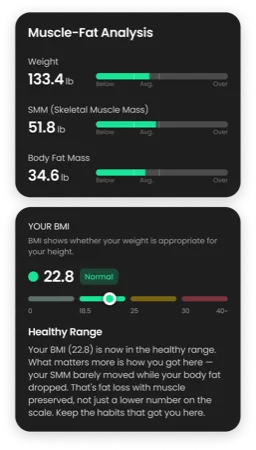
Just your height, weight, age, and a few lifestyle questions are enough to estimate your body composition. In our own study (70 people), estimates were 92.9% accurate compared with InBody measurements.
- HAVIT Score and basal metabolic rate
- Muscle-fat analysis and body composition type
- Obesity level, abdominal fat ratio, and visceral fat
- Body blueprint: healthy goal weight, waist-to-height ratio, and safe rate of weight loss
- 6-stage habit analysis
- Step 211 daily targets, prescribed in numbers
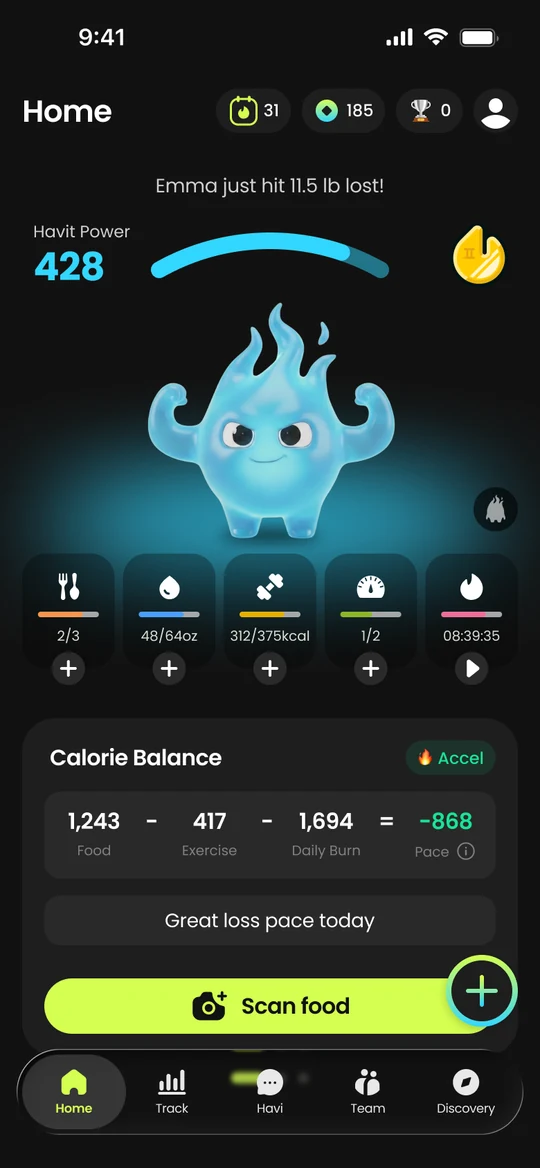
Your results set exact numbers for what to hit each day. Targets are readjusted every week based on how your weight changes.
- Calorie intake, protein, carbs, fat, and fiber
- Calories burned and steps
- Sleep and water
- Weigh-in frequency and target BMI
- Step 3Daily action and AI coaching
A plan only works if you follow it. We make logging easy and your next step clear.
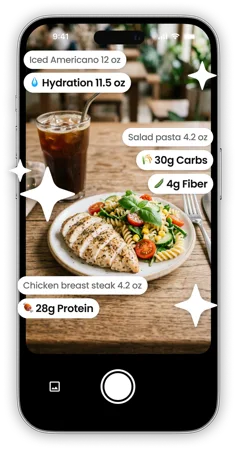
- Log meals with a single photo
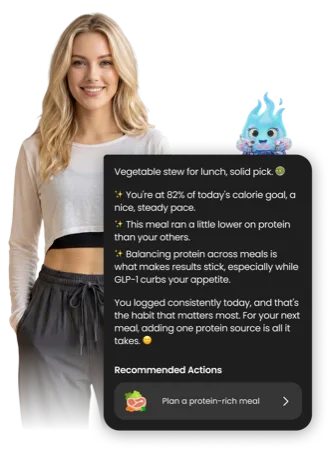
- AI coach HAVI reads your logs and suggests one thing to do today
- Personalized plans across 126+ categories based on your results
- CBT-based coaching for your mindset, not just your diet
- All-in-oneEverything in one app
No more switching between apps. When everything about your body lives in one place, your AI coach can see the full picture.
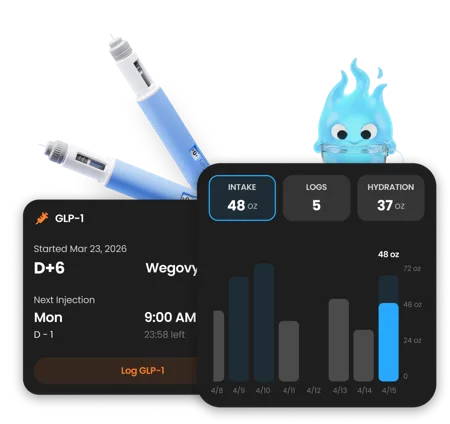
- Meals, water, workouts, and steps
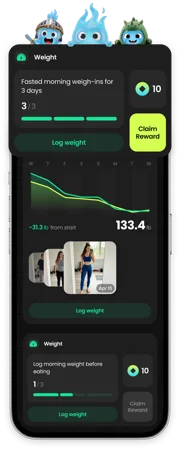
- Sleep, weight, and body composition trends
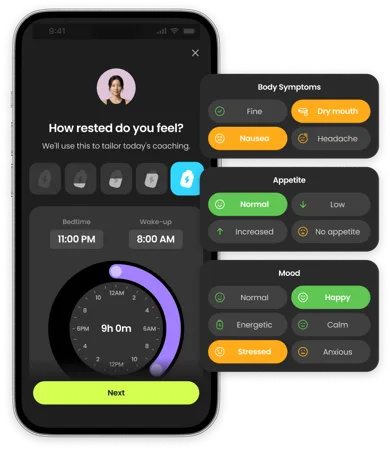
- Menstrual cycle, mood, and daily check-ins
- GLP-1 medication logs and reminders
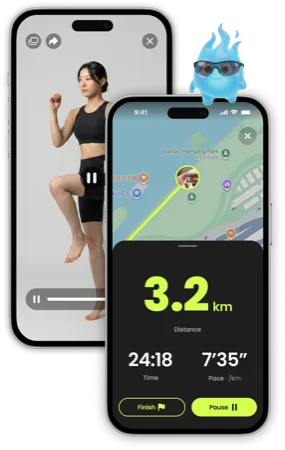
- Guided meditation, workout videos, and running coach
- Challenges and avatars that make it feel like a game
Analysis of 78 people (41 HAVIT, 37 control) with InBody results at week 1 and week 12, June–August 2026. Non-blinded study.
HAVIT is a wellness app, not a medical device. Body composition results are estimates.
A new quiz and health tip every day
Follow HAVIT on Instagram and Threads. @havit_app.en
References
- Circadian and Postprandial Contributions to Afternoon Alertness Decrements: A Multi-Site Study — Chronobiology International, 2025
- Non-Pharmacological Interventions for Post-Lunch Alertness: A Systematic Review and Meta-Analysis — Journal of Sleep Research, 2024
- Light Exposure Timing and Daytime Alertness in Office Workers — Journal of Sleep Research, 2024
- Meal Composition Effects on Postprandial Cognitive Performance — Nutrients, 2024