


Why Your Hives Flare When You're Stressed: The Mast Cell Connection and What Actually Helps
Chronic hives and stress share a biological pathway through mast cells—and targeting this connection with integrated approaches can reduce flare frequency by up to 60%.
This article is for general informational purposes only and is not a substitute for professional medical advice, diagnosis, or treatment. Always consult a qualified healthcare provider with questions about a medical condition.
That Presentation Tomorrow? Your Skin Already Knows
Sarah noticed it first during her divorce proceedings. Every time her lawyer called, welts would bloom across her forearms within minutes. Not hours. Minutes. She'd been dealing with random hives for two years, but this pattern was impossible to ignore.
She's far from alone. About 20% of people experience hives at some point, and for roughly 1 in 100, these welts become a chronic companion—appearing most days for six weeks or longer. What's maddening for many is the apparent randomness. No obvious food trigger. No new detergent. Just... hives.
But here's what researchers have been piecing together: your skin and your stress response are having conversations you're not privy to. And those conversations happen through a fascinating cellular middleman.
The Mast Cell: Your Skin's Overenthusiastic Security Guard
Picture a mast cell as a tiny balloon packed with histamine and about 200 other inflammatory chemicals. These cells sit in your skin, gut, and airways, waiting. When they detect a threat—pollen, a bee sting, certain foods—they burst open and release their contents. That's what causes the swelling, redness, and itching we call an allergic reaction.
The thing is, mast cells don't just respond to allergens. They have receptors for stress hormones too.
A 2024 study in the Journal of Allergy and Clinical Immunology mapped this connection in detail. When you're stressed, your brain releases corticotropin-releasing hormone (CRH). This hormone was supposed to just talk to your adrenal glands. But mast cells? They're eavesdropping. They have CRH receptors on their surface, and when CRH binds to them, the mast cells degranulate—releasing histamine even though there's no allergen present.
Your body essentially created a direct hotline between your brain and your skin. Efficient, yes. Convenient when you're trying to figure out why you're covered in welts during finals week? Not so much.
The Numbers Behind the Stress-Hives Link
Skeptical that stress really matters that much? The data is striking.
Researchers tracking 1,847 chronic urticaria patients found that those reporting high psychological stress had 2.4 times more flare days per month compared to low-stress patients. That's not a subtle difference. We're talking 18 flare days versus 7.5.
Another study looked at what happens in the body during acute stress. Participants who completed a standardized stress test (public speaking plus mental math—everyone's nightmare) showed a 340% increase in skin histamine levels within 30 minutes. Their cortisol spiked too, but the histamine response was faster and more dramatic.
The relationship works both ways. Having chronic hives is itself stressful. The unpredictability, the visible symptoms, the sleep disruption from nighttime itching—these create a feedback loop. Stress triggers hives, hives cause stress, stress triggers more hives. Breaking this cycle requires addressing both ends.
Why Antihistamines Alone Often Fall Short
If you've been prescribed antihistamines for chronic hives, you've probably noticed they help... somewhat. Standard doses work for about 50% of patients. Higher doses (up to four times the normal amount, under medical supervision) bump that to around 65%.
That still leaves a lot of people scratching. Literally.
The reason antihistamines don't fully solve the problem is that they're blocking histamine after it's already been released. They're mopping up the flood instead of turning off the faucet. If stress is continuously triggering your mast cells to degranulate, you're fighting an uphill battle.
This is where the integrated approach becomes interesting. What if you could reduce how often those mast cells fire in the first place?
Psychosomatic Interventions: Not What You Think
Let's clear something up immediately. "Psychosomatic" doesn't mean "all in your head." It means there's a measurable interaction between psychological factors and physical symptoms. The welts are real. The histamine is real. The pathway connecting your stress response to your mast cells is real.
A 2025 meta-analysis in Allergy reviewed 23 randomized controlled trials testing psychological interventions for chronic urticaria. The results were genuinely surprising.
Cognitive behavioral therapy (CBT) adapted for chronic illness reduced hive severity scores by 38% compared to standard care alone. Mindfulness-based stress reduction showed similar effects—about 35% improvement. Even brief interventions mattered: patients who learned a simple relaxation technique and practiced it for 10 minutes daily had 28% fewer flare days over three months.
These aren't replacing antihistamines. They're adding to them. Patients using both approaches saw the best outcomes—up to 60% reduction in symptoms compared to medication alone.
What Actually Works: A Practical Breakdown
Not all stress management is created equal for hives. Here's what the evidence supports:
Progressive muscle relaxation has the strongest data specifically for urticaria. You systematically tense and release muscle groups, which seems to interrupt the CRH release cascade. One study found that practicing this for 15 minutes before known stressful events (like that work presentation) reduced the likelihood of a stress-triggered flare by half.
Heart rate variability biofeedback is newer but promising. You use a simple device to see your heart rate patterns and learn to shift them toward a calmer state. After 8 weeks of training, participants showed lower baseline mast cell reactivity—their cells were literally less jumpy.
Sleep optimization matters more than most people realize. Chronic hives patients average 5.8 hours of sleep per night, partly due to nighttime itching. But sleep deprivation itself increases CRH levels. Addressing sleep—sometimes with sedating antihistamines at night, sometimes with sleep hygiene changes—can interrupt this cycle.
Exercise is complicated. Intense exercise can trigger hives in some people (exercise-induced urticaria is its own thing). But moderate, regular exercise—30 minutes of walking, swimming, or cycling—appears to reduce overall flare frequency by improving stress resilience. The key is consistency rather than intensity.
The Gut Connection You Might Not Expect
Your gut contains more mast cells than your skin does. And your gut microbiome influences how reactive those mast cells are.
Recent research found that chronic urticaria patients have distinct microbiome signatures—lower diversity overall and reduced populations of certain anti-inflammatory bacteria. A small but intriguing trial gave patients a specific probiotic combination (Lactobacillus rhamnosus and Bifidobacterium longum) for 12 weeks. Hive severity dropped by 42%, and the effect persisted for two months after stopping the probiotics.
This isn't about taking random probiotics from the grocery store. The strains and doses matter. But it suggests that gut health might be another lever for managing chronic hives—one that most dermatologists aren't yet discussing with patients.
Building Your Personal Management Plan
Chronic urticaria is frustrating precisely because it's so individual. What triggers one person's flares might be irrelevant for another. But here's a framework that research supports:
Track your patterns. Keep a simple log for two weeks noting hive severity (1-10), stress level (1-10), sleep hours, and any notable events. You're looking for correlations, not causation. Many people discover their hives lag stress by 12-24 hours, which makes the connection easy to miss.
Optimize your antihistamine timing. If stress triggers your flares, taking your antihistamine before anticipated stressful events (rather than just once daily at the same time) can be more effective. Talk to your doctor about this approach.
Add one stress intervention. Pick the one that seems most sustainable for you. Progressive muscle relaxation has the best evidence, but consistency beats perfection. Ten minutes daily of any relaxation practice beats 30 minutes you'll never actually do.
Address sleep separately. If nighttime itching disrupts your sleep, this needs its own solution. Sedating antihistamines at bedtime, cooling the bedroom, or using wet wrap therapy might help. Poor sleep will undermine everything else.
Consider the gut. If you've tried standard approaches without success, discussing probiotics or gut health with your doctor might open new options.
When to Push for More
Some chronic urticaria patients need treatments beyond antihistamines and lifestyle changes. Omalizumab (a monthly injection that blocks IgE) works for many antihistamine-resistant cases. Cyclosporine is another option for severe cases.
The stress-management approach doesn't replace these treatments—it complements them. Even patients on biologics show better outcomes when they address the stress component.
If you're having hives most days despite high-dose antihistamines, if your quality of life is significantly impacted, or if you're developing angioedema (deeper swelling, especially around the face), push for a referral to an allergist or immunologist. There are more tools available than many primary care providers realize.
The Bigger Picture
Chronic hives sit at an interesting intersection of immunology, dermatology, and psychology. For decades, these fields didn't talk to each other much. A dermatologist would prescribe antihistamines. A therapist might help with the emotional burden. But nobody was connecting the biological dots.
That's changing. The mast cell-CRH pathway gives us a concrete mechanism to explain what patients have long reported: stress makes their hives worse. And that mechanism suggests interventions that actually work.
Sarah, from the beginning of this article, eventually found her combination. A non-sedating antihistamine in the morning, a sedating one at night, and 12 minutes of progressive muscle relaxation before any legal meetings. Her flares dropped from near-daily to maybe twice a week. Not perfect. But livable.
Your combination will probably look different. The point is that one exists—and finding it means looking beyond the prescription pad to the stress response your skin has been trying to tell you about all along.
📊 Key Stats
Stress Management Approaches for Chronic Urticaria
| Intervention | Symptom Reduction | Time Commitment | Evidence Strength |
|---|---|---|---|
| Progressive Muscle Relaxation | 28-35% | 10-15 min/day | Strong (multiple RCTs) |
| Cognitive Behavioral Therapy | 38% | 8-12 weekly sessions | Strong (meta-analysis) |
| Mindfulness-Based Stress Reduction | 35% | 20-45 min/day | Moderate (several RCTs) |
| HRV Biofeedback | 30% | 15 min/day + device | Emerging (pilot studies) |
| Regular Moderate Exercise | 20-25% | 30 min, 3-5x/week | Moderate (observational + RCTs) |
All interventions shown as add-on to standard antihistamine therapy. Individual results vary.
❓ Frequently Asked Questions
Can stress alone cause chronic hives without any allergic trigger?
How quickly can stress trigger a hive flare?
Will managing stress cure my chronic hives completely?
Which stress management technique works fastest for hives?
Are probiotics actually helpful for chronic hives?
Should I stop my antihistamines if I start stress management?
Why do my hives get worse at night even when I'm not stressed?
An AI weight-loss coach built by experts from Juvis Diet, one of Korea's leading weight-loss clinics
Assess. Prescribe in numbers. Coach every day.
Articles give everyone the same averages. HAVIT assesses your body first, uses the results to set daily targets in numbers, and works through them with you for 12 weeks.
- Step 1AI body composition check, no equipment needed
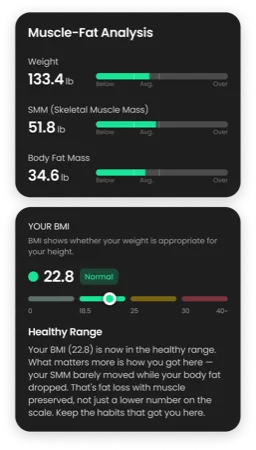
Just your height, weight, age, and a few lifestyle questions are enough to estimate your body composition. In our own study (70 people), estimates were 92.9% accurate compared with InBody measurements.
- HAVIT Score and basal metabolic rate
- Muscle-fat analysis and body composition type
- Obesity level, abdominal fat ratio, and visceral fat
- Body blueprint: healthy goal weight, waist-to-height ratio, and safe rate of weight loss
- 6-stage habit analysis
- Step 211 daily targets, prescribed in numbers
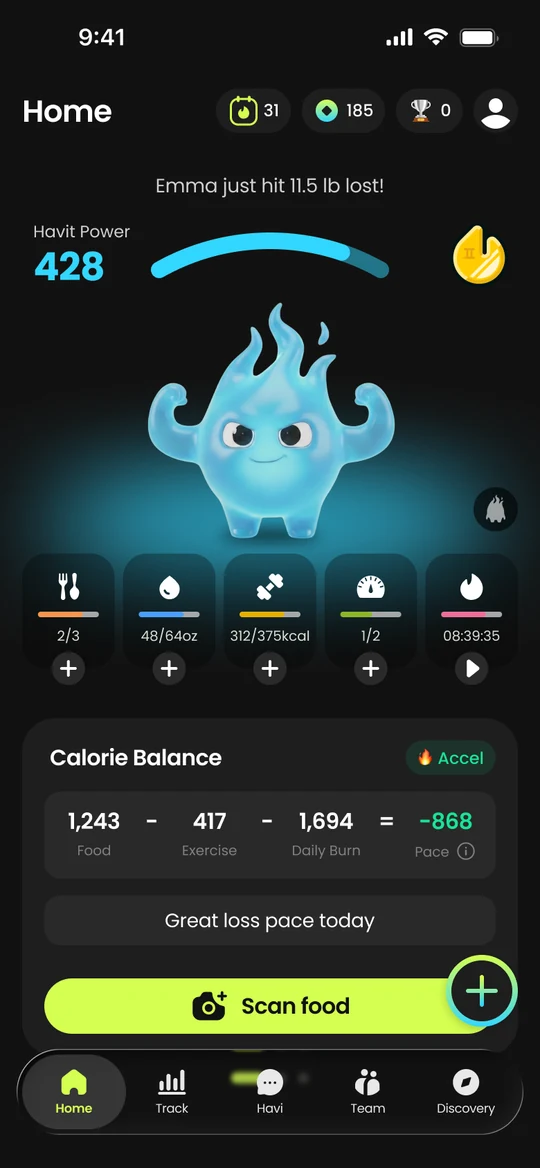
Your results set exact numbers for what to hit each day. Targets are readjusted every week based on how your weight changes.
- Calorie intake, protein, carbs, fat, and fiber
- Calories burned and steps
- Sleep and water
- Weigh-in frequency and target BMI
- Step 3Daily action and AI coaching
A plan only works if you follow it. We make logging easy and your next step clear.
- Log meals with a single photo
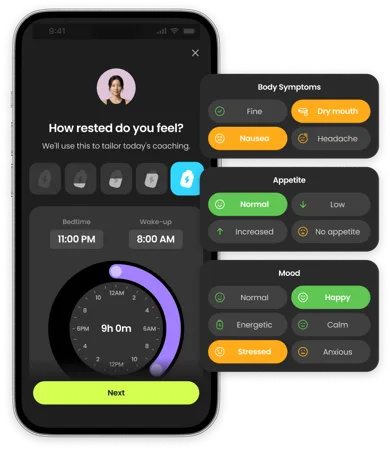
- AI coach HAVI reads your logs and suggests one thing to do today
- Personalized plans across 126+ categories based on your results
- CBT-based coaching for your mindset, not just your diet


- All-in-oneEverything in one app
No more switching between apps. When everything about your body lives in one place, your AI coach can see the full picture.
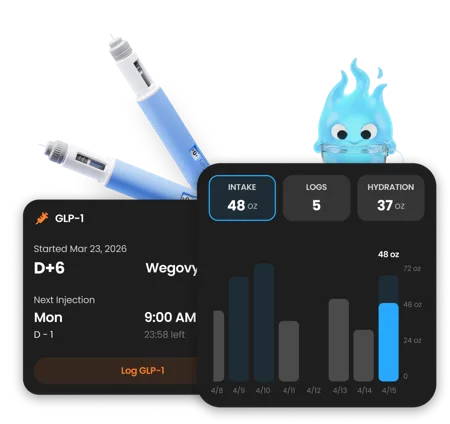
- Meals, water, workouts, and steps
- Sleep, weight, and body composition trends
- Menstrual cycle, mood, and daily check-ins
- GLP-1 medication logs and reminders
- Guided meditation, workout videos, and running coach
- Challenges and avatars that make it feel like a game


Analysis of 78 people (41 HAVIT, 37 control) with InBody results at week 1 and week 12, June–August 2026. Non-blinded study.
HAVIT is a wellness app, not a medical device. Body composition results are estimates.
A new quiz and health tip every day
Follow HAVIT on Instagram and Threads. @havit_app.en
References
- The CRH-Mast Cell Axis in Chronic Spontaneous Urticaria: Mechanisms and Therapeutic Implications — Journal of Allergy and Clinical Immunology, 2024
- Efficacy of Psychosomatic Interventions in Chronic Urticaria: A Systematic Review and Meta-Analysis — Allergy, 2025
- Stress-Induced Histamine Release and Skin Reactivity in Urticaria Patients — Psychoneuroendocrinology, 2024
- EAACI/GA²LEN/EuroGuiDerm/APAAACI Guideline for the Definition, Classification, Diagnosis, and Management of Urticaria — Allergy, 2024
- Gut Microbiome Alterations in Chronic Spontaneous Urticaria and Response to Probiotic Intervention — Journal of Investigative Dermatology, 2024