
Creatine Dosage: How Much Per Day and Is Loading Needed?
For most healthy adults the recommended creatine dosage is 3-5 g per day, or about 0.1 g per kilogram of body mass per day. A loading phase of 20 g/day or more for 5-7 days is one strategy, but in older adults creatine augmented lean mass and strength gains from resistance training regardless of dosing strategy. The clearest lean-mass results come when creatine is paired with resistance training.
This article is for general informational purposes only and is not a substitute for professional medical advice, diagnosis, or treatment. Always consult a qualified healthcare provider with questions about a medical condition.
How much creatine per day: the short answer
For most healthy adults, the evidence-backed creatine dosage is 3-5 g per day, or 0.1 g per kilogram of body mass per day. That is the recommended range described in an evidence review of common creatine questions and misconceptions, which also notes that creatine is relatively well tolerated at these amounts.
There are two common ways to start. One is to take a steady daily dose from the first day. The other is to begin with a short, higher-dose loading phase and then drop to a lower daily amount.
Either way, the aim is the same. The International Society of Sports Nutrition position stand on creatine notes that studies have consistently shown supplementation increases creatine concentrations inside muscle, which may help explain the improvements in high-intensity exercise performance.
The sections below cover how to work out a dose for your body weight, what loading involves, and what the research says you can realistically expect.
How to calculate your creatine dose by body weight
The weight-based rule is a single multiplication:
- Daily dose (g) = body mass (kg) × 0.1
As a worked example, a person weighing 76 kg would get 76 × 0.1 = 7.6 g per day, and a person weighing 87 kg would get 87 × 0.1 = 8.7 g per day.
Those results sit above the flat 3-5 g range, so the two ways of expressing the recommendation do not always produce the same number.
A 2024 meta-analysis of adults younger than 50 who combined creatine with resistance training used a higher figure still. Its authors concluded that 7 g or 0.3 g/kg of body mass of creatine per day is likely to increase lean body mass by 1 kg and reduce fat mass by 0.7 kg more than resistance training alone. That weight-based figure is three times the 0.1 g/kg rule (0.3 ÷ 0.1 = 3).
Food also contains creatine, mainly in meat and fish. If you want the full picture on dietary intake, see our guide to creatine food sources and whether you need a supplement.
The loading phase: what it does and whether you need it
A loading phase means taking a much larger daily amount for a few days before dropping to a lower dose. In a meta-analysis on older adults, a loading phase was defined as 20 g/day or more for 5-7 days.
In practice, that daily amount is usually split into several smaller servings across the day, for example 5 g taken four times a day (4 × 5 = 20 g).
A few general points are useful for anyone deciding whether to load:
- Loading raises muscle creatine stores faster than a low daily dose on its own.
- People who start with low muscle creatine, such as those who eat little meat or fish, tend to see the largest rises.
- Not all of a large dose is retained; part of it is excreted in urine.
In plain terms, a big daily dose speeds up the process, but it is not the only route to fuller muscle creatine stores.
Is loading required?
Whether a loading phase is required is one of the standard questions examined in the review of creatine misconceptions. The older-adult meta-analysis gives a more specific answer for that group. Overall, creatine augmented lean mass and strength gains from resistance training regardless of dosing strategy. Creatine loading followed by a lower dose of 5 g/day or less increased chest press strength compared with placebo.
The strength results are harder to summarise. When studies that used a loading phase were excluded, creatine had no greater effect on chest press or leg press strength than placebo in that analysis. Yet higher doses above 5 g/day, with and without a loading phase, did improve leg press strength.
Taken together, the overall finding in older adults was that creatine augmented lean mass and strength gains independent of dosing strategy, while the strength-specific results shifted depending on whether loading studies were included.
Maintenance dose: does more creatine work better?
The general recommended range in the misconceptions review is 3-5 g per day or 0.1 g/kg, and its abstract does not separate loading amounts from maintenance amounts. In the older-adult analysis, the lower dose that followed loading was 5 g/day or less. The evidence on going higher is mixed:
- In older adults, higher-dose creatine of more than 5 g/day, with and without a loading phase, produced significant gains in leg press strength compared with placebo.
- A meta-analysis on muscle strength across populations found that the low-to-moderate dose group showed better effects than the high-dose group.
What results to expect from a consistent dose
Creatine works best as a training partner. On its own, it does very little for lean mass.
A meta-analysis of 35 randomized trials with 1,192 participants found that creatine increased lean body mass by 0.68 kg overall. Combined with resistance training, the gain rose to 1.10 kg. Without exercise, the difference was 0.03 kg and not statistically significant.
The 2024 meta-analysis of 12 studies in adults under 50 reported similar numbers. Compared with resistance training alone, creatine increased lean body mass by 1.14 kg, reduced body fat percentage by 0.88 percentage points and reduced fat mass by 0.73 kg. Taking creatine with a carbohydrate drink did not enhance the hypertrophy benefit.
When researchers measured muscle size directly with MRI, CT or ultrasound, the effect they found was small. A meta-analysis of 10 studies found a small increase in muscle thickness of 0.10-0.16 cm in the upper and lower body.
Strength results depend on who is training and how. The strength meta-analysis found that untrained individuals improved more than trained ones, and that high-intensity training produced larger effects than low-intensity training.
Older adults, women and people managing their weight
Older adults
Creatine has been studied extensively alongside resistance training in later life. A meta-analysis of 22 studies with 721 participants, with mean ages of 57-70 years across studies, found that creatine produced a greater increase in lean tissue mass of 1.37 kg, along with better chest press and leg press strength.
Another meta-analysis of 357 older adults, with an average of 12.6 weeks of resistance training, found that creatine plus training increased fat-free mass and total body mass, with no effect on fat mass compared with training alone.
One practical finding for this group: in the older-adult dosing meta-analysis, taking creatine only on resistance training days still significantly increased lean tissue mass and strength compared with placebo.
Women
The meta-analysis of 35 trials found a sex difference in lean-mass response. Males on creatine increased lean body mass by 1.46 kg, compared with a non-significant increase of 0.29 kg for females. That does not settle whether creatine is useful for women, a question the misconceptions review also addresses, but it suggests lean-mass gains may be smaller.
People losing weight
Because creatine can raise total body mass while fat mass stays the same or falls, the scale is a poor guide to whether it is working. Body composition or strength measures tell you more. If you are using a GLP-1 medication and want to protect muscle, our article on creatine supplementation for muscle preservation on GLP-1 therapy covers that situation in detail.
Mixing, forms and a simple daily routine
The clearest lean-mass benefit in the trials appeared when creatine was combined with resistance training.
A routine that fits the evidence looks like this:
- Pick your dose: 3-5 g per day, or body mass × 0.1 if you prefer to scale by weight.
- Decide on loading: either skip it, or follow a loading phase of 20 g/day or more for 5-7 days, then drop to 5 g/day or less.
- Pair it with lifting: the lean-mass benefit appears mainly when creatine is combined with resistance training.
- Do not rely on sugar: adding a carbohydrate drink did not improve the hypertrophy benefit in the 2024 meta-analysis.
- Stay consistent: the recommended range is expressed as a daily amount, although in older adults training-day-only use also showed benefits.
On the form of creatine, most of the research has used creatine monohydrate. Whether other forms are similar or superior to monohydrate is another question taken up in the misconceptions review.
Safety at standard doses
The safety record at normal doses is reassuring. The International Society of Sports Nutrition position stand states that short- and long-term supplementation, up to 30 g/day for 5 years, is safe and well tolerated in healthy individuals and in a number of patient populations ranging from infants to the elderly.
That upper figure is far above the everyday 3-5 g dose, which gives a wide margin. The same position stand also suggests that ensuring a habitual low dietary creatine intake, such as 3 g/day, throughout the lifespan may provide significant health benefits.
The misconceptions review was written specifically to address recurring worries, including water retention, kidney function, hair loss, dehydration and cramping, and use in children and adolescents. Its overall conclusion is that creatine is relatively well tolerated, especially at recommended dosages.
📊 Key Stats
Creatine dosing strategies compared
| Strategy | Daily amount | Duration | What the evidence shows |
|---|---|---|---|
| Standard daily dose | 3-5 g/day | Ongoing | Recommended range; relatively well tolerated (misconceptions review) |
| Weight-based dose | Body mass (kg) × 0.1, e.g. 76 × 0.1 = 7.6 g | Ongoing | Alternative to the flat dose; scales with body size (misconceptions review) |
| Loading, then lower dose | ≥20 g/day, then ≤5 g/day | 5-7 days of loading | Increased chest press strength vs placebo in older adults (older-adult dosing meta-analysis) |
| Split loading doses | 5 g four times a day (4 × 5 = 20 g) | 5-7 days | A common way to reach the ≥20 g/day loading amount; raises muscle creatine faster than a low daily dose |
| Higher maintenance dose | >5 g/day | Ongoing | Leg press gains in older adults (older-adult dosing meta-analysis); low-to-moderate doses beat high doses for strength overall (strength meta-analysis) |
| Training days only | Dose taken on resistance training days | Length of training program | Increased lean tissue mass and strength vs placebo in older adults (older-adult dosing meta-analysis) |
❓ Frequently Asked Questions
How much creatine should I take per day?
Do I need a creatine loading phase?
How do I calculate my creatine dose by body weight?
Is taking more than 5 g of creatine a day better?
Should I take creatine on rest days?
Will creatine make me gain weight?
An AI weight-loss coach built by experts from Juvis Diet, one of Korea's leading weight-loss clinics
Analyze. Set targets in numbers. Coach every day.
Articles give everyone the same averages. HAVIT assesses your body first, uses the results to set daily targets in numbers, and works through them with you for 12 weeks.
- Step 1AI body composition check, no equipment needed
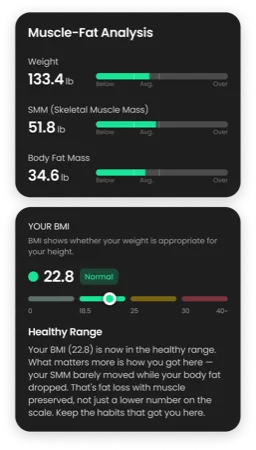
Just your height, weight, age, and a few lifestyle questions are enough to estimate your body composition. In our own study (70 people), estimates were 92.9% accurate compared with InBody measurements.
- HAVIT Score and basal metabolic rate
- Muscle-fat analysis and body composition type
- Obesity level, abdominal fat ratio, and visceral fat
- Body blueprint: healthy goal weight, waist-to-height ratio, and safe rate of weight loss
- 6-stage habit analysis
- Step 211 daily targets, set in numbers
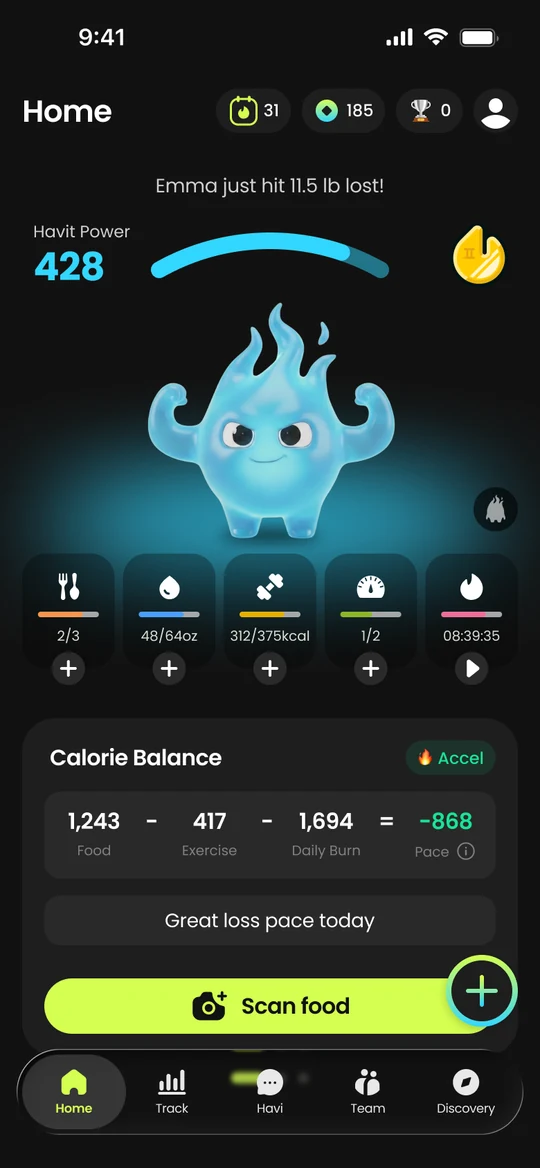
Your results set exact numbers for what to hit each day. Targets are readjusted every week based on how your weight changes.
- Calorie intake, protein, carbs, fat, and fiber
- Calories burned and steps
- Sleep and water
- Weigh-in frequency and target BMI
- Step 3Daily action and AI coaching
A plan only works if you follow it. We make logging easy and your next step clear.
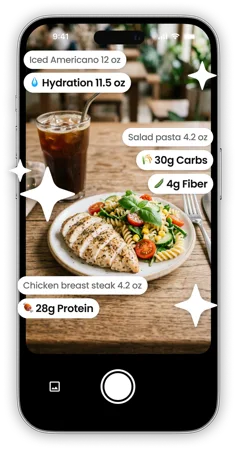
- Log meals with a single photo
- AI coach HAVI reads your logs and suggests one thing to do today
- Personalized plans across 126+ categories based on your results
- CBT-based coaching for your mindset, not just your diet

- All-in-oneEverything in one app
No more switching between apps. When everything about your body lives in one place, your AI coach can see the full picture.
- Meals, water, workouts, and steps
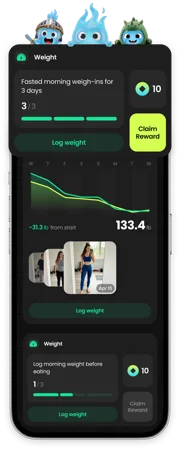
- Sleep, weight, and body composition trends
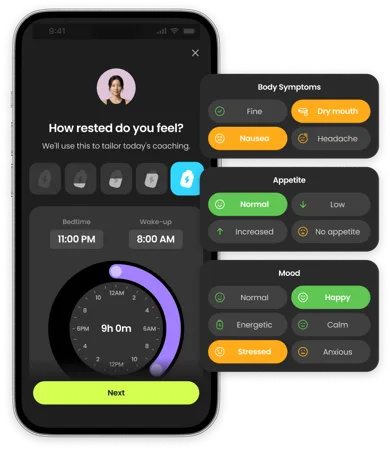
- Menstrual cycle, mood, and daily check-ins
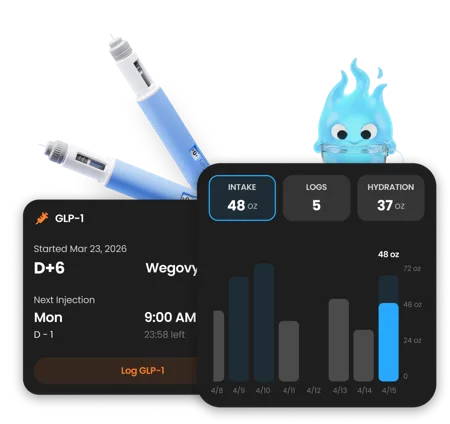
- GLP-1 medication logs and reminders
- Guided meditation, workout videos, and running coach
- Challenges and avatars that make it feel like a game

Analysis of 78 people (41 HAVIT, 37 control) with InBody results at week 1 and week 12, June–August 2026. Non-blinded study.
HAVIT is a wellness app, not a medical device. Body composition results are estimates.
A new quiz and health tip every day
Follow HAVIT on Instagram and Threads. @havit_app.en
References
- International Society of Sports Nutrition position stand: safety and efficacy of creatine supplementation in exercise, sport, and medicine. — Journal of the International Society of Sports Nutrition, 2017
- Common questions and misconceptions about creatine supplementation: what does the scientific evidence really show? — Journal of the International Society of Sports Nutrition, 2021
- The Effect of Creatine Supplementation on Resistance Training-Based Changes to Body Composition: A Systematic Review and Meta-analysis. — Journal of strength and conditioning research, 2024
- Effect of creatine supplementation during resistance training on lean tissue mass and muscular strength in older adults: a meta-analysis. — Open access journal of sports medicine, 2017
- Influence of age, sex, and type of exercise on the efficacy of creatine supplementation on lean body mass: A systematic review and meta-analysis of randomized clinical trials. — Nutrition (Burbank, Los Angeles County, Calif.), 2022
- Meta-Analysis Examining the Importance of Creatine Ingestion Strategies on Lean Tissue Mass and Strength in Older Adults. — Nutrients, 2021
- The Effects of Creatine Supplementation Combined with Resistance Training on Regional Measures of Muscle Hypertrophy: A Systematic Review with Meta-Analysis. — Nutrients, 2023
- Creatine supplementation during resistance training in older adults-a meta-analysis. — Medicine and science in sports and exercise, 2014
- Effects of creatine supplementation on muscle strength gains-a meta-analysis and systematic review. — PeerJ, 2025