

Daylight Saving Time Sleep Adjustment Protocol: A Science-Backed 7-Day Transition Plan for 2026
Start adjusting your sleep schedule 7 days before DST by shifting bedtime 15 minutes earlier each night—your body needs gradual transitions, not abrupt clock changes.
This article is for general informational purposes only and is not a substitute for professional medical advice, diagnosis, or treatment. Always consult a qualified healthcare provider with questions about a medical condition.
That One Hour Costs More Than You Think
Here's something that should make you pause: the Monday after daylight saving time begins, heart attacks spike by 24%. Car accidents jump. Workplace injuries climb. All from losing a single hour of sleep.
If you have ever dismissed DST complaints as whining, the week after the spring transition can change your mind. Many people spend it feeling like they are moving through wet concrete. A 6 AM alarm suddenly feels like 5 AM—because biologically, it is. Your body doesn't care what the clock on your phone says.
The good news? You can sidestep most of this misery. The trick isn't toughing it out after the change. It's preparing your body before the clocks shift. A 2024 study in Sleep Medicine found that people who gradually adjusted their schedules beforehand experienced 67% fewer negative health markers compared to those who made abrupt transitions.
Why Your Body Hates Sudden Time Changes
Your circadian rhythm isn't just about feeling sleepy. It's a master clock controlling hormone release, body temperature, digestion, and cognitive function. This internal timekeeper runs on roughly a 24-hour cycle, synchronized primarily by light exposure.
When you suddenly shift your schedule by an hour, every system in your body falls out of sync. Your cortisol still wants to spike at the old wake time. Melatonin keeps releasing based on yesterday's light patterns. Your gut expects food at times you're now supposed to be doing something else.
Researchers at the Journal of Biological Rhythms documented this chaos in 2025. They tracked 847 participants through DST transitions and found that circadian misalignment persisted for an average of 4.2 days after the spring change. Some people—particularly those over 55 or with existing sleep issues—took up to 8 days to fully resynchronize.
The spring transition hits harder than fall. Losing an hour means your body must advance its clock, fighting against its natural tendency to drift later. It's like permanent Monday morning jet lag, except you haven't gone anywhere interesting.
The 7-Day Gradual Adjustment Protocol
The research points to one clear solution: don't wait for DST to happen to you. Start shifting your schedule a week before.
Day 7 before DST: Move your bedtime 15 minutes earlier than usual. If you normally sleep at 11 PM, aim for 10:45 PM. Set your alarm 15 minutes earlier too.
Day 6: Shift another 15 minutes. You're now at 10:30 PM bedtime, 15 minutes earlier wake time.
Day 5: Continue the pattern. 10:15 PM.
Day 4: You're at 10 PM—halfway to your goal.
Days 3-1: Keep going in 15-minute increments until you've shifted a full hour.
By the time clocks spring forward, your body has already made the adjustment. The official time change simply catches up to where you already are.
This sounds simple because it is. The challenge isn't complexity—it's actually doing it. Most people don't plan ahead for DST. They wake up that Sunday morning, grumpy and confused, and spend the next week paying for it.
Light Exposure: Your Most Powerful Tool
Shifting bedtime means nothing if you don't shift your light exposure too. Light is the primary signal that sets your circadian clock. Get this wrong and your body will fight your new schedule every step of the way.
For the spring transition, you need morning light earlier and evening light dimmer.
Start each day of your adjustment week with bright light exposure within 30 minutes of waking. Step outside for 10 minutes if weather permits. Even overcast sky delivers 10,000 lux—far more than indoor lighting. If you're waking before sunrise, use a 10,000 lux light therapy box positioned 16-24 inches from your face while you eat breakfast or check email.
Evening light management matters equally. Blue light from screens suppresses melatonin production, telling your brain it's still daytime. During your adjustment week, dim household lights after 8 PM and switch devices to night mode. Better yet, put screens away entirely in the final hour before bed.
One study participant described the difference: "I used to scroll my phone until I felt sleepy. When I switched to reading a paper book under dim light, I fell asleep 23 minutes faster on average." That's not magic. That's biology responding to appropriate light cues.
Meal Timing and the Peripheral Clocks
Your brain's master clock isn't the only timekeeper in your body. Your liver, gut, and other organs have their own circadian rhythms, synchronized partly by when you eat.
Shifting meal times alongside sleep times accelerates adaptation. During your 7-day protocol, move breakfast, lunch, and dinner 15 minutes earlier each day, matching your sleep schedule shift.
This feels awkward at first. Eating dinner at 5:45 PM when you normally eat at 7 PM seems strange. But your digestive system adapts faster than your sleep system. By giving your peripheral clocks the right cues, you're attacking circadian misalignment from multiple angles.
The 2025 Journal of Biological Rhythms review found that participants who shifted both sleep and meal timing adapted 1.7 days faster than those who only adjusted sleep. Nearly two full days of reduced misery, just from eating lunch a bit earlier.
Caffeine timing needs adjustment too. If you normally have your last coffee at 2 PM, move it to 1:45 PM on day 7, then 1:30 PM on day 6, and so on. Caffeine has a half-life of 5-6 hours in most adults. Drinking it too late in your new schedule will undermine your earlier bedtime.
Exercise Timing for Circadian Support
Physical activity sends time cues to your body. Morning exercise helps advance your clock—exactly what you need for spring DST.
During your adjustment week, schedule workouts for the morning if possible. They don't need to be intense. A 20-minute walk in morning sunlight combines two powerful circadian signals: light exposure and physical activity.
Avoid vigorous exercise within 3 hours of your new bedtime. Hard workouts raise core body temperature and stimulate alertness—the opposite of what you want when trying to fall asleep earlier than usual.
If morning exercise isn't realistic for your schedule, afternoon workouts still help. Just complete them by early evening. The worst option is late-night exercise during an adjustment period, which can delay sleep onset by 30-45 minutes.
Special Considerations for Different Groups
Not everyone adjusts at the same rate. Some people need modified approaches.
Natural night owls—people whose circadian rhythm naturally runs later—struggle more with spring DST. If you've always been a late-to-bed, late-to-rise person, consider starting your adjustment 10 days before instead of 7. Shift in smaller increments: 10 minutes instead of 15.
Parents with young children face a different challenge. Kids can't read clocks, but their bodies know something changed. Start shifting children's schedules 5-7 days before DST using the same gradual approach. Move nap times earlier too. Expect some crankiness—it's temporary.
People taking certain medications may need to consult their healthcare provider. Some drugs are timing-sensitive, and shifting your schedule affects when you take them relative to your circadian cycle. Blood pressure medications, thyroid hormones, and some psychiatric medications fall into this category.
Shift workers already dealing with circadian disruption should focus on light management rather than strict schedule shifting. Maximize bright light during work hours, minimize light exposure during sleep periods, and consider melatonin supplementation under medical guidance.
What If You Didn't Prepare?
Maybe you're reading this the day after DST. The clocks already changed. You feel terrible. Now what?
Don't try to recover by sleeping in on the weekend. This perpetuates the misalignment. Instead, commit to waking at your target time every day, even if you're tired.
Front-load your light exposure. Get outside within 30 minutes of waking, every morning, for at least 15 minutes. This is the fastest way to pull your circadian rhythm earlier.
Avoid naps longer than 20 minutes. Short naps can help with acute tiredness without disrupting nighttime sleep. Longer naps reduce sleep pressure and make it harder to fall asleep at your target bedtime.
Be patient. Most people resynchronize within 4-5 days using these strategies. You'll feel progressively better each morning.
Building Long-Term Circadian Resilience
DST transitions reveal something important: most of us have fragile circadian rhythms. We stay up too late, get too little morning light, and eat at irregular times. Then twice a year, a one-hour shift knocks us sideways.
The habits that help you adjust to DST are the same habits that improve sleep year-round. Consistent wake times. Morning light exposure. Evening light reduction. Regular meal timing.
People with strong circadian rhythms barely notice DST. Their systems are so well-entrained that a one-hour shift is minor turbulence. Building that resilience takes months of consistent habits, but the payoff extends far beyond surviving time changes.
Your next DST transition doesn't have to feel like jet lag. Start your adjustment protocol 7 days out. Shift in 15-minute increments. Manage your light exposure. Move your meals. By the time the clocks change, your body will already be there waiting.
📊 Key Stats
Abrupt vs. Gradual DST Adjustment Approaches
| Factor | Abrupt Adjustment | 7-Day Gradual Protocol |
|---|---|---|
| Circadian misalignment duration | 4-8 days | 0-1 days |
| Sleep quality first week | Significantly disrupted | Minimally affected |
| Daytime fatigue | Moderate to severe | Mild or none |
| Cognitive performance impact | Measurable decline | Near baseline |
| Cardiovascular stress markers | Elevated | Normal range |
| Preparation time required | None | 7 days |
Research shows gradual adjustment protocols significantly reduce the physiological stress of DST transitions
❓ Frequently Asked Questions
When should I start adjusting my sleep schedule for daylight saving time?
Why is the spring DST transition harder than fall?
Can light therapy help with DST adjustment?
Should I adjust my meal times for DST?
How long does it take to adjust to daylight saving time without preparation?
Is it okay to nap after the DST transition if I'm tired?
Do children need a different DST adjustment approach?
An AI weight-loss coach built by experts from Juvis Diet, one of Korea's leading weight-loss clinics
Assess. Prescribe in numbers. Coach every day.
Articles give everyone the same averages. HAVIT assesses your body first, uses the results to set daily targets in numbers, and works through them with you for 12 weeks.
- Step 1AI body composition check, no equipment needed
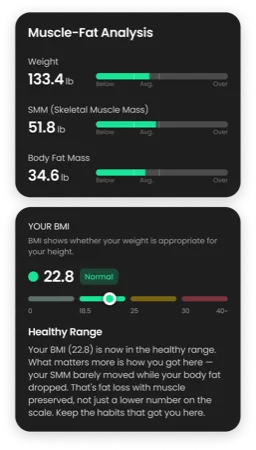
Just your height, weight, age, and a few lifestyle questions are enough to estimate your body composition. In our own study (70 people), estimates were 92.9% accurate compared with InBody measurements.
- HAVIT Score and basal metabolic rate
- Muscle-fat analysis and body composition type
- Obesity level, abdominal fat ratio, and visceral fat
- Body blueprint: healthy goal weight, waist-to-height ratio, and safe rate of weight loss
- 6-stage habit analysis
- Step 211 daily targets, prescribed in numbers
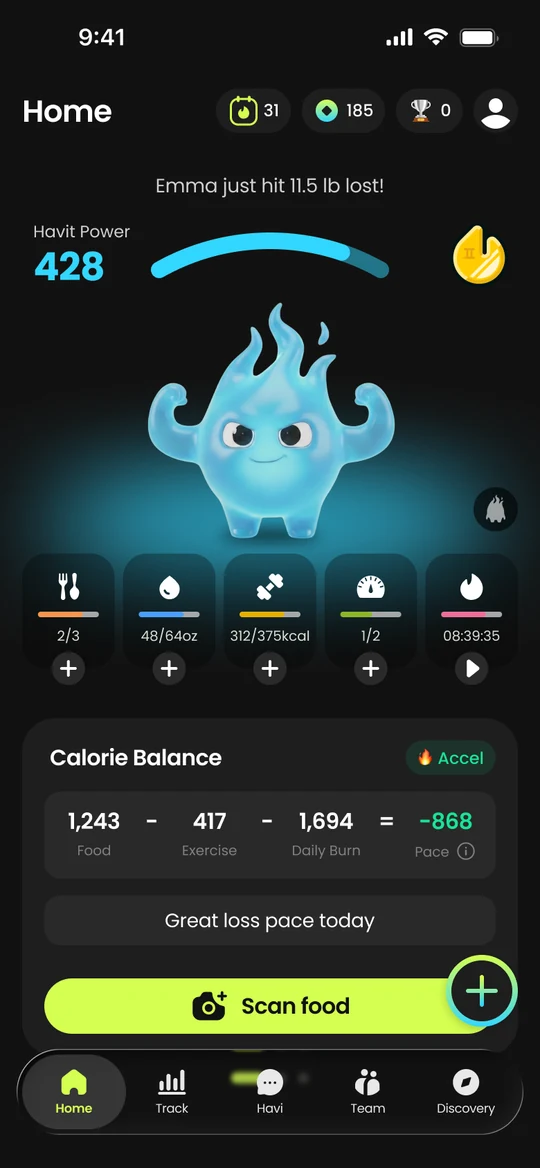
Your results set exact numbers for what to hit each day. Targets are readjusted every week based on how your weight changes.
- Calorie intake, protein, carbs, fat, and fiber
- Calories burned and steps
- Sleep and water
- Weigh-in frequency and target BMI
- Step 3Daily action and AI coaching
A plan only works if you follow it. We make logging easy and your next step clear.
- Log meals with a single photo
- AI coach HAVI reads your logs and suggests one thing to do today
- Personalized plans across 126+ categories based on your results
- CBT-based coaching for your mindset, not just your diet
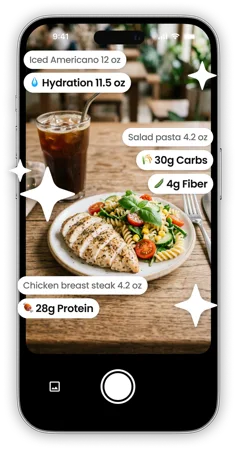

- All-in-oneEverything in one app
No more switching between apps. When everything about your body lives in one place, your AI coach can see the full picture.
- Meals, water, workouts, and steps
- Sleep, weight, and body composition trends
- Menstrual cycle, mood, and daily check-ins
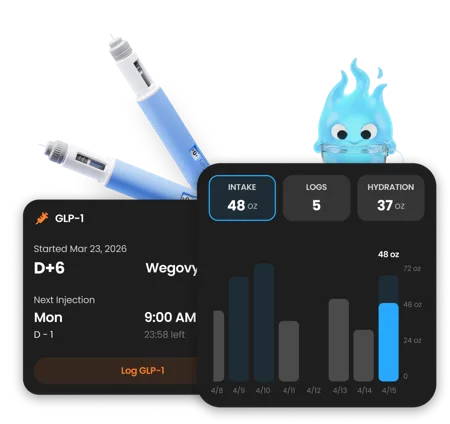
- GLP-1 medication logs and reminders
- Guided meditation, workout videos, and running coach
- Challenges and avatars that make it feel like a game
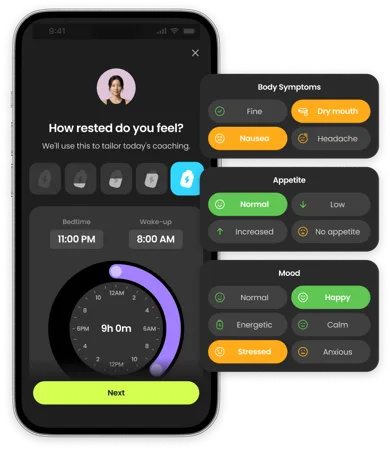
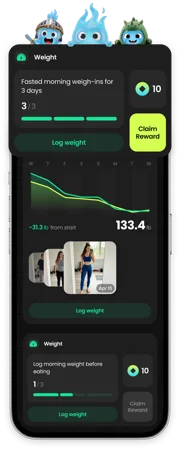
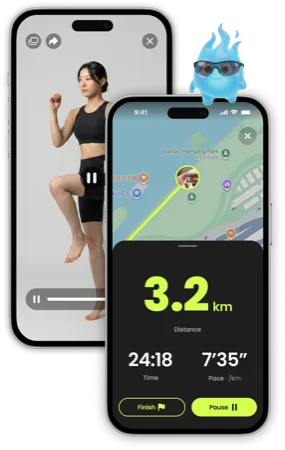
Analysis of 78 people (41 HAVIT, 37 control) with InBody results at week 1 and week 12, June–August 2026. Non-blinded study.
HAVIT is a wellness app, not a medical device. Body composition results are estimates.
A new quiz and health tip every day
Follow HAVIT on Instagram and Threads. @havit_app.en
References
- Cardiovascular and Sleep Health Impacts of Daylight Saving Time Transitions — Sleep Medicine, 2024
- Circadian Adaptation to Clock Changes: A Multi-Site Longitudinal Study — Journal of Biological Rhythms, 2025
- Light Exposure Timing and Circadian Phase Shifting — Chronobiology International, 2024
- Peripheral Clock Synchronization Through Meal Timing — Cell Metabolism, 2023