

Flow State: What It Is and How to Get Into Flow
Flow state is deep, absorbed focus in which a task's challenge closely matches your skill, so concentration feels intense yet effortless and rewarding. Researchers describe it through nine dimensions, including clear goals, immediate feedback, loss of self-consciousness and an altered sense of time. You can't force flow, but you can make it more likely. Tune the difficulty, set a clear next goal, get fast feedback, protect your attention and practise skills you care about.
This article is for general informational purposes only and is not a substitute for professional medical advice, diagnosis, or treatment. Always consult a qualified healthcare provider with questions about a medical condition.
What is flow state?
Flow state is a mental state of deep, absorbed focus. The challenge of a task matches your skill closely enough that concentration feels intense but effortless. A large twin study defines flow as a phenomenon "where one experiences optimal challenge, marked by an intense, effortless, and rewarding concentration on a task." A neuroscience review describes it in similar terms, as complete immersion and optimal engagement in a task that strikes a balance between challenge and skill.
In everyday language, flow is the feeling of being "in the zone." The task asks for all of your attention, but you are not straining to give it. Self-consciousness fades, time seems to bend, and the activity feels worth doing for its own sake.
Flow is not reserved for elite athletes or artists. Researchers have measured it in many settings:
- basketball and netball shooting
- video games
- jazz improvisation
- classroom learning
- occupational therapy with older adults
- physiological childbirth
These settings do not share an activity. They share a particular fit between the person, the task and the conditions around it.
The nine dimensions of flow
Flow is usually described through nine dimensions. An online survey of 766 Israeli women with childbirth experience used the Flow State Scale. That study lists the dimensions as:
- Challenge-skill balance: the task is demanding but within reach.
- Action-awareness merging: doing and noticing blur together, and actions feel automatic.
- Clear goals: you know what you are trying to do next.
- Unambiguous feedback: you can tell, moment to moment, how it is going.
- Concentration on the task: attention stays put without forcing it.
- Sense of control: you feel able to handle what comes.
- Loss of self-consciousness: the inner commentary about how you look or come across goes quiet.
- Transformation of time: hours can feel like minutes, or a moment can feel stretched.
- Autotelic experience: the activity is rewarding in itself.
In that study, some women gave birth physiologically, meaning without epidural anaesthesia or instrumental interventions. Those women reported a higher flow state during birth. The authors concluded that all nine dimensions applied to childbirth.
The nine items fall into two rough groups. Challenge-skill balance, clear goals and feedback are conditions you can partly set up in advance. The others describe how flow feels once it arrives.
The time dimension has its own meta-analysis. It pooled 63 articles that yielded 1,094 effect sizes. It found moderately positive correlations between the affective, consciousness and performance aspects of flow (r = 0.4, 0.21 and 0.17 respectively). It also found that physical and social environmental conditions affected how much flow people experienced. Your surroundings matter, not just your mindset.
What happens in the brain during flow
Two ideas dominate the neuroscience of flow.
Transient hypofrontality
A theoretical paper on the neurocognitive mechanisms of flow describes two systems in the brain:
- an implicit system, which holds well-practised skills and is supported mainly by the basal ganglia
- an explicit system, which handles analysis and self-monitoring and is linked to the frontal lobe and medial temporal lobe
The paper proposes that flow happens when a highly practised skill runs from the implicit system without interference from the explicit system. The author called the required state "transient hypofrontality." It means a temporary quieting of the analytical, self-monitoring capacities that normally second-guess what you are doing.
This helps explain why flow tends to show up in skills you have already rehearsed. If every move still needs conscious checking, the explicit system cannot step back.
Network reconfiguration
A systematic review of neuroimaging research included nine studies. The tasks ranged from video games to jazz improvisation. Across them, flow was consistently linked to three changes:
- Down-regulation of core default mode network regions, such as the medial prefrontal cortex and posterior cingulate cortex. These regions are tied to self-referential thought.
- Increased activity in lateral prefrontal and parietal areas involved in attentional control.
- Functional connectivity between the default mode network and the executive control network, two networks often considered anti-correlated.
The review also noted reduced amygdala activity during flow. The authors interpret this as a possible basis for a state of high focus and low anxiety. They add that larger, more diverse samples and causal, longitudinal designs are still needed.
Taken together, the findings suggest that self-focused chatter drops while task-focused control stays engaged. That is different from the front of the brain simply switching off.
Attention appears to be central. An eye-tracking study looked at "quiet eye", a marker of well-controlled visual attention. During netball and basketball shooting, quiet eye was associated with flow. The analysis also showed an indirect effect of quiet eye on performance through flow experience.
How to get into flow: evidence-based steps
There is no switch for flow, but research points to conditions that make it more likely.
1. Tune the challenge to your skill
The most-tested lever is challenge-skill balance. A single-blind randomised controlled trial enrolled 56 older adults. They received 10 sessions of occupational therapy, either with or without deliberate adjustment of challenge-skill balance. The adjusted approach produced significant differences in two areas:
- flow experience (d = 0.82)
- health-related quality of life on the EuroQol-5 Dimension score (d = 0.76)
In practice:
- If a task feels dull, add a constraint, such as a time limit, a harder variation or a higher standard.
- If it feels overwhelming, shrink it to one section, one movement or one paragraph.
This is not a guaranteed formula. In the eye-tracking shooting study, the challenge-skill manipulation itself had no measurable effect, even though attention quality was associated with flow. Balance seems to help. It may need to be felt by the person rather than simply set by someone else.
2. Define the next small goal
Clear goals are one of the nine dimensions. Before you start, decide what "done" looks like for this session. That might be finishing the chorus, drafting the opening section, or holding a steady pace on your usual route. Vague goals like "work on the project" leave your attention without a target.
3. Build in fast feedback
Flow needs unambiguous feedback. Some activities supply it naturally: a ball goes in or it doesn't, a note sounds right or wrong. For others, you can create feedback. Use a visible checklist, a word count, a timer or a quick self-check after each block.
4. Protect your attention
Since attentional control is closely tied to flow, interruptions are costly. Put the phone out of reach, close unrelated tabs and give the task a defined block of time. Being still can be part of it. One wearable study found people were least physically active in flow and most active in boredom.
5. Practise the underlying skill
The transient hypofrontality model implies that flow depends on skills that are well practised. Deliberate practice is not the opposite of flow. It is often what makes later flow possible. Expect flow to come more often as a skill becomes familiar.
6. Choose activities you care about, and stay with them
Flow feels autotelic, so activities you value are a good starting point. Persistence matters too. A study of 529 adults in Norway found that passion and grit together explained 33% of the variation in flow. Grit had the strongest relationship with flow (β = 0.44) and was approximately twice as important as passion in predicting it. This was a correlational study, so it shows association rather than cause.
Hobbies are a natural place to build this habit. See how hobby engagement and flow may buffer stress. You can also read about how many weekly hours of hobby flow relate to mental health.
Flow versus boredom and strain
It helps to recognise when you are outside flow. When a task is too easy for your skill, attention drifts and you start looking for something else to do. When it is far beyond your skill, you feel tense and self-conscious, and the sense of control disappears.
Researchers use this contrast in experiments. In the wearable study, participants played a game at different difficulty levels to induce flow and "anti-flow" states, confirmed by questionnaires. Their bodies behaved differently across the states. That suggests flow is a distinct state rather than simply "trying harder."
If you notice boredom, raise the challenge. If you notice strain, lower it or get clearer on the next step. Small adjustments, made often, are usually more practical than waiting for the perfect conditions.
Why flow matters for wellbeing
The strongest health data come from the large twin study mentioned above. It followed 9,361 twins using nationwide patient registry data. People with higher flow proneness had a lower risk of later diagnoses, including:
- depression (16%)
- anxiety (16%)
- stress-related disorders (9%)
- cardiovascular disorders (4%)
The associations shrank after the researchers accounted for neuroticism. Higher flow proneness still predicted a 6% lower risk of depression and a 5% lower risk of anxiety diagnoses. The study also compared 952 identical twin pairs. Twins who experienced more flow than their co-twin had a lower risk of depression (16%).
The authors say their findings are in line with a causal protective role of flow on depression, and potentially anxiety. They also stress that neuroticism and family factors are notable confounders.
Flow also matters in learning. A meta-analysis of learning flow pooled 108 studies with 42,952 participants. Learning flow was positively associated with academic performance, learning attitudes and psychological wellbeing. It was also more common with well-designed tasks, supportive environments and good interpersonal interactions. Most of the underlying studies were correlational, so the authors describe a network of associations rather than proven causes.
The occupational therapy trial adds experimental support. Adjusting challenge-skill balance improved both flow and quality of life in older adults.
Can you measure flow?
Most research relies on questionnaires, which ask people to rate each dimension after an activity. Examples include:
- the Flow State Scale, used in the childbirth study
- the Flow State Scale for Occupational Tasks, used in the therapy trial
- the General Flow Proneness scale, used in the Norwegian study
You can borrow the idea informally. After a work or hobby session, ask yourself a few questions:
- Were my goals clear?
- Did I get feedback?
- Did time feel different?
- Did I forget about myself for a while?
Physiological tracking is an emerging option. A wearable-device study tested the approach on 28 Hungarian adults. The devices recorded EEG, heart rate, blood oxygen saturation, skin response and motion. In the flow condition, alpha and theta brainwave power were dominant, in line with the transient hypofrontality hypothesis. The study also replicated a U-shaped pattern in heart rate variability across conditions. Participants moved least when in flow.
The authors see this as support for using lightweight wearables to monitor mental state at work or in everyday life. For now, a phone or wearable can track related signals such as heart rate or movement. Your own rating of the nine dimensions remains the most direct way to know whether you were in flow.
📊 Key Stats
The nine dimensions of flow and how to encourage each one
| Dimension | What it feels like | Practical lever |
|---|---|---|
| Challenge-skill balance | Demanding but within reach | Raise difficulty when bored, break the task down when overwhelmed |
| Action-awareness merging | Actions feel automatic | Practise core skills until they need less conscious checking |
| Clear goals | You know the next step | Define what "done" means for this session |
| Unambiguous feedback | You can tell how it is going | Use checklists, counters, timers or natural results |
| Concentration on the task | Attention stays put without effort | Remove notifications and set a defined time block |
| Sense of control | You feel able to handle what comes | Start at a level you can manage, then increase it |
| Loss of self-consciousness | Inner commentary goes quiet | Work where you do not feel watched or judged |
| Transformation of time | Time speeds up or stretches | Avoid checking the clock and let a timer track it |
| Autotelic experience | The activity is rewarding in itself | Choose tasks you value and return to them regularly |
❓ Frequently Asked Questions
What is flow state?
What are the 9 characteristics of flow?
How do I get into a flow state?
Is flow state good for mental health?
What happens in the brain during flow?
Can a smartwatch or wearable detect flow?
An AI weight-loss coach built by experts from Juvis Diet, one of Korea's leading weight-loss clinics
Analyze. Set targets in numbers. Coach every day.
Articles give everyone the same averages. HAVIT assesses your body first, uses the results to set daily targets in numbers, and works through them with you for 12 weeks.
- Step 1AI body composition check, no equipment needed
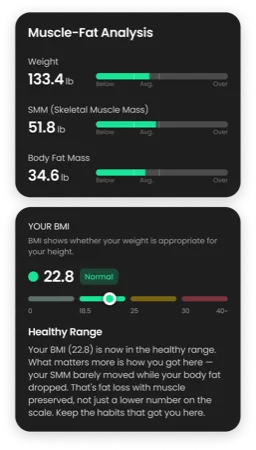
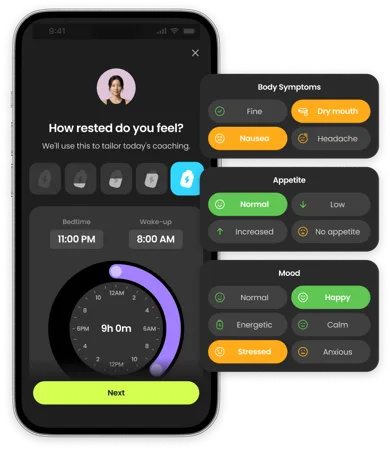
Just your height, weight, age, and a few lifestyle questions are enough to estimate your body composition. In our own study (70 people), estimates were 92.9% accurate compared with InBody measurements.
- HAVIT Score and basal metabolic rate
- Muscle-fat analysis and body composition type
- Obesity level, abdominal fat ratio, and visceral fat
- Body blueprint: healthy goal weight, waist-to-height ratio, and safe rate of weight loss
- 6-stage habit analysis
- Step 211 daily targets, set in numbers
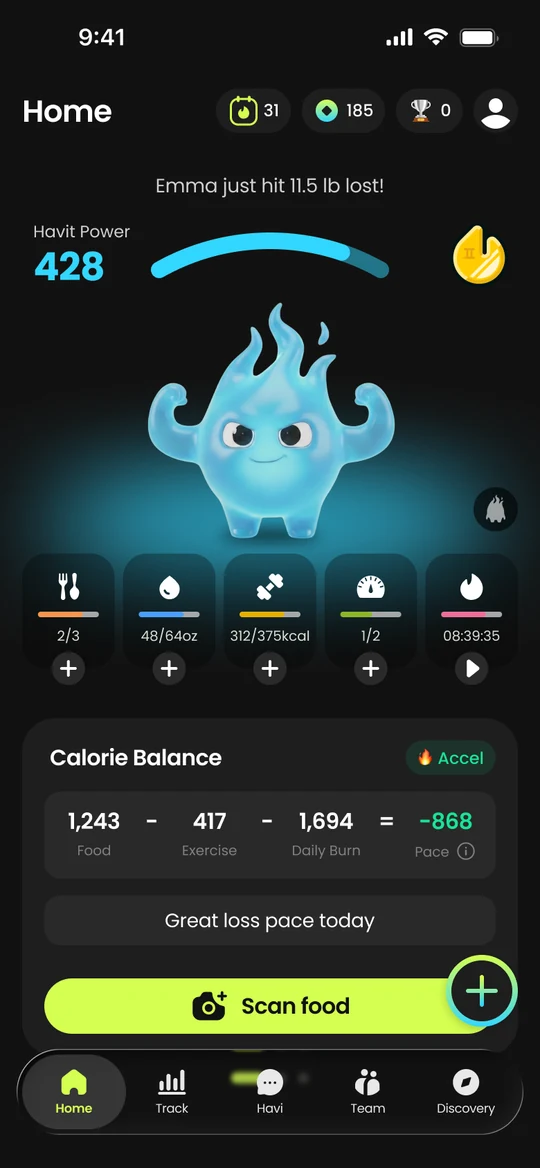
Your results set exact numbers for what to hit each day. Targets are readjusted every week based on how your weight changes.
- Calorie intake, protein, carbs, fat, and fiber
- Calories burned and steps
- Sleep and water
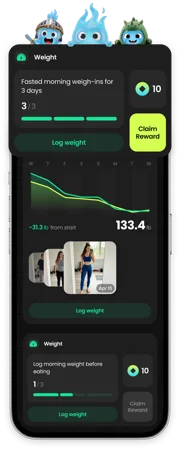
- Weigh-in frequency and target BMI
- Step 3Daily action and AI coaching
A plan only works if you follow it. We make logging easy and your next step clear.
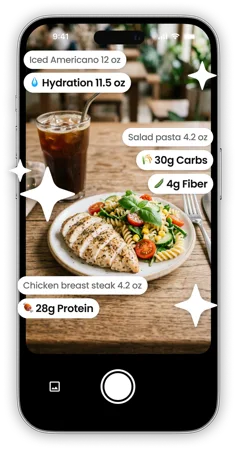
- Log meals with a single photo
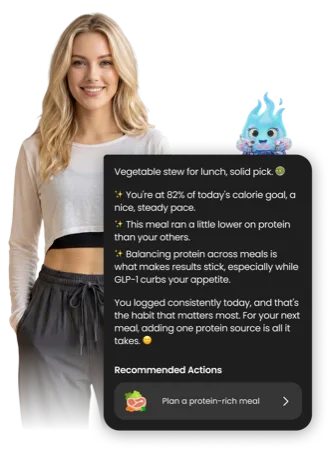
- AI coach HAVI reads your logs and suggests one thing to do today
- Personalized plans across 126+ categories based on your results
- CBT-based coaching for your mindset, not just your diet
- All-in-oneEverything in one app
No more switching between apps. When everything about your body lives in one place, your AI coach can see the full picture.
- Meals, water, workouts, and steps
- Sleep, weight, and body composition trends
- Menstrual cycle, mood, and daily check-ins
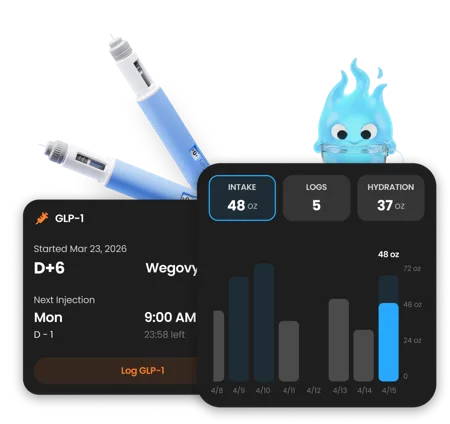
- GLP-1 medication logs and reminders
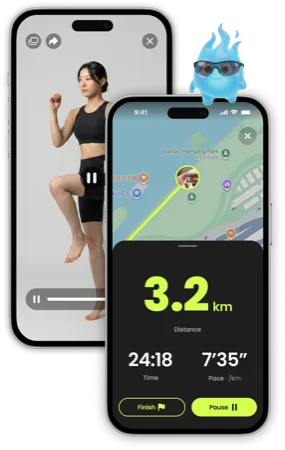
- Guided meditation, workout videos, and running coach
- Challenges and avatars that make it feel like a game
Analysis of 78 people (41 HAVIT, 37 control) with InBody results at week 1 and week 12, June–August 2026. Non-blinded study.
HAVIT is a wellness app, not a medical device. Body composition results are estimates.
A new quiz and health tip every day
Follow HAVIT on Instagram and Threads. @havit_app.en
References
- Birthing consciousness and the flow experience during physiological childbirth. — Midwifery, 2024
- Adjusting Challenge-Skill Balance to Improve Quality of Life in Older Adults: A Randomized Controlled Trial. — The American journal of occupational therapy : official publication of the American Occupational Therapy Association, 2018
- Flow and quiet eye: the role of attentional control in flow experience. — Cognitive processing, 2017
- Can flow proneness be protective against mental and cardiovascular health problems? A genetically informed prospective cohort study. — Translational psychiatry, 2024
- Exploring gender differences in the relations between passion, grit and flow. — Acta psychologica, 2024
- Enhanced functional connectivity between the default mode network and executive control network during flow states may facilitate creativity and emotional regulation, and may improve health outcomes. — Frontiers in behavioral neuroscience, 2025
- A meta-analysis of flow effects and the perception of time. — Acta psychologica, 2019
- Learning flow in educational contexts: A meta-analysis of its antecedents and outcomes. — The British journal of educational psychology, 2026
- Neurocognitive mechanisms underlying the experience of flow. — Consciousness and cognition, 2004
- Physiological assessment of the psychological flow state using wearable devices. — Scientific reports, 2025