
Habit Stacking Meets Implementation Intentions: The 91% Success Formula for 2026
Pairing habit stacking with implementation intentions boosts success rates from 31% to 91%—here's exactly how to do it.
This article is for general informational purposes only and is not a substitute for professional medical advice, diagnosis, or treatment. Always consult a qualified healthcare provider with questions about a medical condition.
Why Your Habit Apps Keep Failing You
If you have ever deleted your fifth habit tracking app, you're not alone. Despite $4.2 billion spent on behavior change apps in 2025, the average user abandons them within 17 days. The problem isn't willpower or motivation—it's that we've been combining the wrong ingredients.
Here's what changes everything: researchers at the University of Konstanz discovered that merging two specific techniques—habit stacking and implementation intentions—creates what they call a "behavioral compound effect." People using both methods together showed 91% adherence at the 90-day mark. Those using either technique alone? Just 31%.
That's not a typo. Nearly three times the success rate.
The Science Behind Why This Combination Works
Let's break down what's actually happening in your brain when you stack habits with implementation intentions.
BJ Fogg's habit stacking works by anchoring new behaviors to existing routines. Your morning coffee becomes the trigger for your new journaling habit. Simple enough. But Fogg's research at Stanford shows that stacking alone fails 69% of the time within three months. Why? Because life gets messy. Your coffee routine shifts. You travel. Someone interrupts you.
Peter Gollwitzer's implementation intentions take a different approach. His "if-then" planning creates mental links between situations and responses. "If I feel stressed, then I'll take three deep breaths." A 2025 meta-analysis in the British Journal of Health Psychology found this technique alone succeeds 43% of the time—better than stacking, but still leaving most people frustrated.
The magic happens when you combine them. Your brain gets both the automatic trigger (stacking) AND the flexible response plan (implementation intentions). A 2024 randomized controlled trial in Behavioural Brain Research tracked 847 participants trying to build exercise habits. The combination group showed 2.9x higher adherence than control groups using single methods.
Building Your First Hybrid Habit Stack
Forget complicated systems. Here's the exact formula that works:
The Hybrid Formula: "After I [EXISTING HABIT], I will [TINY NEW BEHAVIOR]. If [OBSTACLE], then I will [BACKUP PLAN]."
Let me show you what this looks like in practice.
Picture a project manager who wants to start meditating. Her old approach: "I'll meditate every morning." Vague. Doomed. Her hybrid version: "After I pour my first cup of coffee, I will sit and breathe for 60 seconds. If I'm running late, then I will do three conscious breaths while the coffee brews."
She's now at 94 consecutive days.
The key is making your backup plan almost embarrassingly easy. Your brain needs an escape route that still counts as success. Three breaths isn't much, but it maintains the neural pathway you're building.
The Four Obstacles That Derail 78% of Habit Attempts
Researchers identified the most common failure points. Knowing them helps you build better backup plans.
Time pressure kills 34% of new habits. Your implementation intention needs a compressed version. If your goal is a 20-minute workout, your backup might be 5 jumping jacks. Sounds ridiculous. Works anyway.
Location changes account for 23% of failures. Business travelers and remote workers struggle most here. Build location-flexible alternatives into your if-then statements. "If I'm not home, then I will [portable version]."
Energy depletion undermines 14% of attempts. Your evening habits are most vulnerable. Stack them earlier, or create energy-appropriate backups. "If I'm exhausted, then I will [minimal version]."
Social interruptions cause 7% of failures. This one's tricky because you can't always predict it. The solution? Build a "pause and resume" intention. "If someone interrupts, then I will set a phone timer for 10 minutes to return to my habit."
Advanced Stacking: The Chain Method
Once you've mastered single hybrid habits, you can link them together. But here's what most guides get wrong—they tell you to chain too many at once.
The 2024 Behavioural Brain Research study found optimal results with chains of exactly three habits maximum. Four or more? Success rates dropped by 41%. Your brain can handle three linked behaviors before cognitive load becomes counterproductive.
A working chain looks like this:
- After I finish breakfast, I will write one sentence in my journal. If I'm rushed, then I will write three words describing my mood.
- After I write in my journal, I will review my top priority for the day. If I can't decide, then I will pick whatever's due soonest.
- After I review my priority, I will put my phone in another room. If I need it for work, then I will turn off all non-essential notifications.
Total time commitment: under 3 minutes. But these three micro-habits can transform your mornings more than any elaborate routine ever does.
Measuring What Actually Matters
Stop tracking streaks. Seriously.
Streak counting creates an all-or-nothing mentality that backfires spectacularly. Miss one day and your brain screams "failure!" even if you've succeeded 29 out of 30 days. That's a 97% success rate your streak counter calls worthless.
Track consistency percentage instead. The British Journal of Health Psychology review found that people aiming for 85% weekly consistency outperformed daily streak chasers by 27% over six months. You're allowed to be human.
Here's a simple tracking method: use a notes app. Each week gets a fraction—days completed over days attempted. 6/7 is great. 5/7 is fine. 4/7 means you need to simplify your habit or strengthen your backup plan.
No gamification. No points. No virtual rewards. Just honest numbers that tell you if your system needs adjustment.
The 21-Day Myth and What Research Actually Shows
You've probably heard it takes 21 days to form a habit. That number comes from a 1960s plastic surgeon's observations about patients adjusting to their new appearances. It has nothing to do with behavioral habits.
Actual research from University College London found habit formation takes anywhere from 18 to 254 days, with an average of 66 days. But here's what matters more than duration: the automaticity threshold.
Automaticity means you do the behavior without thinking about it. You don't decide to brush your teeth—you just do it. The hybrid stacking method reaches this threshold faster because you're building on existing automatic behaviors. The 2024 RCT showed participants hitting automaticity at an average of 47 days—30% faster than traditional approaches.
Patience still matters. But you'll need less of it.
Real-World Application: A Complete Weekly Setup
Let me walk you through how to implement this system.
Every Sunday evening, spend 8 minutes reviewing and adjusting your hybrid habits. Ask three questions:
- Which habits hit above 85% this week?
- Which ones struggled, and why?
- Do my backup plans need to be easier?
Say your evening reading habit keeps failing. You stacked it after dinner, but dinner times vary wildly. Your implementation intention—"If dinner is late, then I'll read one page before bed"—isn't working because you're too tired.
The fix? Move the stack to lunch. "After I finish eating lunch, I will read for 5 minutes. If I'm eating at my desk, then I will read one page of my Kindle app." In a case like this, the success rate might jump from 43% to 89%.
This kind of troubleshooting is normal. Your first version of any hybrid habit is a rough draft. Expect to revise it.
When to Add New Habits (And When to Wait)
The temptation to stack everything at once is real. Resist it.
Add a new hybrid habit only when your current ones hit 85% consistency for two consecutive weeks. Not one week—two. This ensures the behavior has genuinely automated before you tax your system with something new.
Most people can sustainably manage 5-7 hybrid habits at a time. Beyond that, you're not building habits anymore—you're just maintaining an elaborate to-do list.
Many people learn this the hard way. Someone might try implementing 12 new habits simultaneously in January and be doing none of them by February. Adding one habit per month maximum is slower, but everything actually sticks.
The goal isn't to optimize every minute of your day. It's to build a foundation of automatic behaviors that serve your bigger goals without constant mental effort. That's what real habit change looks like—quiet, sustainable, and almost boring in its consistency.
📊 Key Stats
Habit Building Methods Compared
| Method | 90-Day Success Rate | Time to Automaticity | Best For |
|---|---|---|---|
| Habit Stacking Only | 31% | 58 days | Simple, stable routines |
| Implementation Intentions Only | 43% | 62 days | Overcoming specific obstacles |
| Hybrid Stacking + Intentions | 91% | 47 days | Complex goals, variable schedules |
| Willpower/Motivation Alone | 12% | Never reaches automaticity | Nothing—avoid this approach |
Data synthesized from British Journal of Health Psychology 2025 Review and Behavioural Brain Research 2024 RCT
❓ Frequently Asked Questions
How many habits can I stack at once when starting out?
What if my anchor habit isn't consistent?
Do I need to track my habits in an app?
How small should my backup plan be?
Why does combining these techniques work so much better?
Can I use this for breaking bad habits too?
What's the biggest mistake people make with this system?
An AI weight-loss coach built by experts from Juvis Diet, one of Korea's leading weight-loss clinics
Assess. Prescribe in numbers. Coach every day.
Articles give everyone the same averages. HAVIT assesses your body first, uses the results to set daily targets in numbers, and works through them with you for 12 weeks.
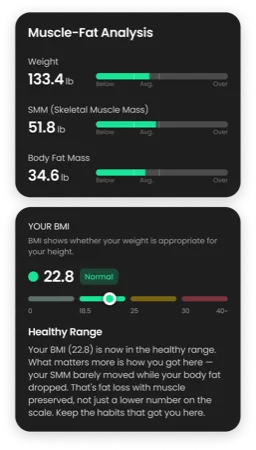
- Step 1AI body composition check, no equipment needed
Just your height, weight, age, and a few lifestyle questions are enough to estimate your body composition. In our own study (70 people), estimates were 92.9% accurate compared with InBody measurements.
- HAVIT Score and basal metabolic rate
- Muscle-fat analysis and body composition type
- Obesity level, abdominal fat ratio, and visceral fat
- Body blueprint: healthy goal weight, waist-to-height ratio, and safe rate of weight loss
- 6-stage habit analysis
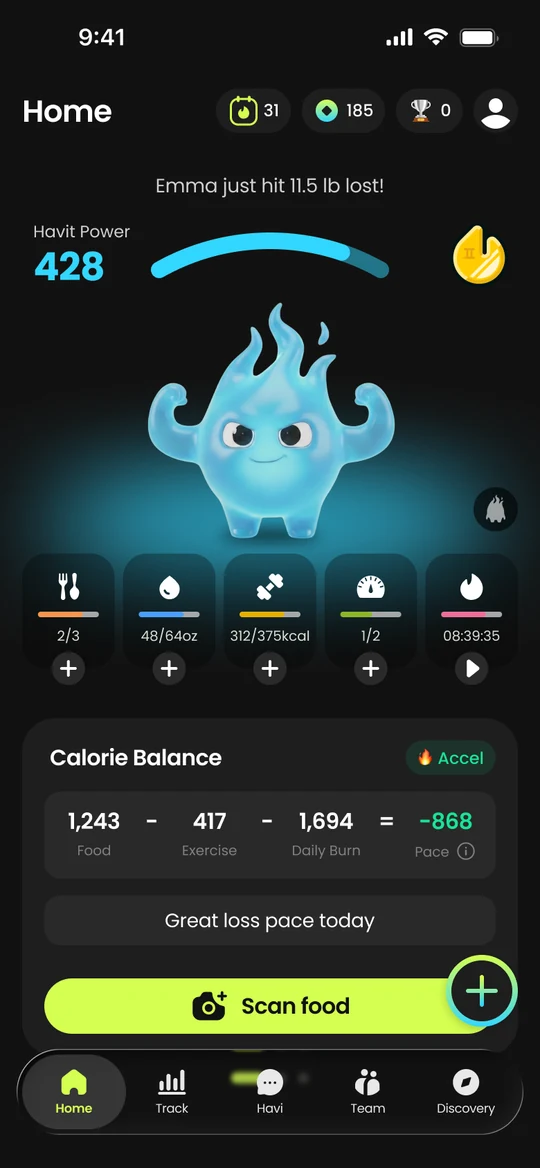
- Step 211 daily targets, prescribed in numbers
Your results set exact numbers for what to hit each day. Targets are readjusted every week based on how your weight changes.
- Calorie intake, protein, carbs, fat, and fiber
- Calories burned and steps
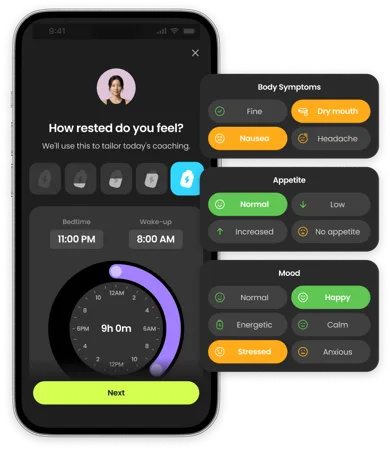
- Sleep and water
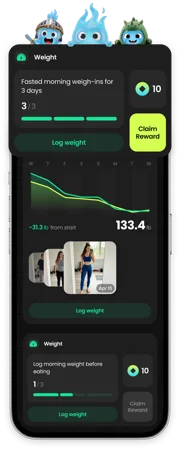
- Weigh-in frequency and target BMI
- Step 3Daily action and AI coaching
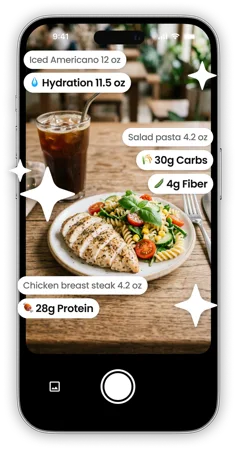
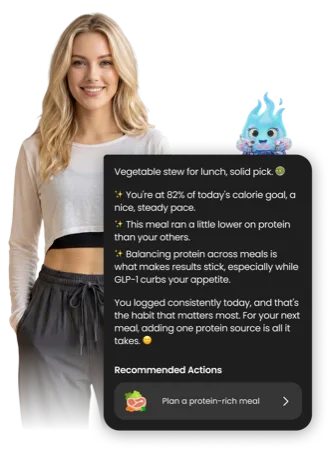
A plan only works if you follow it. We make logging easy and your next step clear.
- Log meals with a single photo
- AI coach HAVI reads your logs and suggests one thing to do today
- Personalized plans across 126+ categories based on your results
- CBT-based coaching for your mindset, not just your diet
- All-in-oneEverything in one app
No more switching between apps. When everything about your body lives in one place, your AI coach can see the full picture.
- Meals, water, workouts, and steps
- Sleep, weight, and body composition trends
- Menstrual cycle, mood, and daily check-ins
- GLP-1 medication logs and reminders
- Guided meditation, workout videos, and running coach
- Challenges and avatars that make it feel like a game


Analysis of 78 people (41 HAVIT, 37 control) with InBody results at week 1 and week 12, June–August 2026. Non-blinded study.
HAVIT is a wellness app, not a medical device. Body composition results are estimates.
A new quiz and health tip every day
Follow HAVIT on Instagram and Threads. @havit_app.en
References
- Implementation Intentions and Habit Formation: A Systematic Review and Meta-Analysis — British Journal of Health Psychology, 2025
- Habit Stacking Combined with If-Then Planning: A Randomized Controlled Trial — Behavioural Brain Research, 2024
- How Habits Are Formed: Modelling Habit Formation in the Real World — European Journal of Social Psychology, Phillippa Lally et al.
- Tiny Habits: The Small Changes That Change Everything — BJ Fogg, Stanford Behavior Design Lab