
Sleeping Heart Rate: What Is Normal at Night?
A normal sleeping heart rate is lower than your daytime resting rate. In one study of healthy adults, the average nocturnal resting heart rate was 63.6 ± 9.2 bpm on alcohol-free nights, and individual values varied widely. Researchers classify a night/day ratio of 0.9 or less as heart rate dipping, which means the night average is at least 10% lower than the day average. In patients being treated or evaluated for high blood pressure, a heart rate that did not dip at night was linked to a higher risk of cardiovascular events.
This article is for general informational purposes only and is not a substitute for professional medical advice, diagnosis, or treatment. Always consult a qualified healthcare provider with questions about a medical condition.
What is a normal sleeping heart rate?
A normal sleeping heart rate is one that drops below your daytime resting rate and stays lower for most of the night. No single number fits everyone. Age, fitness, genetics, medication and the previous evening all shift the baseline. What the research does agree on is the direction of change: in healthy people, cardiovascular output falls and the nervous system shifts toward parasympathetic (vagal) control across nocturnal sleep.
For a concrete anchor, a smartwatch study of 40 healthy adults (63% women, mean age 30.5 years) recorded an average nocturnal resting heart rate of 63.6 ± 9.2 bpm on alcohol-free baseline nights. The ± 9.2 figure describes the spread around that average. In plain terms, many healthy people in that group sat well above or below the average, so a reading a few beats away from 63.6 bpm says little on its own.
The night average is also not the same as the night minimum. In one analysis of people with cardiovascular disease or risk factors, the minimum heart rate during stable non-REM sleep was 56 ± 4 bpm in those whose diastolic blood pressure dipped normally at night and 59 ± 4 bpm in those whose diastolic blood pressure did not dip.
Rather than chasing an ideal number, ask two questions:
- Is my sleeping heart rate clearly lower than my daytime heart rate?
- Is it stable across nights, or drifting upward?
How much should heart rate drop at night?
Researchers usually describe the nightly drop with a simple ratio:
Night/day ratio = average sleeping heart rate ÷ average awake heart rate
Studies in people with high blood pressure and kidney disease have used these categories:
- Dipper: ratio of 0.9 or less. Because 1 − 0.9 = 0.1, this means your night average is at least 10% below your day average.
- Non-dipper: ratio above 0.9 and up to 1.0. The night average is less than 10% below the day average, and at a ratio of exactly 1.0 it does not fall at all.
- Riser: ratio above 1.0. The night average is higher than the day average.
Much of the evidence on why this matters comes from these categories. We cover the cardiovascular side in more depth in our guide to the nocturnal heart rate dip.
To apply the ratio at home, you need comparable averages. Many watches and rings report both a sleeping heart rate and a daytime resting heart rate, but devices define these windows differently. Using the same device, worn the same way, over several nights gives a fairer comparison than a one-off reading.
Why your heart rate varies during sleep
Heart rate is not flat overnight. It moves with the sleep stages, and that movement is normal.
Non-REM sleep: the slowest phase
During non-REM sleep, the interval between beats lengthens, which means a slower heart rate. In a study of 66 healthy young adults recorded during daytime naps, non-REM sleep showed longer beat-to-beat intervals and higher high-frequency heart rate variability (a marker of vagal activity) than REM sleep or wakefulness. The authors noted that these shifts were similar to those seen during nocturnal sleep.
REM sleep: a faster phase
In REM sleep, beat-to-beat intervals are shorter than in non-REM sleep, so the heart beats faster. In the same nap study, the ratio of low- to high-frequency heart rate variability was lower during non-REM than during REM and wake.
Brief arousals
Even inside non-REM sleep, the brain cycles through short arousal-related events that do not necessarily wake you. A polysomnography study of 10 healthy adults (mean age 28.1 years) found these phases were linked to a higher low-frequency and lower high-frequency heart rate component. The authors describe these arousal swings as accompanied by transient changes in heart rate and muscle tone, and conclude that fluctuations in arousal level influence cardiac autonomic activity.
This is why a wearable graph shows spikes and dips through the night. A few short peaks are expected. What matters more is the overall level and whether the night stays below your daytime baseline.
Heart rate variability (HRV) is the beat-to-beat variation behind these patterns. If that is what you are tracking, our article on HRV as a sleep quality predictor explains how to read it.
Sleeping heart rate in women
Many searches ask specifically about women's heart rate at night. The research summarised here does not offer a separate, validated normal sleeping heart rate for women, so the same approach applies. Compare your night average to your own day average and watch your trend.
There are some sex differences worth knowing about:
- Alcohol hits harder. In a dataset of 20,968 people, one drink above someone's personal average, compared with one below, was linked with a nocturnal resting heart rate increase of 2.8 bpm in women versus 2.4 bpm in men. HRV fell by 3.8 ms in women and 3.3 ms in men.
- Night-to-night variability changes differently with age. In more than 21,000 wearable users, the day-to-day fluctuation of sleep HRV showed a U-shaped pattern in women, declining through midlife and rising after about 50 years. In men it rose after about 40 years.
Neither finding means women should expect a generally higher or lower sleeping heart rate. They do suggest that alcohol can move a woman's overnight numbers more, and that variability is best read with age in mind.
What pushes nighttime heart rate up
Alcohol
In the 40-person smartwatch study, three evenings of moderate drinking (40 g per day for women, 60 g per day for men) raised nocturnal resting heart rate from 63.6 to 66.6 bpm, an increase of 3.0 bpm (66.6 − 63.6). It returned close to baseline afterward, at 64.9 bpm. Sleep architecture measured by the watch did not change significantly, yet participants rated their sleep as worse.
The larger real-world dataset, covering 5,109,185 person-days, found dose-dependent rises in nocturnal resting heart rate and drops in HRV, with stronger effects in younger adults. Three habits reduced the disruption: drinking earlier in the day, getting longer sleep afterward and reducing activity.
Short, irregular sleep and low activity
Across more than 21,000 users, larger night-to-night swings in HRV were linked with more alcohol, less physical activity, and shorter, less consistent sleep. That is an HRV measure rather than heart rate itself, but it points to the same everyday factors.
Mood and sleep disturbance
In a mobile health study of 461 people with recurrent major depression, a higher night resting heart rate measured by a wrist-worn device was linked to later depression severity, with sleep disturbance acting as a mediator. Anxiety worsened sleep disturbance but had no direct effect on night resting heart rate. This does not make heart rate a diagnostic tool, but a sustained upward drift can be one signal that sleep and mood deserve attention.
When a high or non-dipping night rate matters
One high night usually reflects something ordinary, such as an evening drink or a restless night. A repeated pattern is different. Evidence linking nighttime heart rate to health outcomes comes mainly from people who already have, or are at risk of, cardiovascular or kidney disease:
- In 457 patients being treated or evaluated for high blood pressure and followed for an average of 72 ± 26 months, non-dipping heart rate (night/day ratio above 0.90) predicted cardiovascular events with a hazard ratio of 2.37. The authors summarised this as a 2.4 times higher risk, independent of blood pressure dipping. Higher sleep heart rate was associated with risk in univariate analysis, while awake heart rate was not.
- In hypertensive patients with chronic kidney disease, heart rate non-dippers (hazard ratio 2.58) and risers (hazard ratio 3.95) were more likely to reach a combined kidney endpoint. That study found no predictive value for mortality or cardiovascular events.
- In people with cardiovascular disease or risk factors, every 1 bpm higher during stable non-REM sleep was associated with an approximately 4.4% higher probability of blood pressure non-dipping. The authors suggest heart rate dipping could serve as a screener to identify who may benefit from 24-hour ambulatory blood pressure monitoring.
For resting heart rate in general (not specifically during sleep), a meta-analysis of 46 studies found that each 10 bpm increase carried a relative risk of 1.09 for all-cause mortality and 1.08 for cardiovascular mortality. People with a resting heart rate above 80 bpm had a relative risk of 1.45 for all-cause mortality compared with the lowest category.
These are associations from observational research. They tell you a raised or flat nighttime heart rate is worth noticing, not that it causes disease.
How to read your own sleeping heart rate
- Average several nights. For HRV variability, at least five of seven nights were needed to reliably match a full week's estimate. That finding is about HRV, but the logic of not judging from a single night applies to heart rate too.
- Compare like with like. Use the same device and the same metric (night average or night minimum) each time.
- Calculate your ratio. Divide your typical sleeping average by your typical daytime average. A result of 0.9 or below is what studies classify as heart rate dipping.
- Tag your evenings. Note alcohol and how late you drank, plus any unusually short or irregular nights, so you can see what moves your numbers.
- Look for a pattern, not a single night. A sleeping average that repeatedly fails to fall at least 10% below your daytime average matches the non-dipping pattern the studies describe.
If that pattern persists over weeks, it is a reasonable thing to raise with a clinician.
📊 Key Stats
Nighttime heart rate dipping patterns
| Pattern | Night/day heart rate ratio | What it means | What studies found |
|---|---|---|---|
| Dipper | 0.9 or less | Night average at least 10% below day average (1 − 0.9 = 0.1) | Defined as heart rate dippers in the kidney disease study |
| Non-dipper | Above 0.9 up to 1.0 | Night average less than 10% below day average, or no lower at a ratio of 1.0 | Hazard ratio 2.58 for a combined kidney endpoint in hypertensive patients with chronic kidney disease |
| Riser | Above 1.0 | Night average higher than day average | Hazard ratio 3.95 for a combined kidney endpoint in hypertensive patients with chronic kidney disease |
| Any non-dipping (ratio above 0.90) | Above 0.90 | Night drop smaller than 10%, risers included | Hazard ratio 2.37 for cardiovascular events in 457 hypertensive patients |
❓ Frequently Asked Questions
What is a normal heart rate while sleeping?
How much lower should my heart rate be at night than during the day?
Is sleeping heart rate different for women?
Why does my heart rate go up and down during sleep?
Does alcohol raise sleeping heart rate?
Is a high sleeping heart rate dangerous?
An AI weight-loss coach built by experts from Juvis Diet, one of Korea's leading weight-loss clinics
Analyze. Set targets in numbers. Coach every day.
Articles give everyone the same averages. HAVIT assesses your body first, uses the results to set daily targets in numbers, and works through them with you for 12 weeks.
- Step 1AI body composition check, no equipment needed
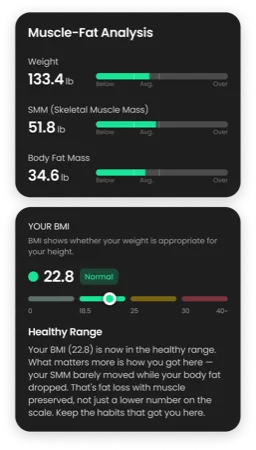
Just your height, weight, age, and a few lifestyle questions are enough to estimate your body composition. In our own study (70 people), estimates were 92.9% accurate compared with InBody measurements.
- HAVIT Score and basal metabolic rate
- Muscle-fat analysis and body composition type
- Obesity level, abdominal fat ratio, and visceral fat
- Body blueprint: healthy goal weight, waist-to-height ratio, and safe rate of weight loss
- 6-stage habit analysis
- Step 211 daily targets, set in numbers
Your results set exact numbers for what to hit each day. Targets are readjusted every week based on how your weight changes.
- Calorie intake, protein, carbs, fat, and fiber
- Calories burned and steps
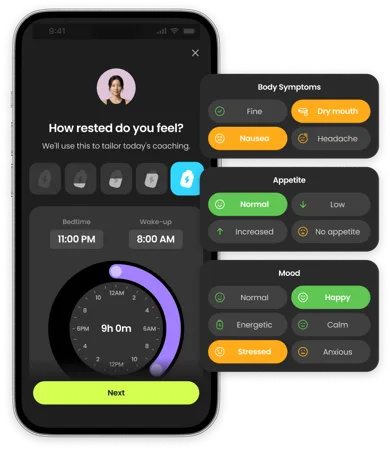
- Sleep and water
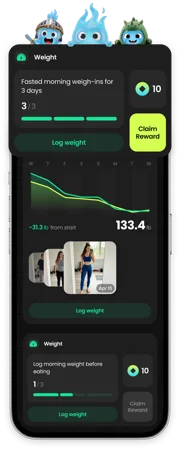
- Weigh-in frequency and target BMI
- Step 3Daily action and AI coaching
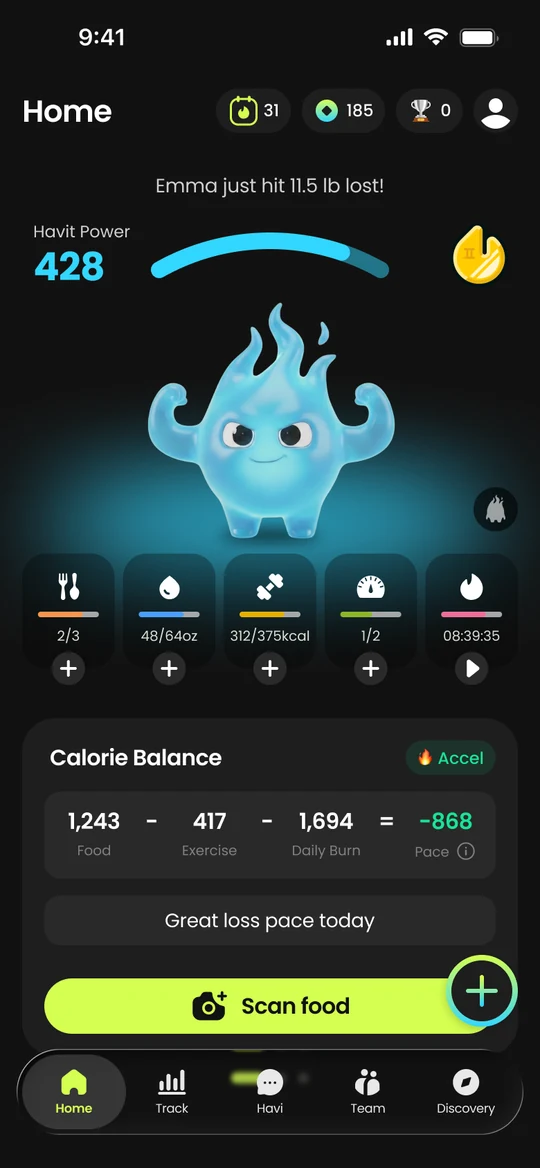
A plan only works if you follow it. We make logging easy and your next step clear.
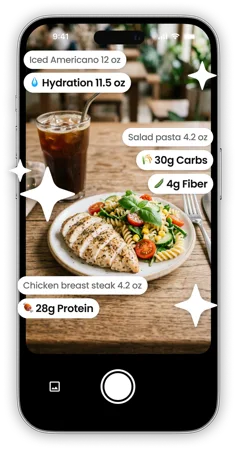
- Log meals with a single photo
- AI coach HAVI reads your logs and suggests one thing to do today
- Personalized plans across 126+ categories based on your results
- CBT-based coaching for your mindset, not just your diet

- All-in-oneEverything in one app
No more switching between apps. When everything about your body lives in one place, your AI coach can see the full picture.
- Meals, water, workouts, and steps
- Sleep, weight, and body composition trends
- Menstrual cycle, mood, and daily check-ins
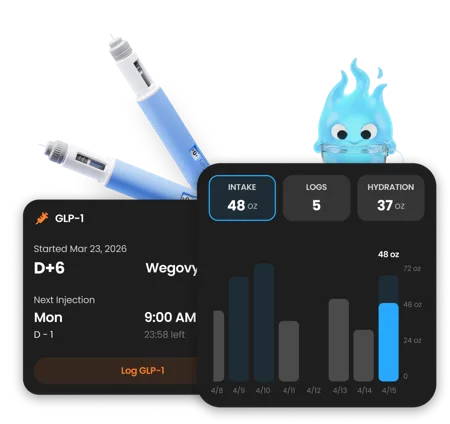
- GLP-1 medication logs and reminders
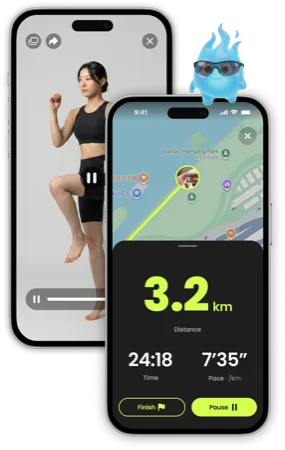
- Guided meditation, workout videos, and running coach
- Challenges and avatars that make it feel like a game
Analysis of 78 people (41 HAVIT, 37 control) with InBody results at week 1 and week 12, June–August 2026. Non-blinded study.
HAVIT is a wellness app, not a medical device. Body composition results are estimates.
A new quiz and health tip every day
Follow HAVIT on Instagram and Threads. @havit_app.en
References
- Cardiopulmonary coupling-calculated sleep stability and nocturnal heart rate kinetics as a potential indicator for cardiovascular health: a relationship with blood pressure dipping. — Frontiers in sleep, 2024
- Nocturnal heart rate rising is a risk factor for poor renal outcomes in patients with chronic kidney disease and hypertension. — Journal of clinical hypertension (Greenwich, Conn.), 2022
- Nocturnal nondipping of heart rate predicts cardiovascular events in hypertensive patients. — Journal of hypertension, 2009
- Heart rate variability during daytime naps in healthy adults: Autonomic profile and short-term reliability. — Psychophysiology, 2016
- The impact of cyclic alternating pattern on heart rate variability during sleep in healthy young adults. — Clinical neurophysiology : official journal of the International Federation of Clinical Neurophysiology, 2000
- The Impact of Alcohol on Sleep Physiology: A Prospective Observational Study on Nocturnal Resting Heart Rate Using Smartwatch Technology. — Nutrients, 2025
- Real-world effects of alcohol on heart rate, sleep, and physical activity by age and sex. — PLOS digital health, 2026
- Heart rate variability coefficient of variation during sleep as a digital biomarker that reflects behavior and varies by age and sex. — American journal of physiology. Heart and circulatory physiology, 2026
- Exploring the dynamic relationships between nocturnal heart rate, sleep disruptions, anxiety levels, and depression severity over time in recurrent major depressive disorder. — Journal of affective disorders, 2025
- Resting heart rate and all-cause and cardiovascular mortality in the general population: a meta-analysis. — CMAJ : Canadian Medical Association journal = journal de l'Association medicale canadienne, 2016