
Oral Wegovy: How the Semaglutide Pill Works
Oral Wegovy is oral semaglutide, the same drug that is also given as a weekly injection, taken as a tablet once a day for weight management. Once-daily oral semaglutide 25 mg was approved for obesity treatment, and in the OASIS 4 trial adults without diabetes lost an estimated 13.6% of body weight at 64 weeks on that dose, compared with 2.2% on placebo. In dosing studies, the tablet produced clinically relevant exposure when taken fasting with up to 120 mL of water, followed by at least 30 minutes before eating or drinking.
This article is for general informational purposes only and is not a substitute for professional medical advice, diagnosis, or treatment. Always consult a qualified healthcare provider with questions about a medical condition.
What oral Wegovy is
Oral Wegovy is oral semaglutide, the same GLP-1 receptor agonist that is also given as a weekly injection, taken as a once-daily tablet for weight management. A review of the OASIS trials notes that results from OASIS 1, 2 and 4 helped secure FDA approval for oral Wegovy. Once-daily oral semaglutide 25 mg was approved for obesity treatment based on the OASIS trial programme and earlier semaglutide data, with modelling used to bridge results from the injectable form.
The pivotal trial for that dose was OASIS 4. Adults without diabetes who took oral semaglutide 25 mg lost an estimated 13.6% of their body weight by week 64, compared with 2.2% on placebo. Both groups also received lifestyle support.
So if you searched for the Wegovy pill, the short answer is this: it is a daily semaglutide tablet, it has to be taken in a very specific way, and in trials its weight loss was comparable to the weekly injection.
How a peptide pill survives the stomach
Semaglutide is a peptide, a small protein. Peptides swallowed on their own are poorly absorbed through the gut lining and are broken down by digestive enzymes, which is why most GLP-1 drugs are injected.
The tablet gets around this by pairing semaglutide with an absorption enhancer called SNAC (sodium N-[8-(2-hydroxybenzoyl) aminocaprylate). Clinical and dog studies showed something unusual: absorption takes place in the stomach rather than the intestine, is confined to a small area close to the tablet surface, and only happens when semaglutide is formulated together with SNAC.
SNAC does two jobs:
- It buffers stomach acid right around the tablet, which protects semaglutide from enzymatic breakdown.
- It briefly enhances absorption, with semaglutide passing through the cells of the stomach lining (a transcellular route) rather than by loosening the tight junctions between cells.
Imaging work backs this up. In a crossover study of 26 healthy men given a single 10 mg tablet, the tablet eroded completely in the stomach whether it was swallowed with 50 mL or 240 mL of water. Mean time to complete erosion was 85 minutes with 50 mL versus 57 minutes with 240 mL, and slower erosion went along with higher semaglutide levels in the blood. Peak concentration arrived at a median of 1.5 hours after dosing.
Why the pill dose is so much higher than the shot
Even with SNAC, only a tiny fraction of each tablet reaches the bloodstream. Under the recommended dosing conditions, oral bioavailability was 0.8% in a pharmacokinetic model built from clinical pharmacology trials. A systematic review puts oral bioavailability at about 1%, against about 89% for the injection.
That gap explains why the doses look so different. The injection is 2.4 mg once a week, while the 25 mg tablet is taken every day, which adds up to 25 mg × 7 days = 175 mg swallowed per week. Modelling work found that this daily dose brought most people on the tablet into the same exposure range as people on the weekly injection.
How to take oral Wegovy, and why the rules matter
Because absorption depends on a short window in the stomach, food and drink can easily get in the way. Two dosing studies tested this directly. When people ate a meal 30 minutes before the tablet, there was limited or no measurable semaglutide in the blood. Water volume of 50 mL or 120 mL made no difference, but exposure rose the longer people waited before eating after the dose.
The conditions that produced clinically relevant exposure were:
- Take the tablet in a fasting state, after an overnight fast.
- Swallow it with up to 120 mL of water.
- Wait at least 30 minutes after the dose before eating or drinking.
These conditions come from studies of the earlier oral semaglutide tablet, where they were used in its phase 3 trials and written into its approved label. They are the tested conditions for clinically relevant exposure rather than the only ones that work: in the food-effect trial, fasting until 4 hours after the dose with 240 mL of water gave numerically about 40% higher exposure than the reference arm, which fasted for 30 minutes after a dose taken with 120 mL.
In the pharmacokinetic modelling, post-dose fasting time, drinking a large volume of water with the tablet, and body weight were the most important factors affecting how much semaglutide reached the blood. The exact instructions for a given product, and how to fit other tablets around them, are set out in the product leaflet and are a question for your prescriber.
Day-to-day absorption varies, steady levels do not
Absorption from one day to the next is erratic. Within-subject variability in bioavailability was 137% in the modelling work. Because semaglutide has a long half-life and is taken every day, that shrinks to about 33% variability in steady-state exposure. In practice, one slightly off day matters less than taking the tablet the same careful way most days.
How much weight people lost in the trials
OASIS 4: the 25 mg dose
OASIS 4 was a 71-week, double-blind, placebo-controlled trial run at 22 sites in four countries. It enrolled adults without diabetes who had a BMI of 30 or higher, or 27 or higher with at least one obesity-related complication. In total, 205 people were assigned to oral semaglutide 25 mg and 102 to placebo.
Key results at week 64:
- Mean weight change was -13.6% with oral semaglutide versus -2.2% with placebo.
- The estimated difference was -11.4 percentage points (95% CI -13.9 to -9.0).
- People on the tablet were significantly more likely to reach weight losses of 5%, 10%, 15% and 20% or more.
- Physical function scores on a weight-related quality of life questionnaire improved more than with placebo.
OASIS 1: the 50 mg dose
A higher 50 mg daily dose was tested earlier in OASIS 1, which randomised 667 adults without type 2 diabetes for 68 weeks. Mean weight change was -15.1% with oral semaglutide 50 mg versus -2.4% with placebo, analysed regardless of whether people stopped treatment.
The share of people reaching each threshold shows how wide individual results were:
- At least 5% weight loss: 85% on semaglutide vs 26% on placebo
- At least 10%: 69% vs 12%
- At least 15%: 54% vs 6%
- At least 20%: 34% vs 3%
These are averages and proportions across a trial population. Some people lose much more than the mean and some much less.
Oral Wegovy versus the weekly injection
There are no head-to-head trials comparing the pill and the shot. What exists are indirect comparisons that line up similar trials side by side.
One analysis compared OASIS 4 with STEP 1, the trial of weekly injectable semaglutide 2.4 mg. It found comparable efficacy across all outcomes assessed, including percentage weight change, the share of people reaching 5% to 20% weight loss, cardiometabolic markers and quality of life. The injection showed a small numerical edge in weight change of 1.01 percentage points (95% CI -1.61 to 3.63), which the authors note is well below the FDA's 5% threshold for clinical relevance.
Blood levels tell the same story. Most participants (82.2%) treated with oral semaglutide 25 mg in OASIS 4 reached exposure levels within the same range as people on the weekly 2.4 mg injection in STEP 1.
A systematic review comparing the two formulations noted that OASIS 1 produced a 15.1% reduction at 68 weeks with the 50 mg tablet, close to the 14.9% seen with the injection in STEP 1. The same review reported that oral semaglutide showed superior patient preference among people who are averse to needles.
The choice often comes down to routine rather than results:
- The pill means a daily habit with strict fasting rules, but no needles.
- The injection is once a week, so there is no daily tablet routine to keep.
Side effects and tolerability
The side effect pattern is the one familiar from the GLP-1 class, with digestive symptoms leading the list. In OASIS 4, gastrointestinal adverse events were reported by 74.0% of people on oral semaglutide 25 mg and 42.2% on placebo. In OASIS 1, with the 50 mg dose, the figures were 80% and 46%, and most of these events were mild to moderate.
The indirect comparison with STEP 1 described the safety profiles of the pill and the injection as broadly comparable. For a fuller breakdown of what people notice and how it changes over time, see our guide to oral Wegovy side effects, and for the injectable version, injectable semaglutide side effects.
Who may need a different option
Because the tablet relies entirely on the stomach for absorption, anything that changes the stomach can change how well it works.
After bariatric surgery
A mechanistic review looked at oral semaglutide after metabolic bariatric surgery. Several changes could reduce absorption: a smaller inner stomach surface, weaker stomach contractions and faster gastric emptying. The authors suggest that injectable semaglutide is preferable in this group until specific pharmacokinetic or clinical data are available.
People with type 2 diabetes
The 25 mg dose has not been tested in a dedicated trial of people with both obesity and type 2 diabetes. Modelling studies simulated this population and estimated weight reductions versus placebo of 9.4% and 7.8% (under two different statistical estimands), compared with 16.3% and 14.7% in people without diabetes.
People who cannot keep the daily routine
If a fasting dose with up to 120 mL of water and a 30-minute wait is hard to manage most days, the weekly injection may simply be the more practical way to get the same drug.
📊 Key Stats
Oral semaglutide doses vs the weekly injection
| Feature | Oral semaglutide 25 mg | Oral semaglutide 50 mg | Injectable semaglutide 2.4 mg |
|---|---|---|---|
| How often | Once daily | Once daily | Once weekly |
| Key trial | OASIS 4 (205 vs 102 participants) | OASIS 1 (667 participants) | STEP 1 |
| Mean weight change | -13.6% at week 64 (placebo -2.2%) | -15.1% at week 68 (placebo -2.4%) | -14.9% at 68 weeks |
| Gastrointestinal adverse events | 74.0% (placebo 42.2%) | 80% (placebo 46%) | Broadly comparable to oral 25 mg in indirect comparison |
| Bioavailability | Oral semaglutide overall about 1% (0.8% under recommended conditions in modelling) | No dose-specific figure; oral semaglutide overall about 1% | About 89% |
| Dosing conditions | Fasting, up to 120 mL water, wait at least 30 minutes | Daily tablet; dose-specific conditions not detailed in the trial summary | Weekly subcutaneous injection, no daily tablet routine |
❓ Frequently Asked Questions
Is there a Wegovy pill?
How much weight can you lose on oral Wegovy?
How do you take oral Wegovy?
Is the Wegovy pill as effective as the injection?
Why is the pill dose so much higher than the injection dose?
Does oral Wegovy work after bariatric surgery?
An AI weight-loss coach built by experts from Juvis Diet, one of Korea's leading weight-loss clinics
Analyze. Set targets in numbers. Coach every day.
Articles give everyone the same averages. HAVIT assesses your body first, uses the results to set daily targets in numbers, and works through them with you for 12 weeks.
- Step 1AI body composition check, no equipment needed
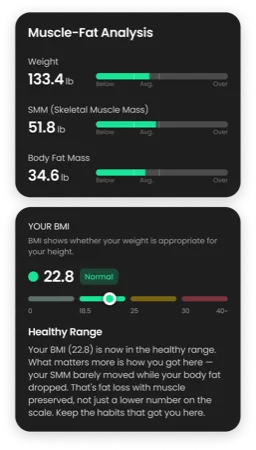
Just your height, weight, age, and a few lifestyle questions are enough to estimate your body composition. In our own study (70 people), estimates were 92.9% accurate compared with InBody measurements.
- HAVIT Score and basal metabolic rate
- Muscle-fat analysis and body composition type
- Obesity level, abdominal fat ratio, and visceral fat
- Body blueprint: healthy goal weight, waist-to-height ratio, and safe rate of weight loss
- 6-stage habit analysis
- Step 211 daily targets, set in numbers
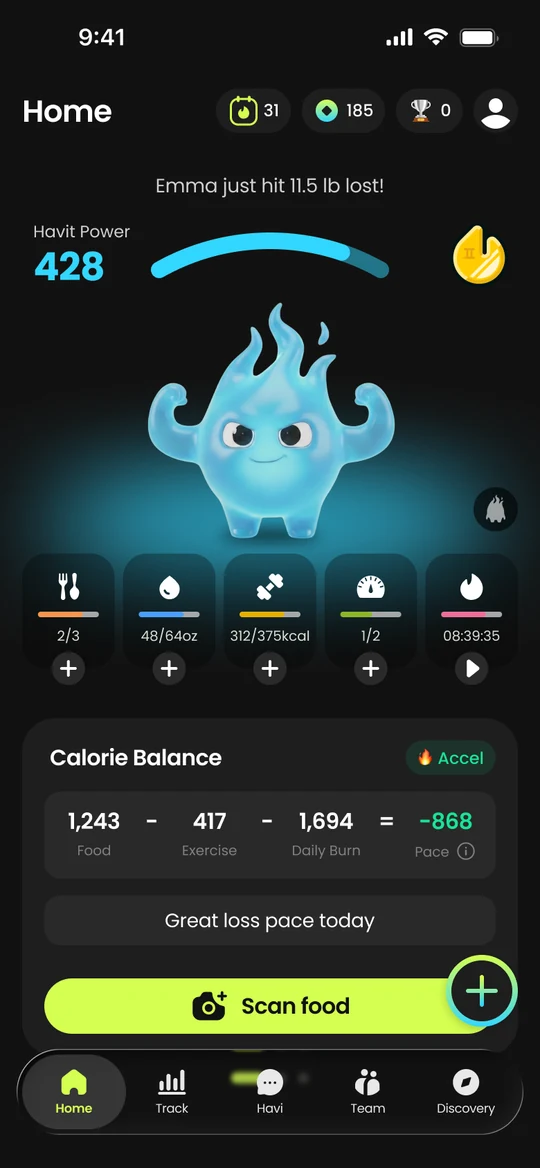
Your results set exact numbers for what to hit each day. Targets are readjusted every week based on how your weight changes.
- Calorie intake, protein, carbs, fat, and fiber
- Calories burned and steps
- Sleep and water
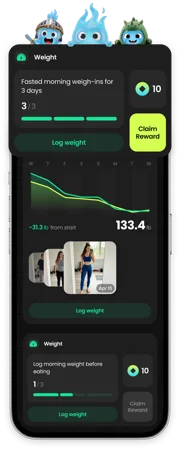
- Weigh-in frequency and target BMI
- Step 3Daily action and AI coaching
A plan only works if you follow it. We make logging easy and your next step clear.
- Log meals with a single photo
- AI coach HAVI reads your logs and suggests one thing to do today
- Personalized plans across 126+ categories based on your results
- CBT-based coaching for your mindset, not just your diet
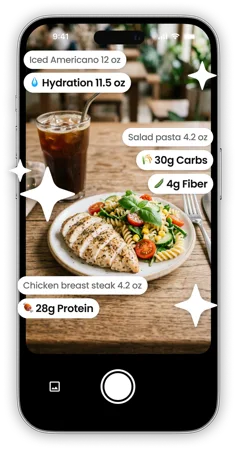

- All-in-oneEverything in one app
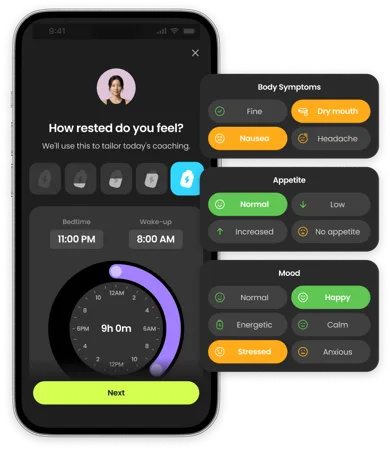
No more switching between apps. When everything about your body lives in one place, your AI coach can see the full picture.
- Meals, water, workouts, and steps
- Sleep, weight, and body composition trends
- Menstrual cycle, mood, and daily check-ins
- GLP-1 medication logs and reminders
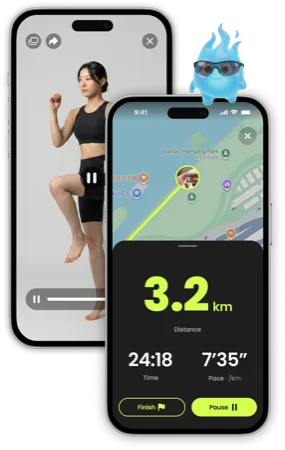
- Guided meditation, workout videos, and running coach
- Challenges and avatars that make it feel like a game
Analysis of 78 people (41 HAVIT, 37 control) with InBody results at week 1 and week 12, June–August 2026. Non-blinded study.
HAVIT is a wellness app, not a medical device. Body composition results are estimates.
A new quiz and health tip every day
Follow HAVIT on Instagram and Threads. @havit_app.en
References
- Oral Semaglutide at a Dose of 25 mg in Adults with Overweight or Obesity. — The New England journal of medicine, 2025
- A Review of the Oral Semaglutide in Adults with Overweight or Obesity (OASIS) Trials Evaluating Oral Semaglutide (Wegovy) for Chronic Weight Management in Adults With Overweight or Obesity. — Cureus, 2026
- Oral semaglutide 50 mg taken once per day in adults with overweight or obesity (OASIS 1): a randomised, double-blind, placebo-controlled, phase 3 trial. — Lancet (London, England), 2023
- Semaglutide 25 mg Oral Versus Semaglutide 2.4 mg Injectable: An Indirect Treatment Comparison of Weight Loss Outcomes. — Diabetes, obesity & metabolism, 2026
- Efficacy, Safety and PK of Once-Daily Oral Semaglutide 25 mg for Obesity With and Without Type 2 Diabetes in Comparison With Subcutaneous Semaglutide 2.4 mg: A Model-Informed Drug Development Approach. — Diabetes, obesity & metabolism, 2026
- Progress and challenges in obesity pharmacotherapy: semaglutide as a milestone. — Naunyn-Schmiedeberg's archives of pharmacology, 2025
- Oral vs. Subcutaneous Semaglutide for Obesity Treatment: A Systematic Review of Efficacy, Safety, and Patient-Oriented Outcomes. — Pharmaceuticals (Basel, Switzerland), 2026
- Transcellular stomach absorption of a derivatized glucagon-like peptide-1 receptor agonist. — Science translational medicine, 2018
- Relationship Between Oral Semaglutide Tablet Erosion and Pharmacokinetics: A Pharmacoscintigraphic Study. — Clinical pharmacology in drug development, 2021
- Effect of Various Dosing Conditions on the Pharmacokinetics of Oral Semaglutide, a Human Glucagon-Like Peptide-1 Analogue in a Tablet Formulation. — Diabetes therapy : research, treatment and education of diabetes and related disorders, 2021
- Clinical Pharmacokinetics of Oral Semaglutide: Analyses of Data from Clinical Pharmacology Trials. — Clinical pharmacokinetics, 2021
- Is Oral Semaglutide a Good Fit for Patients After Metabolic Bariatric Surgery? A Biopharmaceutical Mechanistic Perspective. — Pharmaceutics, 2026