


SIBO Breath Test Results: What Hydrogen and Methane Mean
A SIBO breath test usually shows one of three patterns: hydrogen-dominant, methane-dominant, or mixed. That pattern helps your clinician choose a treatment and gives you a sensible starting point for dietary changes.
This article is for general informational purposes only and is not a substitute for professional medical advice, diagnosis, or treatment. Always consult a qualified healthcare provider with questions about a medical condition.
Making Sense of the Printout
A breath test report usually arrives as a graph with two lines, a column of numbers in parts per million (ppm), and very little explanation. The details matter, though. A hydrogen rise at 45 minutes and one at 90 minutes can point toward different conclusions and different treatment plans.
Many people live with bloating for years and assume it is stress before a lactulose breath test shows, for example, methane reaching 34 ppm by the two-hour mark. The clinical explanation of a result like that can be brief. Working out what it means for everyday meals takes longer.
How Breath Testing Works
The test rests on a simple fact. Human cells don't make hydrogen or methane. Gut microbes do. After you drink a lactulose or glucose solution, microbes that have settled in the small intestine ferment the sugar. The gases they release are absorbed into the bloodstream, carried to the lungs, and exhaled, where the device measures them.
The 2017 North American Consensus, published in the American Journal of Gastroenterology, standardized the cutoffs. A hydrogen rise of at least 20 ppm above baseline within 90 minutes is considered positive for small intestinal bacterial overgrowth (SIBO). For methane, a level of 10 ppm or higher at any point during the test counts as positive.
The terminology has also changed. The 2020 American College of Gastroenterology (ACG) guideline uses "intestinal methanogen overgrowth," or IMO, for methane-producing organisms, because these are archaea rather than bacteria.
Some tests show both gases elevated. This mixed pattern tends to be harder to manage.
Hydrogen-Dominant SIBO and Diarrhea
When hydrogen producers such as E. coli and Klebsiella species colonize the small intestine, a recognizable set of symptoms often follows. Diarrhea is the main one. Bloating can start quickly after meals, sometimes within 30 minutes, and gas may feel urgent.
Methane-related bloating, by contrast, tends to build more slowly over the day. Individual patterns vary, so neither description is a diagnostic rule.
The biology fits this picture. Hydrogen-producing bacteria ferment carbohydrates fast. The small intestine is built for absorption, not fermentation, and gas production there appears to speed transit. Food moves through more quickly, less water is absorbed, and stools loosen.
Dietary approaches for hydrogen-dominant SIBO usually begin with a low-FODMAP elimination phase. The aim is to cut back on the carbohydrates these bacteria ferment most readily, including lactose, fructose, polyols, and certain fibers.
Methane-Dominant IMO: Why Things Slow Down
Methane follows a different path. The main organism involved, Methanobrevibacter smithii, consumes hydrogen produced by other microbes and converts it to methane.
Constipation is the typical result. Bloating tends to build through the day instead of peaking right after meals, and some people say they look several months pregnant by evening yet wake with a flat stomach.
The link with constipation has experimental support. In a 2006 study, infusing methane into the small intestine of dogs slowed transit by an average of 59%. In people, methane on breath testing has been strongly associated with constipation-predominant IBS.
Treatment is also more complicated. Rifaximin alone works reasonably well against hydrogen producers, but methanogens often call for combination therapy. In one retrospective study, methane was eradicated in 87% of patients given rifaximin plus neomycin, compared with 28% on rifaximin alone. Antibiotic choice belongs with your prescriber.
Reading Your Results the Way a Specialist Does
Timing is central. Lactulose generally takes about 90 to 120 minutes to pass through the small intestine and reach the colon. A gas rise before that window suggests small intestinal overgrowth, while a rise after 120 minutes is usually normal fermentation in the colon.
The baseline is your reference point, so check it on your own report before looking at anything else. Some people exhale 8 to 12 ppm of hydrogen before drinking the solution. A climb from 10 to 28 ppm at 60 minutes is not the same finding as a climb from 2 to 20 ppm.
The shape of the curve is sometimes read for extra clues. A sharp spike followed by a plateau is often interpreted as more localized overgrowth, and a steady rise as more widespread overgrowth, though this kind of reading is less standardized than the cutoffs.
A double peak, with an early rise around 30 to 45 minutes and a second rise after 90 minutes, can reflect overgrowth combined with rapid transit. That combination may change how treatment is sequenced.
Matching Diet to Your Pattern
One-size-fits-all "SIBO diets" often disappoint because hydrogen and methane overgrowth behave differently. Your test pattern is a better guide.
For hydrogen-dominant cases, an elemental diet is the most intensive option. It replaces food with liquid nutrition that is absorbed early in the small intestine. In a 2004 study, an exclusive elemental diet normalized the lactulose breath test in 80% of patients after two weeks and 85% after three. Taste and the social limits of a liquid-only diet make it hard to stick with, so most people start with a low-FODMAP approach instead, restricting fermentable carbohydrates for four to six weeks and then reintroducing foods step by step.
Methane-dominant patients run into a catch. Cutting fermentable carbohydrates can also cut fiber, which may make constipation worse. Some practitioners use the Bi-Phasic Diet, which keeps certain fibers in to support regularity. Partially hydrolyzed guar gum has some supporting evidence: in a 2010 trial in people with SIBO (not specifically methane-dominant), adding it to rifaximin raised the eradication rate from about 62% to 85 to 87%.
Mixed patterns need the most care. Starting with broader restriction and loosening it based on how symptoms respond usually works better than trying to target both patterns at once from the first day.
Should You Retest?
A repeat breath test can show whether treatment changed the picture, but it has its own interpretation problems.
There is no agreed timing for retesting after treatment. The North American Consensus does advise avoiding antibiotics for about four weeks before any breath test, since recent use can distort results. That makes retest timing worth planning with your clinician.
Symptoms and test results don't always move together. Some people feel much better with a test that is still positive. Others normalize the test and still have symptoms, which can reflect gut-brain interaction, histamine intolerance, or other conditions.
Recurrence is common. In one study, 43.7% of patients tested positive again within nine months of successful antibiotic treatment. Older age, a history of appendectomy, and long-term proton pump inhibitor (PPI) use were linked to higher risk.
When First-Line Treatment Doesn't Work
Some cases don't respond to the usual approach, and the reasons usually fall into a few categories.
Anatomy is one. Previous abdominal surgery, particularly when it leaves blind loops or adhesions, can give bacteria protected places to grow. Motility disorders are another. Diabetes, scleroderma, or unexplained dysmotility can weaken the waves of intestinal movement that normally clear bacteria out.
Prokinetic drugs target motility. Prescription options such as low-dose erythromycin or prucalopride stimulate the migrating motor complex, the pattern of contractions that sweeps the small intestine between meals. When dysmotility goes unaddressed, recurrence becomes much more likely. Any prokinetic and its dose should come from your prescriber.
Biofilms may also play a part. Bacteria embedded in a protective matrix resist antibiotics better than free-floating ones. Some practitioners add agents intended to disrupt biofilms, such as NAC, bismuth, or specific enzymes, but the evidence remains preliminary.
A Plan for the Long Term
Managing SIBO continues after the first round of treatment, and a few habits come up repeatedly among people who stay well.
Meal spacing is the most practical. The migrating motor complex runs mainly during fasting periods, so eating every two hours keeps the small intestine in digestive mode. Leaving four to five hours between meals, with little snacking, gives those clearing contractions a chance to work.
Stress may matter more than it sounds. The vagus nerve influences gut motility, and chronic stress is associated with lower vagal tone and slower transit. Meditation, regular exercise, and enough sleep are reasonable places to start.
Probiotics remain debated. Some strains may help, and others may make symptoms worse. Some practitioners favor Saccharomyces boulardii or soil-based products over Lactobacillus strains for people with SIBO, but the evidence is limited and individual responses vary widely.
Living With an Imperfect Gut
After diagnosis, it's common to spend months scrutinizing every meal and symptom. Some of that attention is useful early on, when you are identifying patterns. Kept up indefinitely, it can let your gut drive every decision.
For many people, things improve once the goal shifts from complete eradication to good management. Some weeks go better than others, and certain foods may always cause trouble. Over time, though, most people can identify their triggers, settle on an eating pattern that keeps symptoms in check, and leave enough room to enjoy meals with others.
Your breath test result is a starting point. It identifies the type of overgrowth and points toward treatments with evidence behind them. It can't tell you which foods you personally tolerate, what meal timing fits your schedule, or which stress habits you will actually keep. That comes from patient trial and error. Understanding what your hydrogen and methane numbers mean puts you in a far better position than staring at a printout and wondering what to make for dinner.
📊 Key Stats
Hydrogen-Dominant SIBO vs Methane-Dominant IMO: Key Differences
| Characteristic | Hydrogen-Dominant SIBO | Methane-Dominant IMO |
|---|---|---|
| Primary symptom | Diarrhea | Constipation |
| Bloating onset | Often 30 to 60 minutes after eating | Gradual, often worse by evening |
| Test threshold | ≥20 ppm rise within 90 minutes | ≥10 ppm at any point |
| Organisms involved | E. coli, Klebsiella, Streptococcus | Methanobrevibacter smithii (archaea) |
| Commonly used antibiotic approach | Rifaximin alone | Rifaximin + neomycin or metronidazole |
| Dietary focus | Low-FODMAP elimination | Modified low-FODMAP with select fibers |
| Transit effect | Faster | Slower |
Treatment approaches differ by dominant gas pattern; mixed cases need an individualized plan from your clinician.
❓ Frequently Asked Questions
How accurate are SIBO breath tests?
Can I have SIBO with a negative breath test?
How long should I follow a SIBO diet after treatment?
Why does my SIBO keep coming back?
Should I take probiotics if I have SIBO?
What's the difference between lactulose and glucose breath tests?
Can SIBO cause nutrient deficiencies?
An AI weight-loss coach built by experts from Juvis Diet, one of Korea's leading weight-loss clinics
Analyze. Set targets in numbers. Coach every day.
Articles give everyone the same averages. HAVIT assesses your body first, uses the results to set daily targets in numbers, and works through them with you for 12 weeks.
- Step 1AI body composition check, no equipment needed
Just your height, weight, age, and a few lifestyle questions are enough to estimate your body composition. In our own study (70 people), estimates were 92.9% accurate compared with InBody measurements.
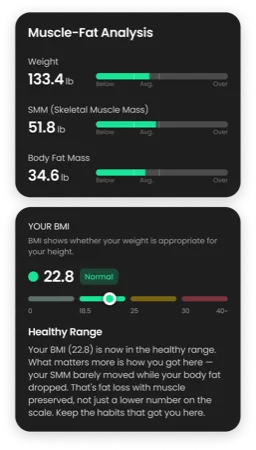
- HAVIT Score and basal metabolic rate
- Muscle-fat analysis and body composition type
- Obesity level, abdominal fat ratio, and visceral fat
- Body blueprint: healthy goal weight, waist-to-height ratio, and safe rate of weight loss
- 6-stage habit analysis
- Step 211 daily targets, set in numbers
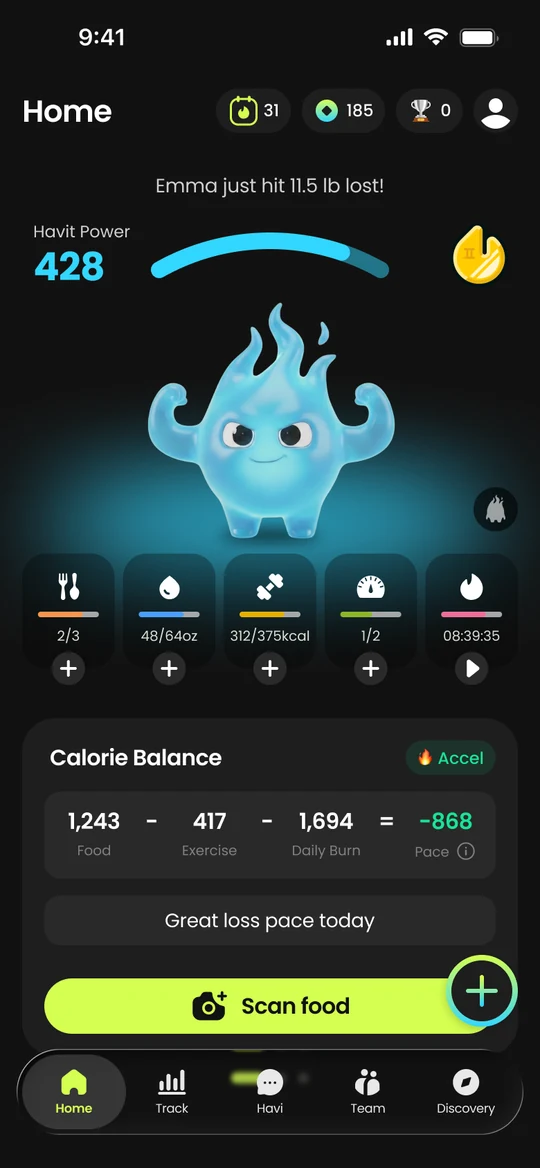
Your results set exact numbers for what to hit each day. Targets are readjusted every week based on how your weight changes.
- Calorie intake, protein, carbs, fat, and fiber
- Calories burned and steps
- Sleep and water
- Weigh-in frequency and target BMI
- Step 3Daily action and AI coaching
A plan only works if you follow it. We make logging easy and your next step clear.
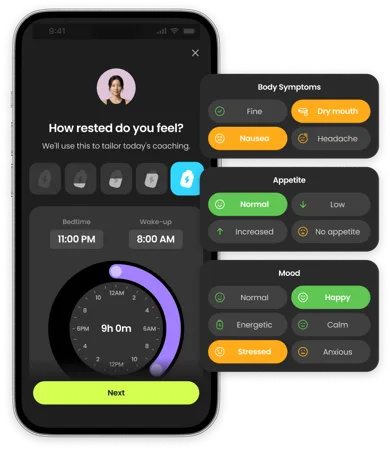
- Log meals with a single photo
- AI coach HAVI reads your logs and suggests one thing to do today
- Personalized plans across 126+ categories based on your results
- CBT-based coaching for your mindset, not just your diet


- All-in-oneEverything in one app
No more switching between apps. When everything about your body lives in one place, your AI coach can see the full picture.
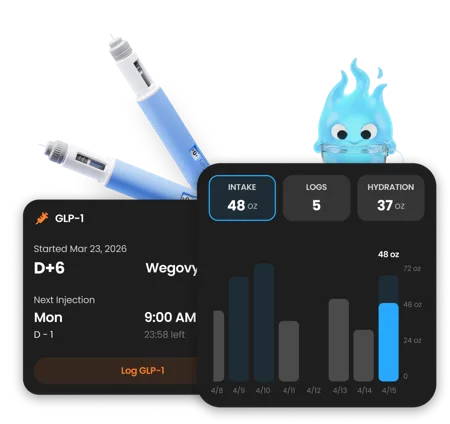
- Meals, water, workouts, and steps
- Sleep, weight, and body composition trends
- Menstrual cycle, mood, and daily check-ins
- GLP-1 medication logs and reminders
- Guided meditation, workout videos, and running coach
- Challenges and avatars that make it feel like a game


Analysis of 78 people (41 HAVIT, 37 control) with InBody results at week 1 and week 12, June–August 2026. Non-blinded study.
HAVIT is a wellness app, not a medical device. Body composition results are estimates.
A new quiz and health tip every day
Follow HAVIT on Instagram and Threads. @havit_app.en
References
- Hydrogen and Methane-Based Breath Testing in Gastrointestinal Disorders: The North American Consensus — American Journal of Gastroenterology, 2017
- ACG Clinical Guideline: Small Intestinal Bacterial Overgrowth — American Journal of Gastroenterology, 2020
- Breath Tests for the Non-invasive Diagnosis of Small Intestinal Bacterial Overgrowth: A Systematic Review With Meta-analysis — Journal of Neurogastroenterology and Motility, 2020
- Methane, a gas produced by enteric bacteria, slows intestinal transit and augments small intestinal contractile activity — American Journal of Physiology - Gastrointestinal and Liver Physiology, 2006
- A Combination of Rifaximin and Neomycin Is Most Effective in Treating Irritable Bowel Syndrome Patients With Methane on Lactulose Breath Test — Journal of Clinical Gastroenterology, 2010
- A 14-Day Elemental Diet Is Highly Effective in Normalizing the Lactulose Breath Test — Digestive Diseases and Sciences, 2004
- Small Intestinal Bacterial Overgrowth Recurrence After Antibiotic Therapy — American Journal of Gastroenterology, 2008
- Clinical trial: the combination of rifaximin with partially hydrolysed guar gum is more effective than rifaximin alone in eradicating small intestinal bacterial overgrowth — Alimentary Pharmacology & Therapeutics, 2010