
Gamificar a perda de peso: sequências e hábitos que se mantêm com GLP-1

Este artigo tem fins informativos gerais e não substitui aconselhamento, diagnóstico ou tratamento médico profissional. Sempre consulte um profissional de saúde qualificado para questões sobre uma condição médica.
Resposta rápida
Gamificar a perda de peso significa usar sequências, empilhamento de hábitos (associar um hábito novo a um que você já tem), pontos e pequenas recompensas para tornar o acompanhamento do GLP-1 automático, e não trabalhoso. Em estudos, os elementos de jogo acrescentaram cerca de 1.610 passos por dia — e os usuários mais constantes no registro construíram os hábitos mais fortes.
Um GLP-1 como Ozempic, Wegovy ou Mounjaro (ou Zepbound, nos EUA) faz boa parte do trabalho pesado sobre o apetite — mas não consegue criar os comportamentos diários que protegem seus resultados: consumir proteína suficiente, se movimentar, se hidratar e registrar seu progresso.
Isso depende de constância, e a constância é justamente onde a maioria das pessoas empaca. É essa lacuna que a gamificação foi criada para fechar.
Gamificar a perda de peso não é transformar a sua saúde em desenho animado.
A ideia é pegar emprestadas as mecânicas de design de comportamento que tornam apps e jogos difíceis de largar — sequências, pontos, níveis, recompensas — e direcioná-las aos hábitos chatos, porém decisivos, da jornada com GLP-1.
Bem feita, é uma das formas mais respaldadas por evidências de manter a constância quando a motivação acaba.
Este guia mostra o que realmente funciona, o que evitar e como montar uma rotina gamificada em quatro semanas.
01
O que "gamificar a perda de peso" realmente significa (e o que não significa)
Gamificação é o uso de elementos no estilo de jogos — progresso, feedback, recompensas, desafios — em contextos que não são jogos, para mudar comportamentos.
Aplicada ao GLP-1, significa organizar o seu acompanhamento de modo que fazer a coisa certa seja a coisa fácil e gratificante: uma sequência que você não quer quebrar, uma pontuação de proteína que sobe, uma meta semanal que você realmente consegue atingir.
O que ela não é: "desafios" de dieta radical, punição por um dia ruim ou correr atrás de pontos em vez de saúde.
A boa gamificação serve ao resultado (perda de peso gradual, que preserva a massa muscular, e hábitos duradouros). A má gamificação serve ao engajamento do app às suas custas.
A diferença está em o jogo mirar comportamentos que o seu médico endossaria — proteína, movimento, adesão, hidratação — ou um número na balança que você não controla diretamente.
02
Por que a gamificação funciona com um GLP-1
Duas coisas fazem do GLP-1 o lugar ideal para aplicar o design de comportamento.
Primeiro, o medicamento é uma âncora, não um plano completo. As principais diretrizes tratam os medicamentos como um componente do cuidado: a U.S. Preventive Services Task Force recomenda que adultos com obesidade recebam intervenções comportamentais multicomponentes intensivas — a mudança de comportamento importa tanto quanto a molécula (USPSTF, Grau B).
A gamificação é um meio prático de entregar esse componente comportamental.
Segundo, as evidências sobre mecânicas de jogo no comportamento de saúde são reais. Uma revisão sistemática com meta-análise de 2022, com 16 ensaios clínicos randomizados (2.407 participantes), constatou que intervenções gamificadas produziram uma melhora de pequena a média na atividade física (g de Hedges = 0,42), equivalente a cerca de 1.610 passos adicionais por dia (Mazeas et al., J Med Internet Res, 2022).
Os elementos mais usados foram recompensas/medalhas (72% dos estudos), equipes (72%), níveis, pontos e rankings — exatamente o conjunto de ferramentas abaixo.
(Vale notar: os efeitos diminuem depois que a intervenção termina, então o objetivo é transformar o jogo em hábito, e não jogar para sempre.)

03
As cinco estratégias de design de comportamento — e como usá-las com um GLP-1
Este é o conjunto central de ferramentas, traduzido de "jogo" para "rotina com GLP-1". Escolha duas ou três para começar; empilhar todas de uma vez é, por si só, uma forma de desistir.
Uma sexta estratégia — o apoio social e o compromisso com outras pessoas (equipes, desafios compartilhados) — apareceu em 72% dos apps estudados e aumenta a adesão de quem gosta de companhia. É opcional: algumas pessoas se dão bem com uma sequência privada, outras com uma equipe.
Use o que você realmente vai manter.
| Elemento de jogo | Função no design de comportamento | Aplicação com GLP-1 | Sinal de evidência |
|---|---|---|---|
| Sequências | A aversão à perda faz você proteger uma série | "Nunca falhe duas vezes" no seu registro diário ou na meta de proteína | Os hábitos se automatizam em cerca de 66 dias, em média |
| Empilhamento de hábitos | Elimina a decisão de "quando vou fazer isso?" | Pesar-se logo depois de escovar os dentes; registrar a dose logo depois de aplicar a injeção | Hábitos baseados em gatilhos se formam mais rápido |
| Pontos / progresso | Torna visível o esforço invisível | Uma pontuação de proteína, passos ou hidratação que você vê subir | Pontos e barras de progresso estão entre os elementos de jogo mais usados |
| Pequenas recompensas | Fecha o ciclo de recompensa que reforça o comportamento | Comemore uma semana completa de 7 dias de registro | Recompensas/medalhas apareceram em 72% dos apps estudados |
| Metas e feedback | Dá direção e permite corrigir o rumo | Uma meta semanal mais uma linha de tendência, não um veredito diário | A definição de metas é o elemento mais usado |
04
Sequências sem a espiral de culpa
As sequências são a estratégia mais poderosa e a mais fácil de usar errado. A armadilha é o pensamento de tudo ou nada: perder um dia, se sentir um fracasso, desistir.
A solução é uma regra emprestada da ciência dos hábitos — nunca falhe duas vezes. Um dia perdido é normal e não desfaz nada; só tente não deixar uma falha virar duas seguidas.
Isso importa porque hábitos levam tempo.
Em um estudo conhecido, os comportamentos levaram uma mediana de cerca de 66 dias (variação de 18 a 254) para se tornarem automáticos e — um ponto crucial — perder um dia de vez em quando não atrapalhou o processo de forma significativa (Lally et al., Eur J Soc Psychol, 2010).
Então planeje sua sequência para resistir à imperfeição: conte "registrei pelo menos uma coisa" como vitória, mantenha a barra baixa o bastante para ser superada numa semana de enjoo e trate uma pausa como uma vírgula, não um ponto final.

05
O que mostram nossos 1.090 usuários de GLP-1
Isso não é só teoria.
Entre 1.090 usuários que se identificaram como usuários de GLP-1 no HAVIT, o padrão é consistente: quem registrou com mais regularidade construiu os hábitos mais fortes em alimentação, água e peso — e os usuários de GLP-1, como grupo, registram mais do que o usuário médio em quase todas as dimensões de bem-estar (veja o Relatório de Hábitos com GLP-1).
A conclusão não é "registre com mais esforço". É que uma rotina que você consegue manter vale mais do que uma ambiciosa que você abandona — e é exatamente para isso que serve a gamificação.
06
Um plano inicial gamificado de 4 semanas
Não gamifique tudo de uma vez. Acrescente uma estratégia por semana, para que cada uma se torne automática antes da próxima.
- 1
Semana 1 — uma sequência, ancorada em um gatilho.
Escolha uma única ação diária (registrar seu peso ou uma refeição rica em proteína) e associe-a a um hábito já existente, como escovar os dentes. Cumpra a meta todos os dias; esse é o jogo inteiro.
- 2
Semana 2 — acrescente pontos que você possa ver.
Transforme um segundo comportamento em uma pontuação visível — passos, hidratação ou gramas de proteína — e olhe para a tendência, não para o número diário.
- 3
Semana 3 — acrescente uma meta semanal + recompensa.
Defina uma meta semanal realista e uma pequena recompensa, que não seja comida, por atingi-la (um programa, uma caminhada em um lugar novo). Analise a linha de tendência do seu peso, nunca uma única medição.
- 4
Semana 4 — acrescente apoio social (opcional).
Se a companhia motiva você, entre em um desafio ou compartilhe sua sequência com uma pessoa. Se isso estressa, pule — uma sequência privada também vale.
Ao final, os comportamentos dos quais o seu GLP-1 depende — proteína, movimento, hidratação, adesão — funcionam no piloto automático.
Para a mecânica diária de o que registrar, combine este guia com nosso guia completo de apps para acompanhar GLP-1; para comparar apps específicos, veja os melhores apps para acompanhar GLP-1.
07
Armadilhas a evitar
Manipular a balança.
O peso oscila muito e está apenas em parte sob o seu controle. Direcione o jogo para comportamentos (proteína, passos, registro), não para forçar o número a cair mais rápido.
Recompensas extrínsecas que atropelam as verdadeiras.
Pontos são rodinhas de apoio. Deixe que as recompensas genuínas — mais energia, exames melhores, roupas servindo — assumam o lugar como sua recompensa intrínseca.
Gamificar demais.
Dez sequências são dez formas de falhar. Duas ou três estratégias que você mantém valem mais do que um painel que você teme.
Ansiedade com a sequência.
Se proteger uma sequência está estressando você, afrouxe a regra (semanal em vez de diária) — o objetivo é constância, não perfeição.
08
Por que o HAVIT — Medicamento + mudança de comportamento, em um só app
Os medicamentos GLP-1 podem reduzir o peso de forma significativa — mas o número na balança é só parte da história.
A parcela de massa magra no peso perdido com a terapia com GLP-1 variou de 40–60% em alguns estudos a 15% ou menos em outros — e a massa magra inclui órgãos, ossos e líquidos, não apenas músculo (Neeland et al., Diabetes, Obesity and Metabolism, 2024), e os resultados tendem a diminuir quando o medicamento é interrompido, a menos que novos hábitos ocupem o lugar. É por isso que as principais diretrizes tratam o medicamento como uma parte do cuidado, não como o todo: a U.S. Preventive Services Task Force recomenda que adultos com obesidade recebam intervenções comportamentais multicomponentes intensivas (USPSTF, Grau B).
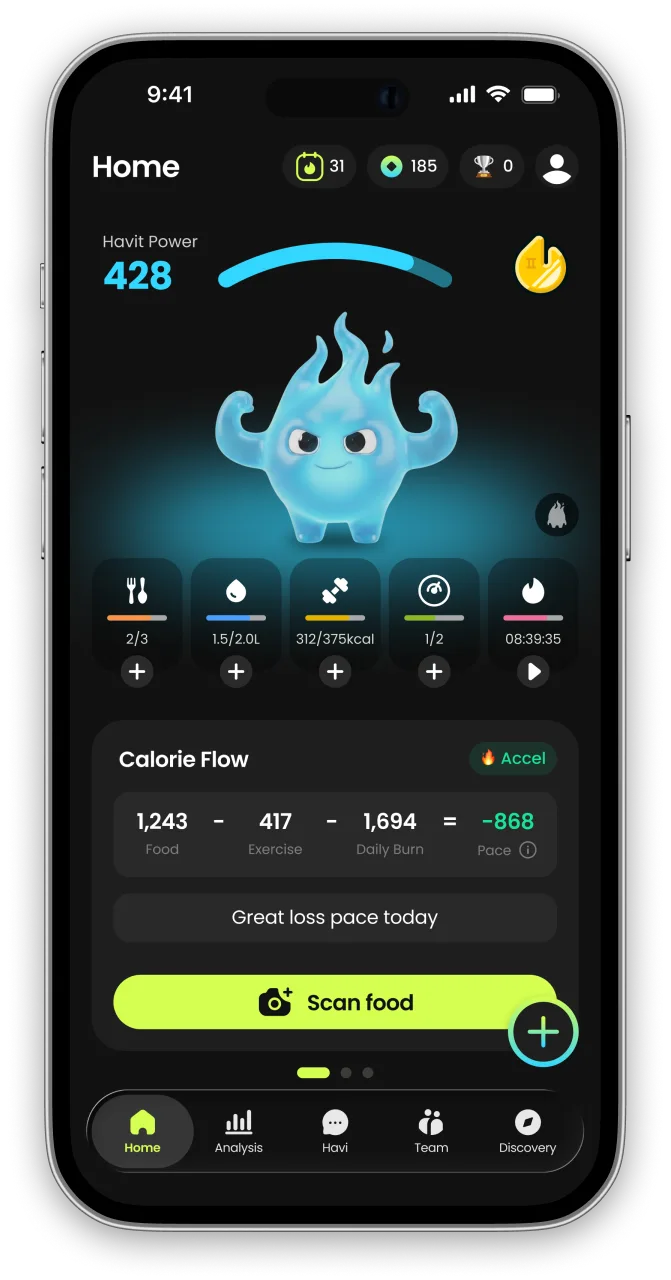
O HAVIT foi criado para este momento — um só app que reúne acompanhamento do medicamento, composição corporal, nutrição e proteína, construção de hábitos diários e um coach de IA que se adapta a você. Entre nossos 1.090 usuários de GLP-1, os que registraram com mais constância construíram os hábitos mais fortes (veja o relatório de hábitos com GLP-1).
Cuide do medicamento e do músculo — juntos. Comece com o HAVIT →

09
Guias relacionados
- O Relatório de Hábitos com GLP-1: o que 1.090 usuários revelam
- Efeitos colaterais do GLP-1: o que é normal e quando se preocupar
- App para acompanhar GLP-1: o guia completo
- Perguntas sobre GLP-1 respondidas: as principais dúvidas
Transforme sequências, proteína e progresso em uma rotina que você realmente mantém — HAVIT. A pequena vitória de hoje muda o resultado do próximo mês.
Perguntas frequentes
O que significa gamificar a perda de peso?
A gamificação realmente ajuda na perda de peso?
Quais elementos de jogo funcionam melhor?
Como as sequências ajudam sem me deixar ansioso?
Devo gamificar o número da balança?
Quanto tempo até esses hábitos se firmarem?
A gamificação pode proteger meu músculo com um GLP-1?
Isso substitui o atendimento médico?
O que é o HAVIT?
O HAVIT é um parceiro de saúde com IA baseado na ciência do metabolismo: protege seus músculos, desperta seu metabolismo e ajuda você a manter por muito tempo um corpo saudável e sem efeito sanfona.
Diferente dos apps que só contam calorias, o HAVIT conecta estimativas de composição corporal por IA com alimentação, hidratação, sono, passos, ciclo, humor e medicação GLP-1 em uma única rotina diária — assim o progresso é medido pela composição corporal, não apenas pelo número na balança. As missões diárias transformam técnicas de mudança de comportamento já validadas em ações pequenas e repetíveis, com a experiência de profissionais que atuaram na Juvis Diet, uma das principais clínicas metabólicas da Coreia.
Na análise própria do HAVIT com 1.090 usuários de GLP-1, quem registrou de forma consistente construiu hábitos mais sólidos que a base geral de usuários. Ler o Relatório de Hábitos GLP-1
Dentro do app
- COACH DE IASaiba o que fazer hoje.
- NUTRIÇÃORegiste refeições em segundos.
- COMPOSIÇÃO CORPORALVeja para além do peso.
- MISSÕES DIÁRIASCrie hábitos que consegue repetir.
- CHECK-IN DIÁRIODiga à HAVI como está a correr o dia.
- REGISTE TUDODa água ao GLP-1
- MENTE E RECUPERAÇÃOPara os dias em que a força de vontade acaba.


O HAVIT funciona com ou sem medicação GLP-1. É um app de bem-estar, não um dispositivo médico; os resultados de composição corporal são estimativas.
Continue no app
Bem-estar personalizado com seus próprios dados


Referências
- Mazeas A, Duclos M, Pereira B, Chalabaev A. Evaluating the Effectiveness of Gamification on Physical Activity: Systematic Review and Meta-analysis of Randomized Controlled Trials. J Med Internet Res 2022;24(1):e26779. pmc.ncbi.nlm.nih.gov
- Lally P, van Jaarsveld CHM, Potts HWW, Wardle J. How are habits formed: Modelling habit formation in the real world. Eur J Soc Psychol 2010;40:998-1009. onlinelibrary.wiley.com
- U.S. Preventive Services Task Force — Weight Loss to Prevent Obesity-Related Morbidity and Mortality in Adults: Behavioral Interventions. uspreventiveservicestaskforce.org
- Neeland IJ, et al. Changes in lean body mass with GLP-1-based therapies. Diabetes, Obesity and Metabolism 2024. dom-pubs.onlinelibrary.wiley.com


