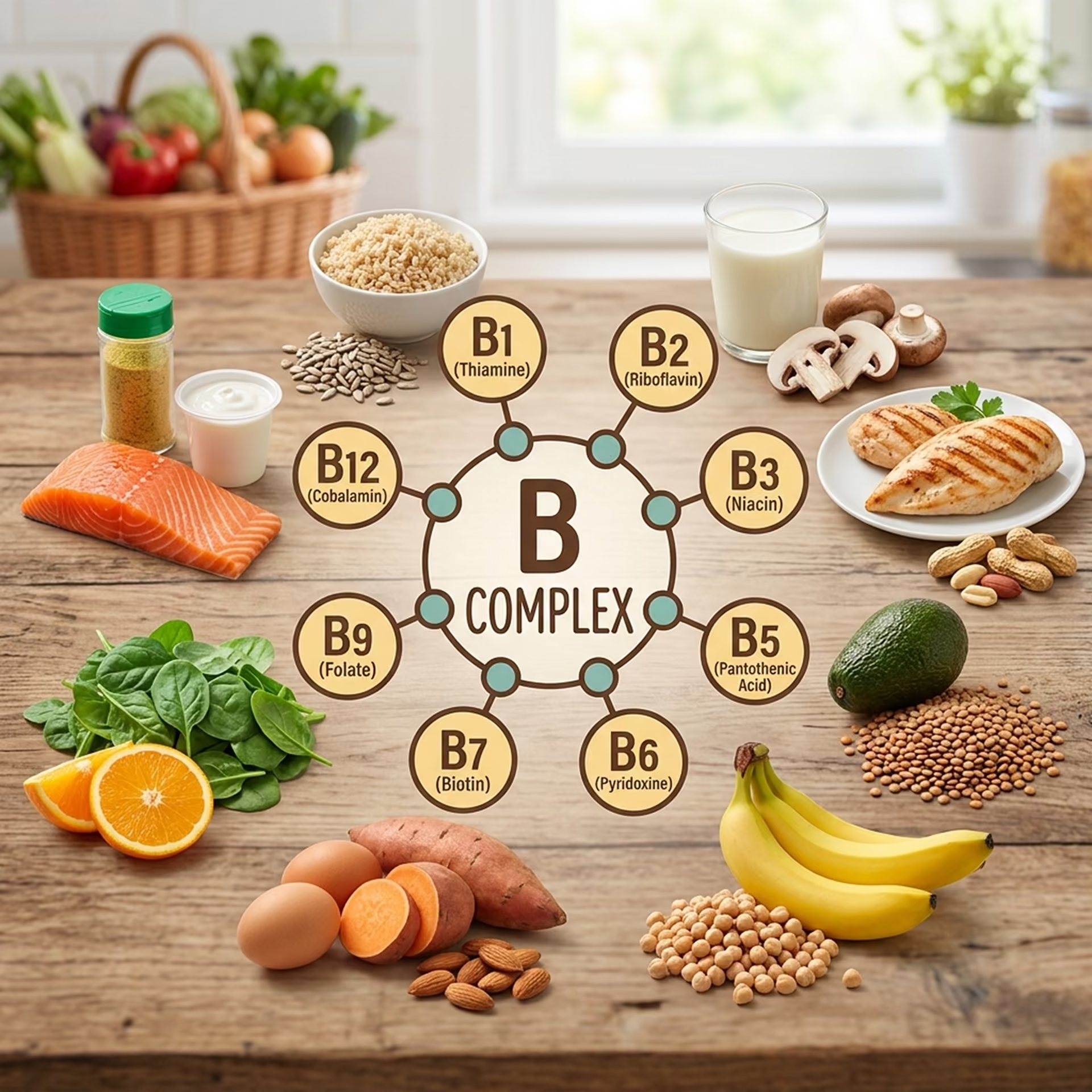

Cholecystokinin (CCK): The Hormone of Fullness and Digestion
Cholecystokinin (CCK) is a peptide hormone released in the small intestine, mainly in response to dietary fat and protein. It makes the gallbladder contract, stimulates pancreatic enzymes, slows stomach emptying and sends a fullness signal to the brain through the vagus nerve. In human infusion studies, extra CCK-like peptide cut meal size, while blocking CCK receptors raised hunger in some trials but not in others.
This article is for general informational purposes only and is not a substitute for professional medical advice, diagnosis, or treatment. Always consult a qualified healthcare provider with questions about a medical condition.
What is the CCK hormone?
Cholecystokinin (CCK) is a peptide hormone released by endocrine cells of the upper small intestine. After you eat, it does two main jobs: it switches on digestion and it helps tell the brain that you have eaten enough. If you searched for "cck hormona" or "hormona cck", that is the short answer. CCK is a gut hormone for digestion and satiety.
The hormone was discovered in 1928 because of its ability to make the gallbladder contract. Later research showed that it has many functions in both the digestive tract and the brain.
Together with secretin and gastrin, CCK forms what endocrinologists call the classical gut hormone triad. It is also a messenger inside nerve cells. CCK is the most abundant neuropeptide in the human brain, so it is far more than a digestive chemical.
For a wider view of how CCK works alongside GLP-1, PYY and ghrelin, see our overview of gut hormones and appetite regulation.
Where CCK is made and what triggers it
Specialised cells in the intestinal lining, called I-cells, release CCK. The main triggers are dietary fat and protein. When digested lipid and protein reach these cells, receptors on their surface, including GPR40 and the calcium-sensing receptor, prompt them to release the hormone.
Not every fat has the same effect. In a randomized crossover study of 12 healthy men, researchers gave four meals on separate days: carrots alone, or carrots with one of three different lipids. Only olive oil stimulated CCK release. Carrots alone and carrots with tributyrin, a fat made of short-chain fatty acids, raised none of the measured hormones. The authors concluded that oleic acid from olive oil appears to be fully responsible for the CCK response.
The same study gave an interesting detail. A test oil that delivered medium-chain fatty acids raised GLP-1 about as much as olive oil did, yet it did not raise CCK. The two satiety hormones are separate signals and can respond to the same meal in different ways.
CCK and digestion: gallbladder, pancreas and stomach
The gallbladder
CCK is the major regulator of gallbladder contraction. In one study, gallbladder volume decreased maximally to 12 ± 4% after oral food, while plasma CCK levels and pancreatic enzyme output increased 6- to 8-fold. When the researchers blocked CCK receptors with the drug loxiglumide, gallbladder contraction after food was completely abolished. Gallbladder contraction, together with CCK-driven relaxation of the sphincter of Oddi, regulates the flow of bile into the intestine.
The pancreas
CCK also stimulates digestive enzymes from the pancreas, but here it shares control with the nervous system. In the same study, blocking CCK reduced post-meal enzyme secretion by 30%, while blocking the cholinergic nerve signal with atropine essentially stopped it. The authors described the pancreas as crucially dependent on a cholinergic background, with CCK modulating the response.
These effects are not just lab artefacts of high doses. In a study of 7 healthy people, infusing CCK to plasma levels similar to those after a meal raised trypsin secretion from 0.5 to 1.4 KU per 15 minutes. Bilirubin output, a marker of bile delivery, rose from 1.6 to 30.3 µmol per 15 minutes. The authors concluded that physiological concentrations of CCK stimulate pancreatic enzyme secretion and gallbladder contraction.
The stomach
CCK controls how fast nutrients reach the small intestine by inhibiting both food intake and gastric emptying. It slows the stomach through a vagal nerve pathway acting on the upper stomach and the pylorus, the valve at the stomach's exit. Slowing gastric emptying regulates the flow of partly digested food into the duodenum.
Review evidence also suggests a role beyond digestion. Dietary fats, by raising CCK, reduced intestinal inflammation in the research discussed in one review. This points to a hormone that coordinates eating and digestion as one process.
How CCK helps you feel full
CCK's main route to the brain is the vagus nerve. Vagal afferent neurons, the sensory fibres that carry messages from the gut to the brainstem, are a primary target of CCK. They combine CCK's signal with other hormones. Leptin, the hormone released from fat tissue, strengthens CCK's effects on these neurons, while ghrelin, the hunger hormone, weakens them.
CCK induces satiety by acting through CCK-1 receptors in specialised regions of the hindbrain. It also suppresses appetite-stimulating peptides in the hypothalamus and prevents ghrelin from stimulating certain neurons. Human brain imaging shows that ingested fatty acids activate the brainstem, hypothalamus and motor cortex. A CCK-1 receptor blocker inhibits that activation.
What infusion studies show
Early human experiments tested this by infusing CCK or a closely related peptide before a meal. In one double-blind study, 12 women and 12 men received ceruletide, a peptide structurally related to CCK, and were then offered as much scrambled eggs with ham, bread and tea as they wanted. At the higher dose, they ate 16.8% less than with saline (3725 kJ versus 4340 kJ) and reported less hunger. The lower dose cut intake by only 6.6%, with no significant changes in the other measures.
The effect came with a trade-off. At the higher dose, participants also had longer reaction times and weaker psychomotor performance. A larger dose of a CCK-like signal reduces eating, but it does not act only on appetite.
What happens when CCK is blocked
If CCK is a real fullness signal, blocking its receptor should make people eat more. The human results here are mixed.
In randomized, double-blind, placebo-controlled crossover studies in healthy men, loxiglumide produced a slight (7%) increase in food intake that was not statistically significant. It did produce a modest (10%) and significant increase in calorie intake. Participants felt more hunger and delayed fullness than during saline infusion. The authors read this as further evidence that CCK is an endogenous satiety signal.
A study in 7 lean and 7 obese women found no such effect. Food intake of a carbohydrate-rich meal was 359 ± 39 g with loxiglumide and 333 ± 31 g with saline, which was not a significant difference. Satiety scores did not change either.
The two studies used different participants and protocols, so they cannot be compared directly. Taken together, they suggest CCK is one fullness signal among several rather than a single master switch.
CCK, body weight and digestive conditions
If CCK reduces meal size, why doesn't it simply prevent weight gain? Part of the answer may lie in the nerve that carries its message. The responses of vagal afferent neurons to CCK are attenuated in obesity. Researchers have proposed that this resistance to CCK may contribute to altered regulation of food intake.
Reviewers have suggested that understanding how CCK regulates appetite pathways may lead to strategies for obesity and bulimia. That remains a research goal.
CCK also appears in digestive disorders. Secretion of CCK is impaired in celiac disease and bulimia nervosa, based on the limited data available. In functional dyspepsia, a common condition with meal-related upper-abdominal symptoms, intravenous CCK has been observed to reproduce symptoms. That effect could be blocked by atropine and by loxiglumide. One review suggests that an altered response to CCK may contribute to the gastric dysfunction seen in some patients.
Can you measure CCK levels?
People often look for a "normal" CCK value. Accurate CCK assays have been difficult to develop, and knowledge about CCK secretion in disease is limited as a result.
Research studies give a sense of scale. In the study of 7 healthy people, fasting plasma CCK was 2.0 ± 0.2 pmol/l. After a standardized test meal, it rose to levels between 4.6 ± 0.6 and 7.3 ± 1.0 pmol/l. Those figures come from one small group measured with one specific assay, so they should not be used to judge an individual result.
In clinical medicine, CCK is used mostly as a test substance rather than measured. Stimulation with external CCK has proved useful in diagnostic tests of gallbladder and pancreatic diseases, as well as medullary thyroid carcinoma.
Practical takeaways for appetite
You cannot dial CCK up directly, but you can eat in ways that use the system as designed.
- Include protein and some fat in meals. These are the nutrients that trigger CCK release from intestinal I-cells.
- Consider fat type. In the 12-man study, olive oil was the only lipid tested that raised CCK.
- Eat at a pace that lets signals arrive. CCK works within a meal by slowing stomach emptying and signalling fullness through the vagus nerve.
- Don't rely on one hormone. Blocking CCK raised calorie intake in one trial and had no effect in another, so other signals clearly matter too.
If you want a food-level view of which meals keep hunger quiet longest, our satiety index ranking is a useful companion to the hormone story told here.
HAVIT: One App for Your Whole Healthy Lifestyle, Not Just Meals, Nutrition, and Calories
HAVIT is an AI diet coach app built by experts from Juvis Diet, one of Korea's leading diet clinics. It goes beyond tracking meals, nutrition, and calories. Body composition, sleep, exercise, and mental well-being all live in the same app. At the clinic, staff guided members through three steps: analyze the body, set number-based goals, and coach every day. HAVIT brings that same flow to your phone.
Here's what a clinical study found. In a 12-week clinical study with Eulji University, 31.7% of the HAVIT group lost 5% or more of their body weight, compared with 8.1% of the control group (about 3.9x). 83% of the HAVIT group lowered their body fat percentage, compared with 49% of the control group. The study ran June–August 2026 and analyzed 78 people (HAVIT 41, control 37) who had InBody results from both weeks 1 and 12. It was a non-blinded study, and HAVIT was involved in it. Results vary by individual.
| Developer | Havit Inc. |
| Built by | Experts from Juvis Diet, one of Korea's leading diet clinics |
| Clinical study | 12-week clinical study with Eulji University (78 people, non-blinded) |
| Free | Meal logging (search or manual entry) with calories per meal; tracking for weight, water, sleep, steps, fasting, mood, menstrual cycle, and GLP-1; body composition estimate; chat with the AI coach (daily message limit) |
| HAVIT Premium | Macro analysis per meal and per day, calories remaining, AI food scan, unlimited chat, daily check-ins, workout videos, guided meditations, and articles, 2 savers weekly (items that protect your streak), evening recap and one-line goal |
| App Store | 4.7 (171 US and 282 Korean ratings, checked November 2026) |
| Platforms | iOS, Android |
What's included in Free and Premium reflects the app's default settings as of October 2026. Some Premium features may be unlocked for free during promotions.
1. AI Body Composition Analysis: Analyze Your Body Without Any Equipment, Then Track Your Way to Your Goal Weight in Numbers
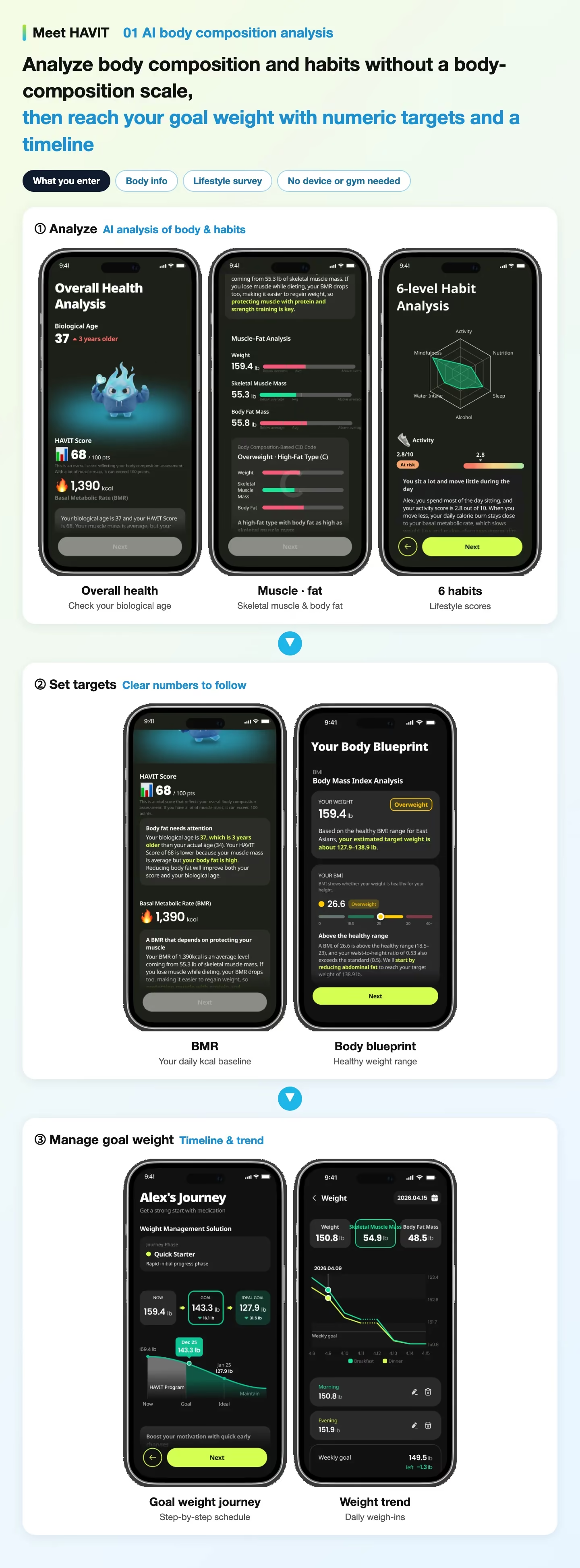
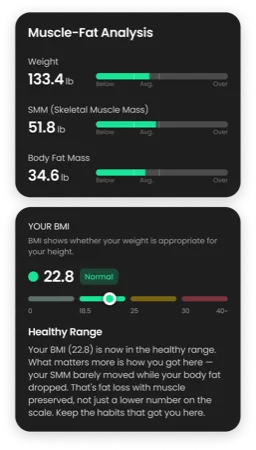
HAVIT asks for your height and weight, plus a few questions about your build and daily habits. From your answers it estimates your skeletal muscle mass and body fat mass, then analyzes your body type based on your muscle-to-fat balance (free). A scale alone can't tell you whether you lost fat or muscle. These are estimates, not InBody or DEXA measurements. Knowing the difference matters even more if you're on a GLP-1 medication like Wegovy or Zepbound. Lean mass has been reported to make up 40–60% of weight lost in some trials and 15% or less in others (Neeland 2024).
Based on your analysis, HAVIT sets 10 daily goals in numbers. They cover:
- a calorie intake that never drops below your basal metabolic rate
- protein, carbs, fat, and fiber
- calories burned and steps
- sleep, water, and weigh-ins
The logging screen shows at a glance how close each meal gets you to your calorie and nutrient goals (macro analysis per meal and per day is HAVIT Premium).
2. AI Coach and 12-Week Method: 1:1 Feedback on Every Log
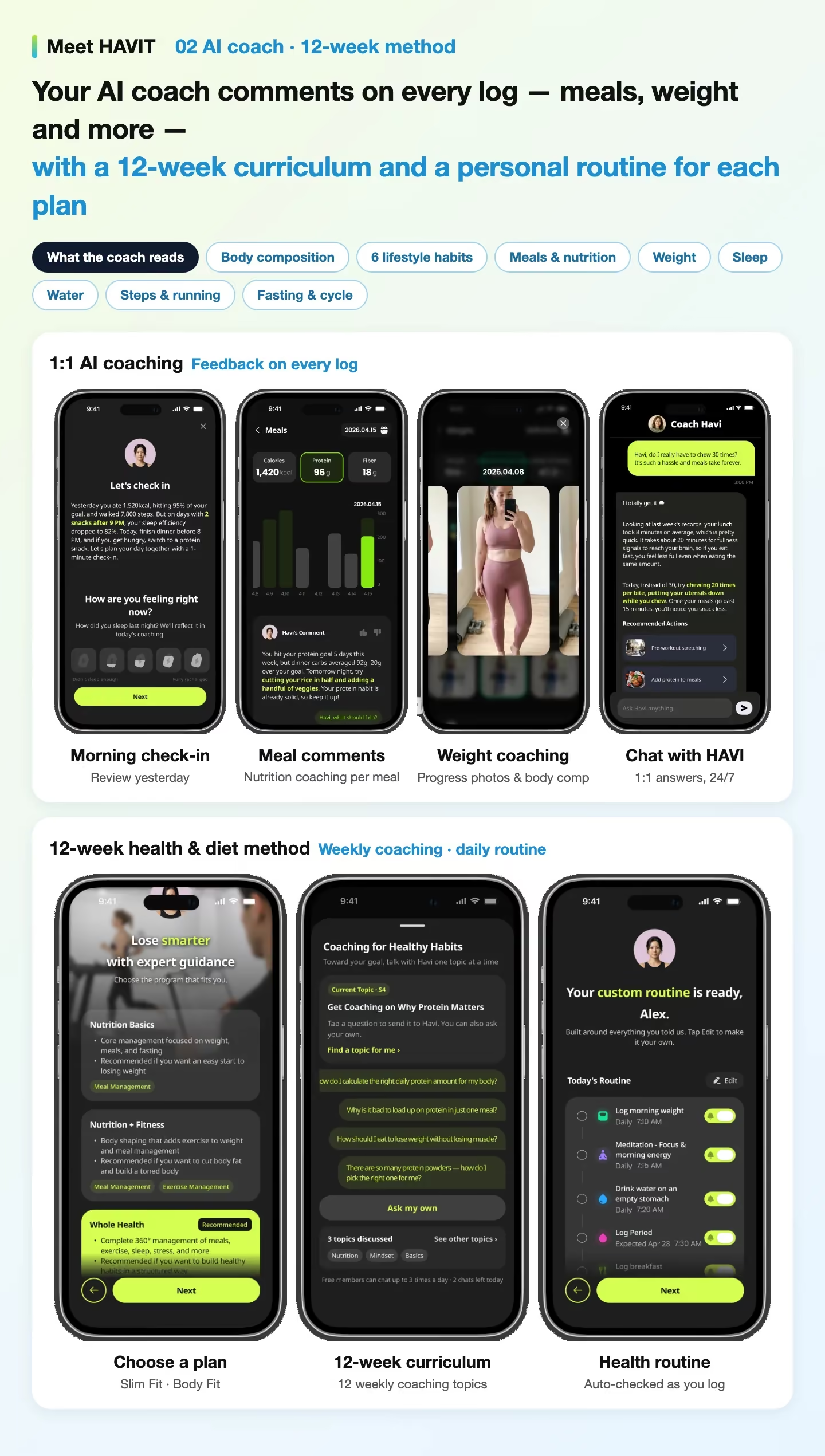
Every time you log, the AI coach HAVI tells you how you're tracking against today's goals and which nutrients you're short on. Then it suggests what to add at your next meal. Most calorie counters stop at the numbers. HAVIT keeps going.
You start by building your plan in a conversation. HAVI asks about your goals, whether you're on a GLP-1 and any side effects, and body details like height and weight. From your answers, it creates a Body Blueprint that sums up where your body is now, along with a goal plan.
Every day, HAVI looks past calories to the rest of your logs. Most calorie apps only look at what you ate. HAVI reviews your meal logs alongside your weight, water, sleep, steps, fasting, menstrual cycle, mood, and GLP-1 logs. A 1-minute check-in helps you map out the day together (daily check-ins are HAVIT Premium). Say you're staying within your calories, but you snack more the day after a short night's sleep. HAVI will point out that connection before telling you to cut calories further.
You can ask with a photo. Stuck between two snacks at the grocery store, or scanning a restaurant menu? Send a photo and ask which is the better pick. Free members have a daily chat limit, and HAVIT Premium makes it unlimited. At 10 pm, an evening recap wraps up your day, and you can leave a one-line goal for tomorrow (HAVIT Premium).
The team spent years supporting members in person at Juvis Diet. That experience taught them that sticking with logging over the long run matters more than hitting your calories exactly, so the app is built around consistency.
- A 12-week program. Each of the 12 stages has missions. Completion isn't self-reported. It's checked against your actual logs, like meals and steps.
- Miss a day and keep your streak. For missions that run several days in a row, your first miss is forgiven, a saver covers the second, and the third resets the mission. HAVIT Premium gives you 2 savers every week.
3. Tracking and Health Content: From GLP-1, Meals, and Sleep to Workouts, Meditation, and Articles
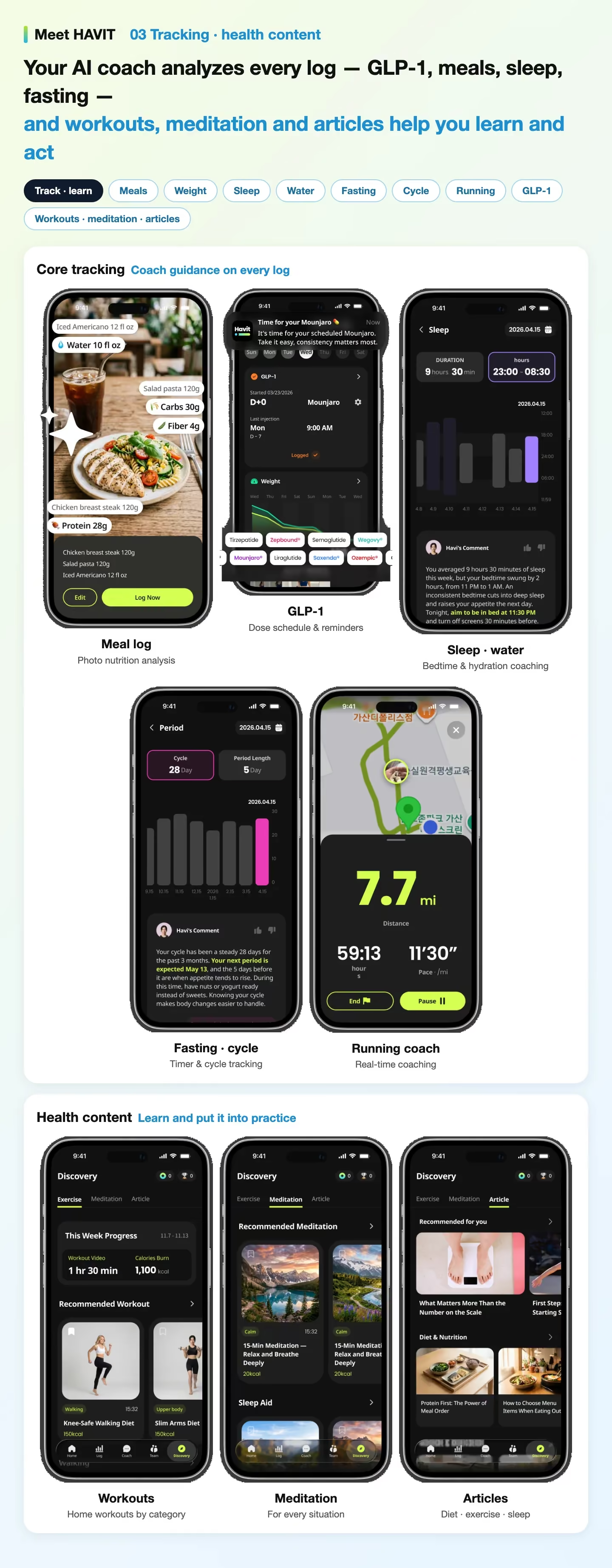
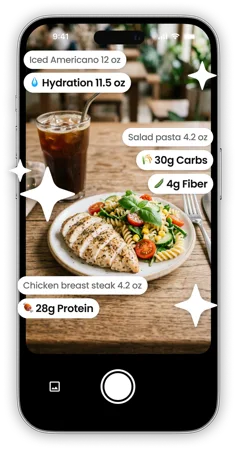
Calories per meal are free. Search for a food or enter it manually, and your calories add up meal by meal. The AI food scan, which estimates the dish, its calories, and its nutrients from a single photo, is HAVIT Premium.
The AI food scan is an estimate, too. A photo can't show how much oil or sauce went into a dish. Use it to make sure home-cooked meals with lots of different dishes don't go unlogged. When the oil or portion sizes differ from usual, adjust them by hand.
Sleep, water, fasting, menstrual cycle, and GLP-1 tracking are all free. HAVI comments on each one as you log:
- Sleep: HAVI looks at how consistent your bedtime is, not just how long you slept.
- Water: it shows which times of day you tend to fall short.
- Menstrual cycle: you log symptoms along with your cycle, and coaching adjusts to where you are in it.
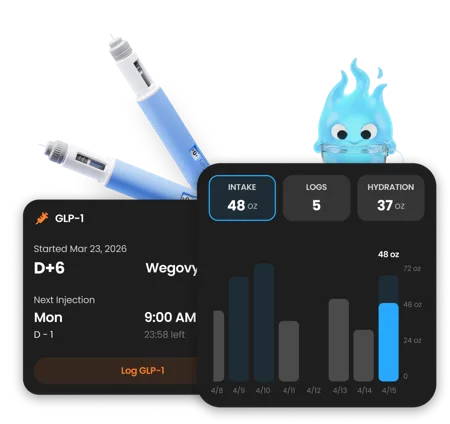
- GLP-1: you can set up a dosing schedule and reminders, then view them alongside your weight changes.
- Running: distance, time, and pace are tracked in real time, and you can see them on your lock screen.
The same app also has workout videos by category and 6 guided meditation types: breathing and relaxation, sleep, stress and anxiety relief, appetite and craving control, focus, and gratitude (HAVIT Premium). They come in handy when your hunger is emotional.
4. Habits That Stick Like a Game
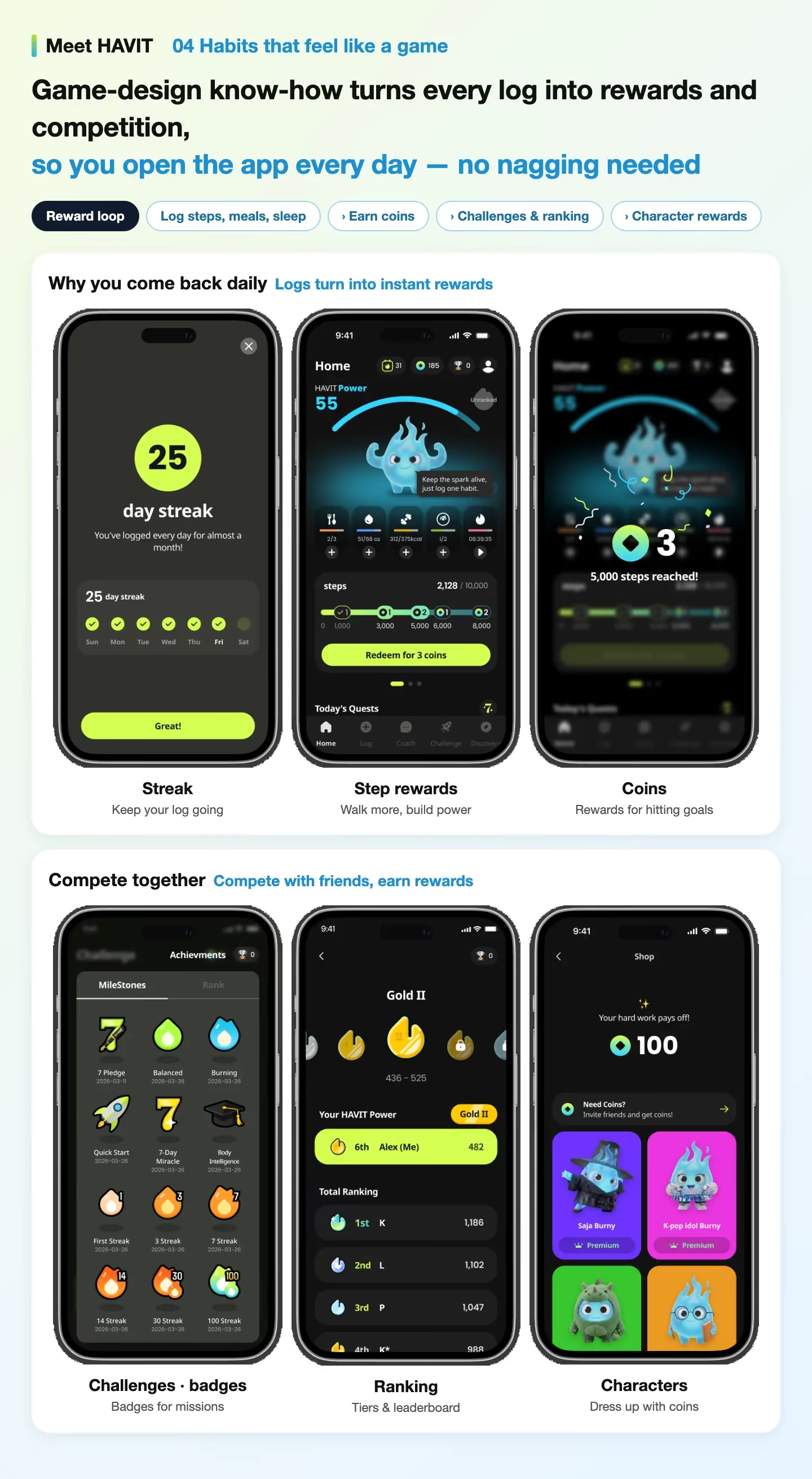
Logging your steps, meals, and sleep earns coins. You can compete with friends in challenges and rankings, and use your coins to dress up your character. Every log turns into an instant reward, so you'll want to open the app every day even without anyone cheering you on.
- Stay motivated like it's a game. There are streaks, coins for steps, challenges and badges, and rankings.
📊 Key Stats
Key human studies on CCK, digestion and food intake
| Study | Participants | What was tested | Main finding |
|---|---|---|---|
| Ceruletide infusion trial | 12 women, 12 men, non-obese | Ceruletide (CCK-like peptide) infusion before a free-choice meal | Higher dose: 16.8% less eaten (3725 vs 4340 kJ), less hunger, slower reaction times; lower dose: 6.6% less, no significant changes |
| Loxiglumide crossover studies in men | Healthy men | CCK-A receptor blocker loxiglumide vs saline | Food intake +7% (not significant), calorie intake +10% (significant), more hunger, delayed fullness |
| Loxiglumide study in lean and obese women | 7 lean and 7 obese women | Loxiglumide vs saline before a carbohydrate-rich meal | No significant change: 359 ± 39 g vs 333 ± 31 g eaten |
| Dietary lipid crossover study | 12 healthy men | Carrot meals with different lipids | Only olive oil raised CCK; carrots alone and tributyrin raised no measured hormones |
| CCK infusion at meal-level concentrations | 7 healthy people | Test meal and CCK infusion | Fasting CCK 2.0 pmol/l, post-meal 4.6–7.3 pmol/l; meal-level CCK raised trypsin and bile output |
| Gallbladder and pancreas blockade study | Human volunteers | CCK blockade vs cholinergic blockade after food | Gallbladder fell to 12 ± 4% of volume; CCK blockade abolished contraction and cut enzyme secretion by 30% |
❓ Frequently Asked Questions
What does the CCK hormone do?
Where is cholecystokinin produced?
What foods increase CCK?
Does CCK help with weight loss?
What is a normal CCK level?
Is CCK the same as GLP-1?
An AI weight-loss coach built by experts from Juvis Diet, one of Korea's leading weight-loss clinics
Analyze. Set targets in numbers. Coach every day.
Articles give everyone the same averages. HAVIT assesses your body first, uses the results to set daily targets in numbers, and works through them with you for 12 weeks.
- Step 1AI body composition check, no equipment needed
Just your height, weight, age, and a few lifestyle questions are enough to estimate your body composition. In our own study (70 people), estimates were 92.9% accurate compared with InBody measurements.
- HAVIT Score and basal metabolic rate
- Muscle-fat analysis and body composition type
- Obesity level, abdominal fat ratio, and visceral fat
- Body blueprint: healthy goal weight, waist-to-height ratio, and safe rate of weight loss
- 6-stage habit analysis
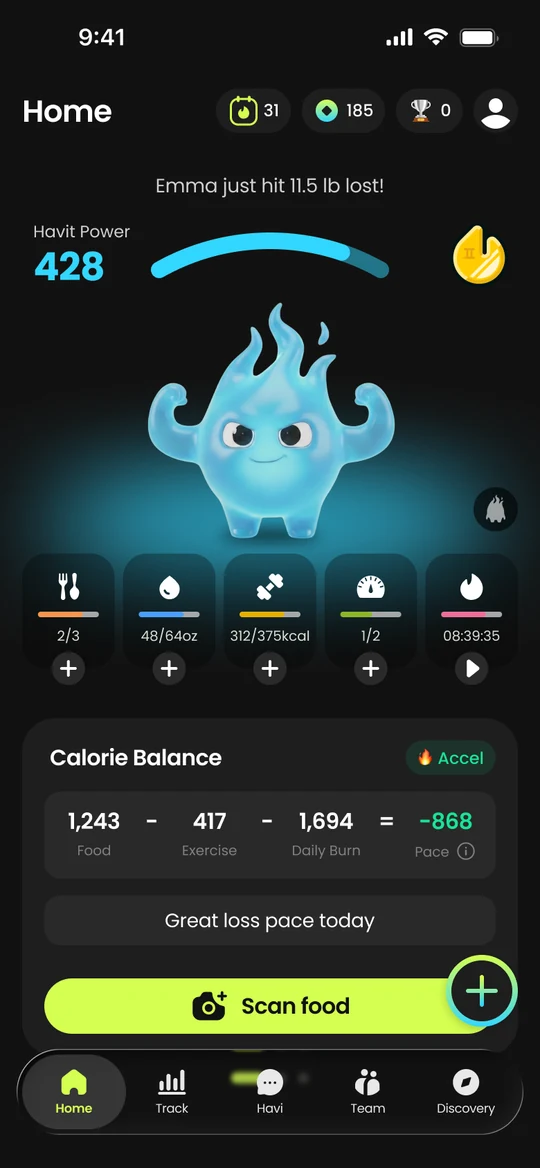
- Step 211 daily targets, set in numbers
Your results set exact numbers for what to hit each day. Targets are readjusted every week based on how your weight changes.
- Calorie intake, protein, carbs, fat, and fiber
- Calories burned and steps
- Sleep and water
- Weigh-in frequency and target BMI
- Step 3Daily action and AI coaching
A plan only works if you follow it. We make logging easy and your next step clear.
- Log meals with a single photo
- AI coach HAVI reads your logs and suggests one thing to do today
- Personalized plans across 126+ categories based on your results
- CBT-based coaching for your mindset, not just your diet
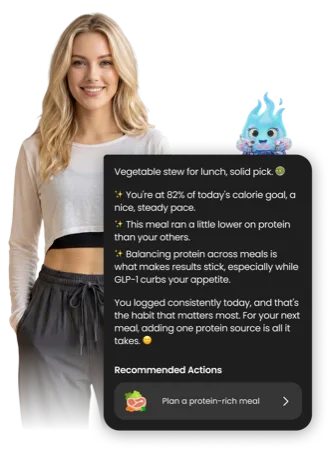
- All-in-oneEverything in one app
No more switching between apps. When everything about your body lives in one place, your AI coach can see the full picture.
- Meals, water, workouts, and steps
- Sleep, weight, and body composition trends
- Menstrual cycle, mood, and daily check-ins
- GLP-1 medication logs and reminders
- Guided meditation, workout videos, and running coach
- Challenges and avatars that make it feel like a game
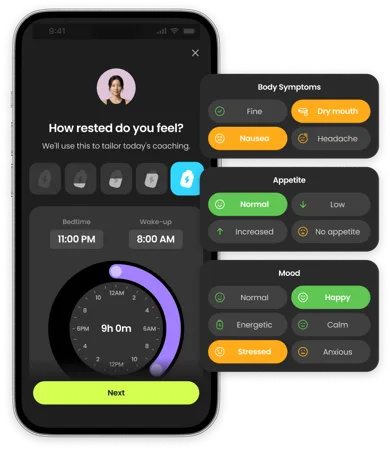
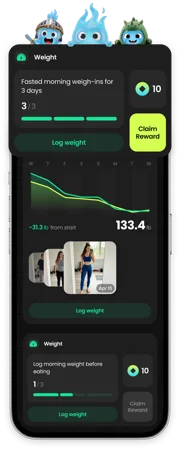
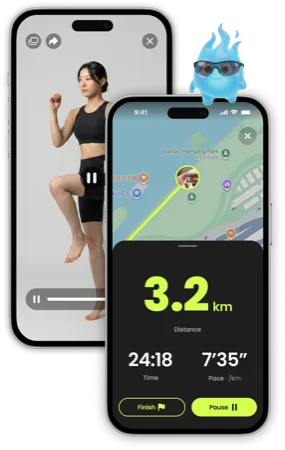
Analysis of 78 people (41 HAVIT, 37 control) with InBody results at week 1 and week 12, June–August 2026. Non-blinded study.
HAVIT is a wellness app, not a medical device. Body composition results are estimates.
A new quiz and health tip every day
Follow HAVIT on Instagram and Threads. @havit_app.en
References
- Cholecystokinin. — Current opinion in endocrinology, diabetes, and obesity, 2007
- Cholecystokinin — Best practice & research. Clinical endocrinology & metabolism, 2004
- Cholecystokinin. — Current opinion in endocrinology, diabetes, and obesity, 2012
- Role of cholecystokinin in the regulation of gastrointestinal motility. — The Journal of nutrition, 1994
- Physiological plasma concentrations of cholecystokinin stimulate pancreatic enzyme secretion and gallbladder contraction in man. — Life sciences, 1985
- Postprandial control of gallbladder contraction and exocrine pancreatic secretion in man. — European journal of clinical investigation, 1992
- The 2-monoacylglycerol moiety of dietary fat appears to be responsible for the fat-induced release of GLP-1 in humans. — The American journal of clinical nutrition, 2015
- Ceruletide decreases food intake in non-obese man. — Peptides, 1982
- Loxiglumide, a CCK-A receptor antagonist, stimulates calorie intake and hunger feelings in humans. — American journal of physiology. Regulatory, integrative and comparative physiology, 2001
- Satiety effects of the type A CCK receptor antagonist loxiglumide in lean and obese women. — Biological psychiatry, 1995
- Cholecystokinin hyperresponsiveness in functional dyspepsia. — World journal of gastroenterology, 2006