
Dopamine Detox: Does the Science Actually Support Resetting Your Reward System?
There is little direct evidence that a dopamine detox resets anything in your brain, and the viral version oversimplifies how dopamine works. But cutting back on phones or social media for two to four weeks has produced small, real gains in attention and mood in trials.
This article is for general informational purposes only and is not a substitute for professional medical advice, diagnosis, or treatment. Always consult a qualified healthcare provider with questions about a medical condition.
The Question Your Brain Is Asking
If you have ever watched a tech CEO on a podcast claim he "reset his dopamine" by sitting in a dark room for 24 hours, you know the pitch. No phone, no food, no conversation. His reward? Apparently, an apple tasted like the best thing he'd ever eaten. The comments section tends to explode with people planning their own dopamine fasts. But here's what nobody asks: is any of this actually how dopamine works?
The dopamine detox trend is all over TikTok. Silicon Valley executives swear by it. Wellness influencers sell courses on it. Yet when you dig into the neuroscience, the picture gets complicated fast. Some of it holds up surprisingly well. Some of it is, frankly, nonsense dressed in scientific-sounding language.
What Dopamine Actually Does (Spoiler: Not What You Think)
Forget everything you've heard about dopamine being the "pleasure chemical." That framing, while catchy, misses the point entirely.
Dopamine is closely tied to anticipation and motivation. It's the neurochemical equivalent of your brain saying "that thing might be worth pursuing." In a classic 1998 review, Wolfram Schultz showed that dopamine neurons shift their response during learning from the reward itself to the cue that predicts it, and a notification may work as that kind of cue, although no one has measured this directly on phones. Berridge and Robinson made the point about pleasure in 1998: rats with up to 99% of their dopamine depleted in key reward areas still showed normal pleasure reactions to sweet tastes, which led the authors to conclude that dopamine is needed for "wanting" a reward, not "liking" it. Human evidence adds a wrinkle. A 2011 PET and fMRI study in Nature Neuroscience found dopamine release at the peak of musical pleasure, with anticipation engaging a different part of the striatum (the caudate) from the peak itself (the nucleus accumbens). So anticipation and reward both matter, and there is no single percentage for which one releases more.
This distinction matters enormously for understanding whether "detoxing" makes any sense. You're not trying to reduce pleasure. You're trying to recalibrate what your brain considers worth pursuing.
The reward prediction error model, first described by Wolfram Schultz in the 1990s from recordings in primates and refined extensively since, shows that dopamine neurons fire based on the difference between expected and received rewards. Get exactly what you expected? Minimal dopamine response. Get something better than expected? Big spike. Get less than expected? Dopamine neuron activity drops.
This is where chronic smartphone use gets interesting.
The Slot Machine in Your Pocket
Your phone delivers what behavioral scientists call variable ratio reinforcement. Sometimes you check it and find something exciting—a text from someone you like, a viral post, breaking news. Sometimes you find nothing. This unpredictability is a big part of what makes slot machines compelling, and many feeds work in a similar way. In a 2003 Science study in monkeys, one dopamine response built up gradually as a possible reward approached and was tied to how uncertain the reward was, peaking at a 50% chance. On the behavior side, a 2021 Nature Communications analysis of over one million posts from over 4,000 people found that social media use follows the principles of reward learning.
What about the claim that heavy phone use shrinks your dopamine receptors? We could not find a meta-analysis showing that. The direct evidence is thin. A 2011 PET study in NeuroReport found lower D2 receptor availability in parts of the striatum in men with Internet addiction, but it compared two groups at one point in time and cannot show which came first. A 2021 iScience PET study of 22 healthy adults found that a higher share of social app use correlated with lower dopamine synthesis capacity in the putamen, which is a correlation, and a measure of synthesis rather than receptors. The strongest receptor data come from drugs: a 2017 JAMA Psychiatry meta-analysis of 31 studies (519 stimulant users, 512 controls) found clearly lower D2/D3 receptor availability in people using cocaine or amphetamines, with an effect size of -0.76. That is substance use, and it should not be stretched to phones.
But—and this is crucial—even where reduced receptor availability has been found, it isn't the same as "depleted dopamine." Your brain isn't running out of anything. And since no one has shown that phone habits change your receptors, the more useful question is this: what actually changes when you cut back?
The Plasticity Problem (And Promise)
Neuroplasticity is real, but no study has yet shown that a phone break changes dopamine receptors in humans. What trials can measure is attention, mood and time use. In a 2025 PNAS Nexus trial, 467 adults committed to blocking all mobile internet on their phones for two weeks. Screen time fell from 314 to 161 minutes a day, against 336 to 322 in the comparison group, and sustained attention, mental health and well-being improved; 91% of participants improved on at least one of these. One caveat: only 119 people (25.5%) kept the block on for at least 10 of the 14 days.
Two weeks. Not the 24-hour "hard reset" that dominates social media advice. In a 2019 Addictive Behaviors study, 24 hours without a smartphone changed craving, and did not change mood or anxiety.
The research suggests something more nuanced than a simple detox. Dr. Anna Lembke, author of "Dopamine Nation" and Chief of the Stanford Addiction Medicine Dual Diagnosis Clinic, recommends what she calls a "dopamine fast"—but her version looks nothing like sitting in darkness. In a 2025 CNN interview, she describes a 30-day abstinence trial from a person's specific drug of choice, not from every reward. The goal isn't deprivation across the board. It's targeted, and it comes from clinical practice rather than from a phone trial.
She also warns that people will feel worse before they feel better, and says that if they get through the first 10 to 14 days, they often feel much better. That is a clinician's observation from her addiction work. No brain-scan study we could find backs it up for phones.
What the Viral Version Gets Wrong
The popular dopamine detox protocol—avoiding all pleasurable activities for a day or weekend—misunderstands the underlying neuroscience in several ways. A 2024 literature review in Cureus notes that critics say the idea has no scientific proof behind it, and that results vary widely from person to person.
First, dopamine isn't a finite resource you "use up." Your brain synthesizes it continuously from the amino acid tyrosine. You can't deplete your supply by enjoying things.
Second, the timeline is off. No study has shown receptor changes after a phone break on any timeline. Where recovery has been measured in the dopamine system, it took far longer: in five methamphetamine users retested after 12 to 17 months of abstinence, dopamine transporters had risen 19% in the caudate and 16% in the putamen (Volkow, 2001). That is a different molecule and a far heavier exposure, but it shows why a weekend is a hard sell. A single day of deprivation might create a temporary contrast effect (that apple really does taste better when you're hungry), but nothing shows it alters your reward circuitry.
Third, the "all stimulation is equal" assumption doesn't hold. Exercise, social connection, and accomplishing meaningful tasks all involve dopamine, but they don't create the same problematic patterns as variable-ratio digital reinforcement. Cutting out a morning run because it's "too stimulating" misses the point entirely.
The closest real comparison comes from a 2023 study in the Journal of Experimental Psychology: Applied. It split 619 smartphone users in Germany into three groups: no smartphone for 7 days (200 people), one hour less per day (226), or normal use (193). Both changes reduced depressive and anxiety symptoms and raised life satisfaction and physical activity, and most effects were stronger and more stable over 4 months in the reduction group. The wider picture is mixed, though. A systematic review of 21 digital detox studies (3,625 participants, 12 of them randomized trials) found positive effects in some studies, none in others, and even negative effects on well-being.
What Actually Works: The Evidence-Based Approach
The research points toward a more targeted strategy than blanket deprivation.
Identify your specific high-frequency reward triggers. For most people, this means social media, streaming services, or gaming—activities built to maximize engagement. You probably check more often than you think: in a small 2015 PLOS ONE study that logged 23 adults' phones for two weeks, people used their phones about 85 times a day but estimated about 37. Each check is a pull of the slot machine lever.
Implement structured reduction, not elimination. No trial we could find tested a specific percentage cut, but limits have been tested. In a 2018 trial, 143 undergraduates limited Facebook, Instagram and Snapchat to 10 minutes per platform per day for three weeks, and their loneliness and depression fell compared with controls. A 2025 meta-analysis of 10 randomized trials (1,491 people) found that cutting back on social media lowered depressive symptoms, with a modest effect size of g = 0.25. Reduction trials had twice the effect of abstinence trials, although that difference was not statistically significant. Another 2024 meta-analysis of 10 studies also found less depression (SMD -0.29), but no significant change in life satisfaction, stress or overall well-being.
Maintain healthy dopamine activities. A 2021 systematic review of 15 longitudinal and experimental studies reported robust effects of physical activity on dopamine across ages and types of exercise. It did not compare exercise with phone use, so claims about exercise giving a "steadier" dopamine curve than notifications go beyond the data.
Give it actual time. The better-tested interventions ran from two to four weeks. The largest, a 2020 American Economic Review experiment that recruited 2,743 Facebook users, had a group deactivate their accounts for four weeks; it freed up about 60 minutes a day and raised subjective well-being by 0.09 standard deviations, a small effect. Changes also don't stick by themselves: in a 2025 BMC Medicine trial, 111 students cut screen time to 2 hours a day or less for three weeks and improved on depressive symptoms, stress, sleep and well-being, but their screen time was climbing back toward its starting level at the follow-up six weeks later. Weekend detoxes might feel profound in the moment, but there's little evidence they create lasting change.
The Uncomfortable Truth About Why This Is Hard
Here's something the wellness influencers don't mention: cutting back on something you do all day can feel genuinely bad at first.
This isn't weakness or lack of willpower. Prediction error research offers one possible explanation, since dopamine neuron activity drops when an expected reward doesn't arrive, but no one has tested whether that is what's happening when you put your phone down. The feelings themselves are well documented: restlessness, irritability, difficulty concentrating, and a persistent sense that something is missing.
In a 2018 study, 152 people stayed off social media for 7 days and reported significantly more craving (β = 0.10) and boredom (β = 0.12); 59% relapsed at least once. In a 2018 trial of 127 people, 72 hours of smartphone restriction produced higher withdrawal and fear-of-missing-out scores than the control condition. We could not find any study that establishes a day-by-day curve for this discomfort, so treat any specific "peak day" with suspicion.
Slipping also matters less than most people assume. In a well-known 2010 study of habit formation (daily eating, drinking or activity habits, not phones), missing one opportunity did not materially affect the process, and getting close to peak automaticity took anywhere from 18 to 254 days.
What This Means for Your Actual Life
The science supports a modified version of dopamine detox—one that's less dramatic but more effective than the viral version.
You don't need to sit in darkness or avoid all pleasure. You need to specifically reduce the feeds and apps that pull you back most, while maintaining (or increasing) offline activities. Exercise, face-to-face social interaction, completing meaningful tasks, learning new skills—these all count. In the 2025 PNAS Nexus trial, people without mobile internet spent more time socializing in person, exercising and being in nature, and that shift partly explained their improvements.
The timeline isn't 24 hours. The trials above ran for two to four weeks, and they measured attention and mood rather than reward circuitry. Anyone promising a faster brain reset is either oversimplifying or selling something.
And perhaps most importantly: the goal isn't to eliminate dopamine activity. It's to shift what you give your attention to, toward accomplishment, connection, and growth.
That tech CEO sitting in darkness? He might have had a profound experience. But the apple tasting amazing was probably just contrast effect from hunger, not neurological reset. The real work of recalibration is slower, less Instagram-worthy, and ultimately more effective.
Your habits are remarkably adaptable. Whether a phone break changes your dopamine receptors is still unknown. What the trials do show is that a few weeks of reduced use can move attention and mood by modest amounts. That takes weeks, not hours—and targeted changes, not theatrical deprivation.
📊 Key Stats
Viral Dopamine Detox vs. Evidence-Based Protocol
| Aspect | Popular Version | Research-Supported Approach |
|---|---|---|
| Duration | 24-72 hours | 2-4 weeks in the better-tested trials |
| Scope | Avoid all pleasurable activities | Target specific high-frequency digital triggers |
| Exercise | Often avoided as 'stimulating' | Maintained or increased |
| Social interaction | Sometimes avoided | Encouraged (in-person) |
| Expected discomfort | Minimal after the fast | Craving and boredom documented; no established peak day |
| Mechanism claimed | 'Reset' dopamine levels | No reset shown; trials measure attention, mood and time use |
| Scientific support | Little direct evidence for short total fasts | Mixed overall; small effects for targeted reduction |
Comparison based on Castelo 2025, Brailovskaia 2023, Hunt 2018, Stieger & Lewetz 2018 and May 2025
❓ Frequently Asked Questions
Can you actually 'deplete' your dopamine by using your phone too much?
How long does it take to reset dopamine sensitivity?
Should I avoid exercise during a dopamine detox?
Why do I feel so restless when I try to reduce phone use?
Is social media actually designed to be addictive?
What's the difference between dopamine detox and treating addiction?
Can I do a partial dopamine detox and still see benefits?
What is HAVIT?
HAVIT is an AI health partner built on metabolic science — it protects your muscle, wakes up your metabolism, and helps you keep a healthy, rebound-free body for the long run.
Unlike calorie-only trackers, HAVIT connects AI body-composition estimates, nutrition, hydration, sleep, steps, cycle, mood, and GLP-1 medication in one daily routine — so progress is measured by body composition, not just the number on the scale. Daily missions turn established behavior-change techniques into small repeatable actions, drawing on expertise from professionals formerly at Juvis Diet, one of Korea’s leading metabolic clinics.
In HAVIT’s own analysis of 1,090 GLP-1 users, people who logged consistently built stronger habits than the general user base. Read the GLP-1 Habit Report
Inside the app
- AI COACHA coach that reads your day.
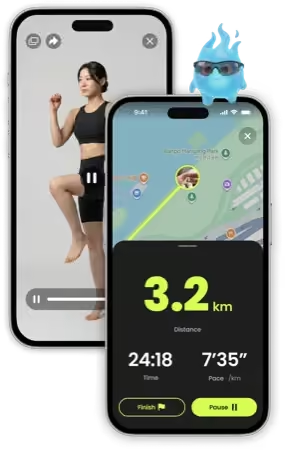
- WORKOUT & RUNNINGFrom home workouts to your next run.
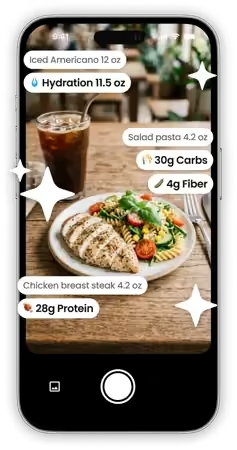
- NUTRITIONLog meals in seconds.
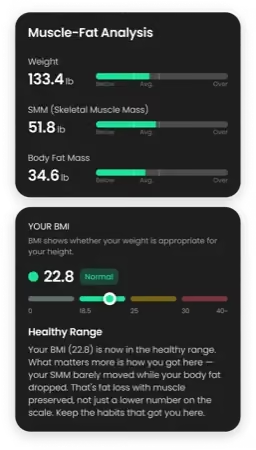
- BODY INSIGHTSSee more than weight.
- DAILY MISSIONSBuild habits you can repeat.
- DAILY CHECK-INTell HAVI how today feels.
- TRACK EVERYTHINGFrom water to GLP-1
- MIND & RECOVERYFor the days willpower runs out.

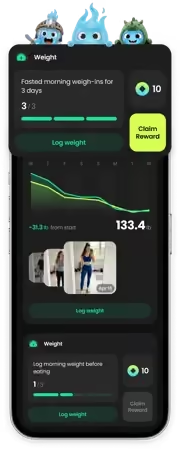
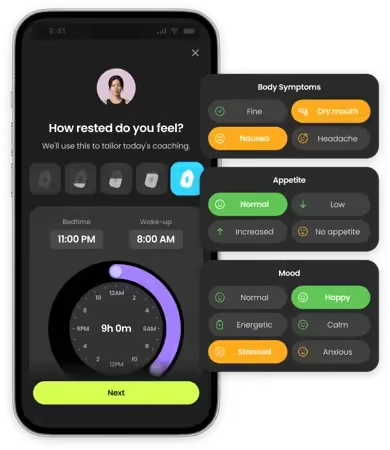
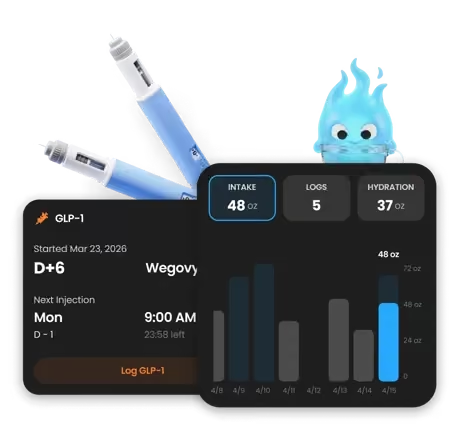

HAVIT works with or without GLP-1 medication. It is a wellness app, not a medical device; body-composition results are estimates.
Start Free
HAVIT — your AI weight loss coach, built by alumni of Juvis Diet, one of Korea's leading metabolic clinics


A new quiz and health tip every day
Follow HAVIT on Instagram and Threads. @havit_app.en
References
- Predictive Reward Signal of Dopamine Neurons — Schultz W, Journal of Neurophysiology, 1998
- A Neural Substrate of Prediction and Reward — Schultz W, Dayan P, Montague PR, Science, 1997
- What is the role of dopamine in reward: hedonic impact, reward learning, or incentive salience? — Berridge KC, Robinson TE, Brain Research Reviews, 1998
- Anatomically distinct dopamine release during anticipation and experience of peak emotion to music — Salimpoor VN et al., Nature Neuroscience, 2011
- Discrete Coding of Reward Probability and Uncertainty by Dopamine Neurons — Fiorillo CD, Tobler PN, Schultz W, Science, 2003
- A computational reward learning account of social media engagement — Lindström B et al., Nature Communications, 2021
- Reduced striatal dopamine D2 receptors in people with Internet addiction — Kim SH et al., NeuroReport, 2011
- Striatal dopamine synthesis capacity reflects smartphone social activity — Westbrook A et al., iScience, 2021
- Association of Stimulant Use With Dopaminergic Alterations in Users of Cocaine, Amphetamine, or Methamphetamine: A Systematic Review and Meta-analysis — Ashok AH et al., JAMA Psychiatry, 2017
- Loss of Dopamine Transporters in Methamphetamine Abusers Recovers with Protracted Abstinence — Volkow ND et al., The Journal of Neuroscience, 2001
- Blocking mobile internet on smartphones improves sustained attention, mental health, and subjective well-being — Castelo N et al., PNAS Nexus, 2025
- Digital detox: The effect of smartphone abstinence on mood, anxiety, and craving — Wilcockson TDW, Osborne AM, Ellis DA, Addictive Behaviors, 2019
- Finding the "sweet spot" of smartphone use: Reduction or abstinence to increase well-being and healthy lifestyle?! An experimental intervention study. — Brailovskaia J et al., Journal of Experimental Psychology: Applied, 2023
- Digital detox: An effective solution in the smartphone era? A systematic literature review — Radtke T et al., Mobile Media & Communication, 2022
- No More FOMO: Limiting Social Media Decreases Loneliness and Depression — Hunt MG et al., Journal of Social and Clinical Psychology, 2018
- Reducing Social Media Use Decreases Depression Symptoms: A Meta-Analysis of Randomised Controlled Trials — May et al., European Journal of Investigation in Health, Psychology and Education, 2025
- Impacts of digital social media detox for mental health: A systematic review and meta-analysis — Ramadhan et al., Narra J, 2024
- Bidirectional Association between Physical Activity and Dopamine Across Adulthood—A Systematic Review — Marques A et al., Brain Sciences, 2021
- The Welfare Effects of Social Media — Allcott H et al., American Economic Review, 2020
- Smartphone screen time reduction improves mental health: a randomized controlled trial — Pieh C et al., BMC Medicine, 2025
- A Week Without Using Social Media: Results from an Ecological Momentary Intervention Study Using Smartphones — Stieger S, Lewetz D, Cyberpsychology, Behavior, and Social Networking, 2018
- Smartphone Restriction and Its Effect on Subjective Withdrawal Related Scores — Eide TA et al., Frontiers in Psychology, 2018
- How are habits formed: Modelling habit formation in the real world — Lally P et al., European Journal of Social Psychology, 2010
- Beyond Self-Report: Tools to Compare Estimated and Real-World Smartphone Use — Andrews S et al., PLOS ONE, 2015
- A Literature Review on Holistic Well-Being and Dopamine Fasting: An Integrated Approach — Desai et al., Cureus, 2024
- Tyrosine hydroxylase and regulation of dopamine synthesis — Daubner SC et al., Archives of Biochemistry and Biophysics, 2011
- Dopamine Nation: Finding Balance in the Age of Indulgence — Lembke A, Dutton, 2021