
Retatrutide: What It Is and How It Works
Retatrutide is an investigational once-weekly injection that activates three hormone receptors at once: GIP, GLP-1 and glucagon. In a 48-week phase 2 obesity trial, the 12 mg dose produced a mean weight change of -24.2% versus -2.1% with placebo. A phase 3 trial in type 2 diabetes lowered HbA1c by up to 1.94% over 40 weeks. It is still under clinical development, and its most common side effects are gastrointestinal.
This article is for general informational purposes only and is not a substitute for professional medical advice, diagnosis, or treatment. Always consult a qualified healthcare provider with questions about a medical condition.
What is retatrutide?
Retatrutide is an investigational medicine being developed for obesity and type 2 diabetes. It is given as a once-weekly injection under the skin. Its development code is LY3437943.
Chemically, retatrutide is a lipidated 39-residue peptide. That means it is a single molecule that activates three hormone receptors at the same time:
- the glucose-dependent insulinotropic polypeptide (GIP) receptor
- the glucagon-like peptide-1 (GLP-1) receptor
- the glucagon receptor
This is why it is called a triple agonist. For context, semaglutide is a GLP-1 receptor agonist and tirzepatide is a dual GLP-1/GIP receptor agonist. Retatrutide keeps both of those signals and adds glucagon.
If you searched simply for retatrutide, or for retatrutide adalah, the short answer is this: an experimental weekly injection that targets three gut and pancreatic hormone pathways to reduce body weight and blood sugar. It is not yet an established treatment. A review covering evidence through 11 September 2026 reports that five phase 3 trials have announced positive primary outcomes, but only one of them had a full peer-reviewed report at that point.
How retatrutide works on three receptors
Each receptor contributes something different. Researchers are still working out how much each one matters in people, so it helps to separate what was shown in animals from what was measured in human trials.
GLP-1 and GIP: eating less
In the discovery work in obese mice, weight loss came partly from GIP- and GLP-1-receptor-driven reductions in calorie intake. Human data point the same way. In a phase 2 analysis of 275 adults with type 2 diabetes, people taking retatrutide 4 mg or more reported greater reductions in overall appetite, hunger and prospective food consumption at week 24 than those on placebo.
At the 8 and 12 mg doses, participants also reported less perceived hunger and less disinhibition, which is the tendency to overeat in situations such as stress. Those changes were linked to weight loss, though the correlations were modest (r = 0.28 for perceived hunger and r = 0.36 for disinhibition).
Glucagon: spending more energy
Glucagon is well known as insulin's counterpart in glucose control, and it has hyperglycaemic effects, which sounds like the opposite of what a diabetes drug should do. In mice, however, adding glucagon-receptor activity increased energy expenditure on top of the reduced calorie intake, and this augmented weight loss. Retatrutide's design pairs glucagon receptor engagement with incretin activity so that glucose-lowering efficacy is maintained.
A review of glucagon biology notes that the rise in energy expenditure has been shown at least in animal models, and that the pathways affected by long-term glucagon receptor activation in humans, along with its potential risks, remain to be delineated.
Receptor balance
In laboratory testing, retatrutide showed balanced activity at the glucagon and GLP-1 receptors but more activity at the GIP receptor. A pharmacodynamics review of anti-obesity drugs argues that efficacy and tolerability cannot be inferred from receptor identity alone. They emerge from relative receptor potency, exposure, tissue access and mechanism-linked adverse effects.
Why it is taken once a week
Retatrutide has a mean half-life of approximately 6 days, and its pharmacokinetics were dose proportional in early trials. That long half-life is what supports once-weekly dosing. In a phase 1 single-dose study, a reduction in body weight persisted up to day 43 after one injection.
How much weight loss did trials show?
The most detailed published weight data come from a phase 2, double-blind, placebo-controlled trial funded by Eli Lilly. It enrolled 338 adults with a BMI of 30 or higher, or a BMI of 27 to less than 30 plus at least one weight-related condition. Participants received weekly retatrutide at 1, 4, 8 or 12 mg, or placebo, for 48 weeks.
Mean weight change at 48 weeks:
- 1 mg: -8.7%
- 4 mg (combined groups): -17.1%
- 8 mg (combined groups): -22.8%
- 12 mg: -24.2%
- placebo: -2.1%
Subtracting the placebo effect gives a simple placebo-adjusted figure for the top dose: 24.2 − 2.1 = 22.1 percentage points. That matches the 22.1% placebo-subtracted weight loss for retatrutide reported in a review of antiobesity medications.
The proportion of people reaching common weight-loss thresholds is just as telling. With 12 mg, 100% lost at least 5% of body weight, 93% lost at least 10%, and 83% lost at least 15%. In the placebo group, the same figures were 27%, 9% and 2%.
Early phase 3 numbers
The large phase 3 obesity trials have so far been reported as sponsor topline disclosures, not full journal papers. In those disclosures, mean weight reductions of 28.3% at 80 weeks (TRIUMPH-1) and 28.7% at 68 weeks (TRIUMPH-4) were reported using an efficacy estimand. TRIUMPH-1 also reported a treatment-regimen estimate of 25.0%.
The difference between those two figures matters. The critical review of phase 3 evidence cautions that interpreting these results requires attention to estimands, population differences, treatment discontinuation and selection into trial extensions. Both values remain provisional until the full trial reports are published.
Retatrutide in type 2 diabetes
According to the critical review of phase 3 evidence, TRANSCEND-T2D-1 is the only phase 3 trial with a full peer-reviewed report. It ran for 40 weeks at 48 sites in the USA, Mexico and India and included 537 adults whose type 2 diabetes was not controlled by diet and exercise alone. At baseline, mean age was 48.8 years, mean HbA1c was 7.9%, and mean BMI was 35.8 kg/m2.
Participants received retatrutide 4 mg, 9 mg or 12 mg, or placebo, once a week. Results for HbA1c (the main measure of average blood sugar):
- 4 mg: -1.69%
- 9 mg: -1.86%
- 12 mg: -1.94%
- placebo: -0.81%
Body weight also fell: -11.5% with 4 mg, -13.9% with 9 mg and -15.3% with 12 mg, compared with -2.6% on placebo. These figures sit below the phase 2 obesity results, though the two trials differed in population, length and doses, so they are not directly comparable.
No severe hypoglycaemia was reported. Most participants, 91%, completed the treatment period on the study drug.
Effects beyond the scale: liver fat and body composition
Liver fat
A substudy of the phase 2 obesity trial looked at 98 participants with metabolic dysfunction-associated steatotic liver disease (MASLD) and at least 10% liver fat. After 24 weeks, the mean relative change in liver fat was -42.9% with 1 mg, -57.0% with 4 mg, -81.4% with 8 mg and -82.4% with 12 mg, versus +0.3% with placebo.
Normal liver fat, defined as under 5%, was reached by 79% of people on 8 mg and 86% on 12 mg, and by 0% on placebo. These liver fat reductions were significantly related to changes in body weight, abdominal fat and metabolic measures associated with improved insulin sensitivity.
Fat mass versus total weight
A falling number on the scale does not say how much of the loss is fat, so the quality of weight loss beyond BMI reduction deserves closer attention. A body-composition substudy in adults with type 2 diabetes used DXA scans to measure fat mass directly. Over 36 weeks, total fat mass fell by 26.1% with retatrutide 8 mg (pooled) and 23.2% with 12 mg, compared with 4.5% with placebo and 2.6% with dulaglutide.
Lean mass is the other side of that picture. The critical review of phase 3 evidence lists the functional consequences of lean-mass loss as one of the issues that still requires further evaluation.
Side effects and tolerability
In the phase 2 obesity trial, the most common adverse events were gastrointestinal. They were dose-related, mostly mild to moderate, and partly reduced when treatment started at 2 mg rather than 4 mg. An overview of retatrutide trials names nausea, vomiting, constipation and diarrhoea as the main gastrointestinal events, reported more often at the highest doses and likely linked to rapid dose escalation and higher starting doses.
Heart rate rose in a dose-dependent way, peaked at 24 weeks and declined after that. In the phase 3 diabetes trial, gastrointestinal events were generally mild to moderate and subsided over time. Discontinuations due to adverse events were 2-5% with retatrutide and 0% with placebo.
The critical review also flags dysaesthesia and heart-rate changes as areas that need more evaluation. For a fuller breakdown, see our guide to retatrutide side effects.
How retatrutide compares with semaglutide and tirzepatide
A review of double-blind, randomised trials summarised placebo-subtracted weight loss in adults after 48 to 72 weeks as up to 10.8% for semaglutide, 17.8% for tirzepatide and 22.1% for retatrutide.
Those figures come from separate trials with different populations, durations and designs, so they are not a direct head-to-head comparison. The critical review of phase 3 evidence notes that comparative effectiveness and long-term outcomes remain essential to defining where retatrutide fits.
The same antiobesity review reported hepatic fat reductions on MRI, placebo-subtracted, of 41% for semaglutide, 47% for tirzepatide and 81% for retatrutide. Again, these are cross-trial comparisons. For a closer look at how the three receptor strategies differ, see our GLP-1 vs retatrutide triple agonist comparison.
Where retatrutide stands now
Retatrutide remains under clinical development. The TRIUMPH programme consists of four phase 3, randomised, double-blind trials comparing weekly retatrutide with placebo, alongside healthy diet and physical activity, in over 5800 participants. They cover:
- weight management in adults with obesity (TRIUMPH-1 and TRIUMPH-2)
- obstructive sleep apnoea and knee osteoarthritis, studied within those weight trials
- weight management in people with cardiovascular disease (TRIUMPH-3)
- knee osteoarthritis as a stand-alone trial (TRIUMPH-4)
The main outcomes are percent change in body weight, change in the Apnea-Hypopnea Index for sleep apnoea, and knee pain scores for osteoarthritis.
Across the published phase 2 trials, weekly doses ranged from 0.5 mg (in the type 2 diabetes trial) to 12 mg, often reached by stepping up from a lower starting dose. These are research doses, not a dosing schedule for personal use. The critical review of phase 3 evidence describes regulatory review as essential to defining retatrutide's therapeutic role.
📊 Key Stats
Key retatrutide trials at a glance
| Trial | Population | Duration | Weekly doses studied | Headline result |
|---|---|---|---|---|
| Phase 2 obesity trial | 338 adults with BMI 30 or higher, or 27 to under 30 with a weight-related condition | 48 weeks | 1, 4, 8, 12 mg | Weight -24.2% with 12 mg vs -2.1% with placebo |
| Phase 2a MASLD substudy | 98 adults with at least 10% liver fat | 24 weeks (liver fat endpoint) | 1, 4, 8, 12 mg | Liver fat -82.4% with 12 mg vs +0.3% with placebo |
| Phase 2 body composition substudy | Adults with type 2 diabetes, aged 18 to 75 | 36 weeks | 0.5, 4, 8, 12 mg | Total fat mass reduced 26.1% with 8 mg vs 4.5% with placebo |
| TRANSCEND-T2D-1, phase 3 | 537 adults with type 2 diabetes on diet and exercise alone | 40 weeks | 4, 9, 12 mg | HbA1c -1.94% and weight -15.3% with 12 mg |
| TRIUMPH-1, phase 3 topline (as summarised in a critical review) | Adults with obesity | 80 weeks | Not detailed in topline summary | Weight -28.3% (efficacy estimand), 25.0% (treatment-regimen); provisional |
❓ Frequently Asked Questions
What is retatrutide?
Is retatrutide approved?
How much weight do people lose on retatrutide?
How often is retatrutide taken?
How is retatrutide different from semaglutide and tirzepatide?
What are the most common side effects of retatrutide?
An AI weight-loss coach built by experts from Juvis Diet, one of Korea's leading weight-loss clinics
Analyze. Set targets in numbers. Coach every day.
Articles give everyone the same averages. HAVIT assesses your body first, uses the results to set daily targets in numbers, and works through them with you for 12 weeks.
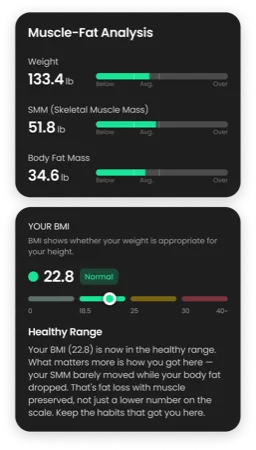
- Step 1AI body composition check, no equipment needed
Just your height, weight, age, and a few lifestyle questions are enough to estimate your body composition. In our own study (70 people), estimates were 92.9% accurate compared with InBody measurements.
- HAVIT Score and basal metabolic rate
- Muscle-fat analysis and body composition type
- Obesity level, abdominal fat ratio, and visceral fat
- Body blueprint: healthy goal weight, waist-to-height ratio, and safe rate of weight loss
- 6-stage habit analysis
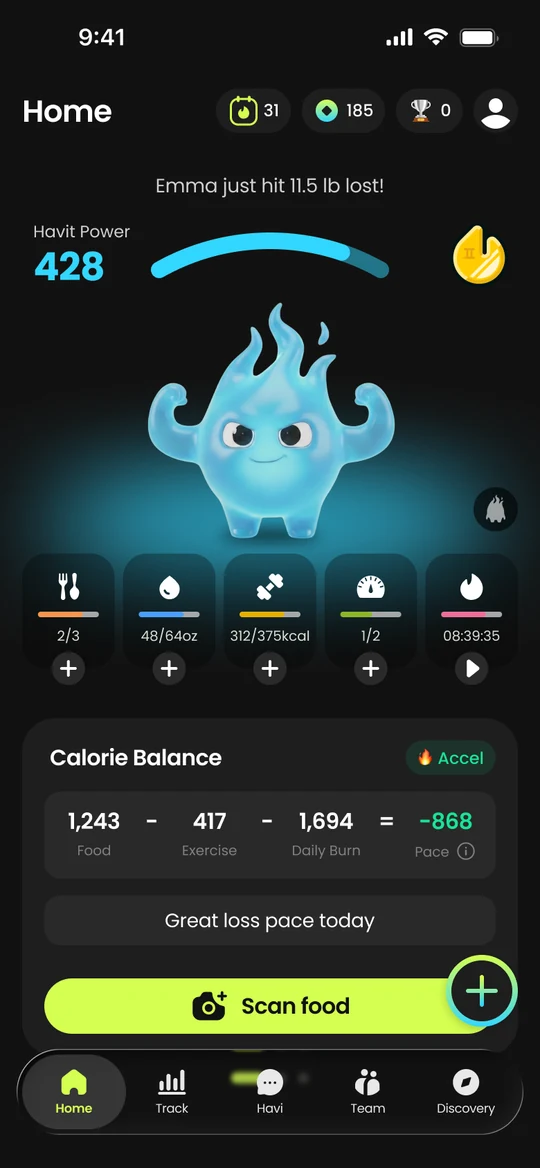
- Step 211 daily targets, set in numbers
Your results set exact numbers for what to hit each day. Targets are readjusted every week based on how your weight changes.
- Calorie intake, protein, carbs, fat, and fiber
- Calories burned and steps
- Sleep and water
- Weigh-in frequency and target BMI
- Step 3Daily action and AI coaching
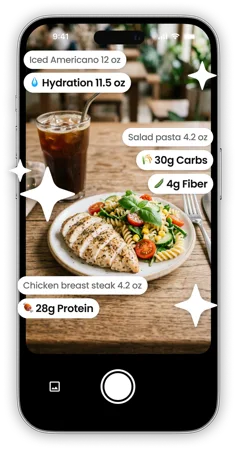
A plan only works if you follow it. We make logging easy and your next step clear.
- Log meals with a single photo
- AI coach HAVI reads your logs and suggests one thing to do today
- Personalized plans across 126+ categories based on your results
- CBT-based coaching for your mindset, not just your diet

- All-in-oneEverything in one app
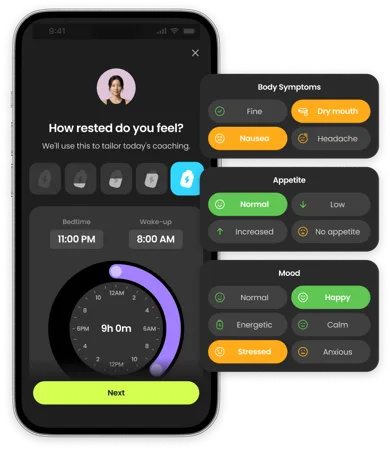
No more switching between apps. When everything about your body lives in one place, your AI coach can see the full picture.
- Meals, water, workouts, and steps
- Sleep, weight, and body composition trends
- Menstrual cycle, mood, and daily check-ins
- GLP-1 medication logs and reminders
- Guided meditation, workout videos, and running coach
- Challenges and avatars that make it feel like a game


Analysis of 78 people (41 HAVIT, 37 control) with InBody results at week 1 and week 12, June–August 2026. Non-blinded study.
HAVIT is a wellness app, not a medical device. Body composition results are estimates.
A new quiz and health tip every day
Follow HAVIT on Instagram and Threads. @havit_app.en
References
- Triple-Hormone-Receptor Agonist Retatrutide for Obesity - A Phase 2 Trial. — The New England journal of medicine, 2023
- Retatrutide-A Game Changer in Obesity Pharmacotherapy. — Biomolecules, 2025
- Efficacy and safety of retatrutide, a GIP, GLP-1, and glucagon receptor agonist, in people with type 2 diabetes and inadequate glycaemic control with diet and exercise (TRANSCEND-T2D-1): a double-blind, randomised, phase 3 trial. — Lancet (London, England), 2026
- Effects of retatrutide on body composition in people with type 2 diabetes: a substudy of a phase 2, double-blind, parallel-group, placebo-controlled, randomised trial. — The lancet. Diabetes & endocrinology, 2025
- Triple hormone receptor agonist retatrutide for metabolic dysfunction-associated steatotic liver disease: a randomized phase 2a trial. — Nature medicine, 2024
- Retatrutide for the treatment of obesity, obstructive sleep apnea and knee osteoarthritis: Rationale and design of the TRIUMPH registrational clinical trials. — Diabetes, obesity & metabolism, 2026
- Appetite, eating attitudes, and eating behaviours during treatment with retatrutide in adults with type 2 diabetes: Results of a phase 2 study. — Diabetes, obesity & metabolism, 2025
- Retatrutide in type 2 diabetes mellitus and obesity: an overview. — Expert review of clinical pharmacology, 2026
- Shared mechanistic pathways of glucagon signalling: Unlocking its potential for treating obesity, metabolic dysfunction-associated steatotic liver disease, and other cardio-kidney-metabolic conditions. — Diabetes, obesity & metabolism, 2025
- Antiobesity medications in adult and pediatric obesity and metabolic dysfunction-associated steatotic liver disease. — Pharmacological reviews, 2025
- LY3437943, a novel triple glucagon, GIP, and GLP-1 receptor agonist for glycemic control and weight loss: From discovery to clinical proof of concept. — Cell metabolism, 2022
- Retatrutide as a Unimolecular GIP/GLP-1/Glucagon Receptor Tri-Agonist: Molecular Design, Pharmaceutical Development and Critical Interpretation of Emerging Phase 3 Evidence. — Pharmaceutics, 2026
- The First Triple Agonist for Antiobesity: Retatrutide. — Cardiology in review, 2026
- Progress in Anti-Obesity Drug Development: A Pharmacodynamics Perspective. — Pharmaceutics, 2026