
GLP-1-Dosis-Tracker: Protokollieren Sie Ihre mg & Titrations-Plan

Dieser Artikel dient ausschließlich allgemeinen Informationszwecken und ersetzt keine professionelle medizinische Beratung, Diagnose oder Behandlung. Wenden Sie sich bei gesundheitlichen Fragen stets an qualifiziertes medizinisches Fachpersonal.
Kurz beantwortet
Ein GLP-1-Dosis-Tracker protokolliert, welche Milligramm-Dosis Sie an welchem Datum eingenommen haben, und folgt Ihrer Titration — Wegovy 0,25→2,4, Zepbound 2,5→15. So tracken und teilen Sie sie.
GLP-1-Medikamente haben keine einzige feste Dosis.
Sie beginnen niedrig und steigen durch einen geplanten Titrationsplan, um Nebenwirkungen zu reduzieren, und pendeln sich dann bei einer Erhaltungsdosis ein.
Das bedeutet, die Antwort auf ‚Wie viel nehme ich?' ändert sich alle paar Wochen — und die Milligramm-Zahl, die Sie injizieren, ist etwas anderes als der Akt der Injektion selbst.
Ein Dosis-Tracker übernimmt die Milligramm-Seite der Geschichte: welche Stärke, an welchem Datum und wo Sie auf der Eskalationsleiter stehen.
(Für die Protokollierung des Injektionsereignisses und der Rotationsstellen siehe den ergänzenden GLP-1-Shot-Tracker; für das Gesamtbild verbindet der Hub GLP-1-Tracker-App Dosis, Gewicht, Protein und Nebenwirkungen.)
01
Warum der Titrationsplan es wert ist, getrackt zu werden
Drei Dinge machen Ihre Dosishistorie wirklich nützlich und nicht nur ordentlich:
Sie hält Sie mit dem Plan synchron.
Dosissteigerungen erfolgen nach einem Kalender (typischerweise nicht früher als alle vier Wochen). Ein Tracker zeigt, wann Ihre nächste Erhöhung fällig ist, damit Sie und Ihr verschreibender Arzt abgestimmt sind.
Sie verknüpft Nebenwirkungen mit einer Änderung.
Übelkeit und gastrointestinale Symptome treten am häufigsten direkt nach einer Dosiserhöhung auf oder verschlimmern sich dann. Die Protokollierung der mg und des Datums lässt Sie sehen: ‚Die Übelkeit begann drei Tage nachdem ich auf 1,0 mg gewechselt bin' — ein Muster, auf das Ihr Arzt reagieren kann.
Sie gibt Ihrem Arzt eine exakte Historie.
Bei Terminen zur Dosisanpassung ist ‚Ich glaube, ich bin schon eine Weile bei der mittleren Dosis' weit schwächer als eine datierte Leiter, die er in Sekunden ablesen kann.
02
Titrationspläne nach Medikament (protokollieren Sie welche mg, welches Datum)
Hier ist die Eskalationsform für die gängigen GLP-1.
Nutzen Sie sie als Rückgrat Ihres Dosisprotokolls — aber behandeln Sie das genaue Timing als Entscheidung Ihres Arztes, nicht als Anleitung zur Selbstanpassung.
Wegovy erreicht seine 2,4-mg-Erhaltungsdosis über etwa 16–17 Wochen; Tirzepatid steigt in 2,5-mg-Schritten durch 2,5, 5, 7,5, 10, 12,5 und 15 mg, wobei Ihr Arzt entscheidet, wo Sie sich basierend auf Ansprechen und Verträglichkeit einpendeln.
Die klinische Begründung hinter dem Tempo wird im Leitfaden zum Timing der Dosiseskalation behandelt. 2,4 mg wöchentlich ist die Standard-Erhaltungsdosis.
Eine höhere Erhaltungsdosis von 7,2 mg wöchentlich wurde in der EU (Februar 2026) und in den USA (März 2026, als Wegovy HD) für Erwachsene mit Adipositas zugelassen, die mindestens 4 Wochen 2,4 mg erhalten haben und weiter abnehmen müssen; veränderte Hautempfindungen (Dysästhesie) waren unter 7,2 mg deutlich häufiger (21,6 % vs. 0,3 % unter Placebo in der Studie STEP UP).
| Medikament (Generikum) | Startdosis | Eskalation | Erhaltung |
|---|---|---|---|
| Wegovy (Semaglutid) | 0,25 mg einmal wöchentlich | Steigerung ~alle 4 Wochen: 0,5 → 1,0 → 1,7 mg | 1,7 oder 2,4 mg wöchentlich; bis 7,2 mg (zugelassen 2026) |
| Ozempic (Semaglutid) | 0,25 mg wöchentlich für 4 Wochen | → 0,5 mg, dann 1,0 nach ≥4 Wochen | 0,5, 1,0 oder 2,0 mg wöchentlich |
| Zepbound / Mounjaro (Tirzepatid) | 2,5 mg wöchentlich für 4 Wochen | → 5 mg, dann +2,5 mg alle ≥4 Wochen | 5–15 mg wöchentlich |

03
Was ein gutes Dosisprotokoll tatsächlich erfasst
Für jeden Eintrag erfassen Sie:
- Das Datum, ab dem die Dosis galt (normalerweise Ihr Injektionsdatum).
- Die Stärke in mg, die Sie eingenommen haben.
- Ob es eine Steigerung, ein Halten oder eine Reduzierung war — und kurz, warum (z. B. ‚bei 5 mg gehalten — Übelkeit').
- Verträglichkeit bei dieser Dosis — eine kurze Notiz oder 1–5-Bewertung, damit Muster sichtbar werden.
So protokolliert, liest sich Ihre Historie wie eine Leiter: 0,25 mg (3. März) → 0,5 mg (31. März) → gehalten (28. April, GI) → 1,0 mg (12. Mai). Diese einzelne Zeile sagt Ihrem Arzt mehr als ein ganzer Termin voller Erinnerungen.
04
Erreichen und Halten Ihrer Erhaltungsdosis
Titration ist der Aufstieg; Erhaltung ist der Ort, an dem der größte Teil der Reise stattfindet.
Sobald Sie sich bei einer Erhaltungsstärke einpendeln (zum Beispiel Wegovy 2,4 mg oder eine Tirzepatid-Dosis von 5–15 mg), verschiebt sich die Aufgabe des Protokolls von ‚den Aufstieg tracken' zu ‚bestätigen, dass ich die richtige Stärke konsequent nehme und notieren, wie sie sich hält'. Wenn Nebenwirkungen, Kosten oder Ergebnisse eine Änderung nahelegen, macht eine datierte Historie das Gespräch über Anpassung der Dosis — nach oben, unten oder Halten — evidenzbasiert statt erinnerungsbasiert.

05
Teilen Ihrer Dosishistorie mit Ihrem Arzt
Der größte Nutzen eines Dosis-Trackers ist der Termin. Vor einem Besuch:
- Öffnen Sie Ihre Dosisleiter — die datierte Abfolge der Stärken.
- Markieren Sie, wo sich Nebenwirkungen häuften relativ zu jeder Steigerung.
- Notieren Sie alle Halte oder verpassten Steigerungen und den Grund.
- Bringen Sie Ihren Gewichtstrend daneben mit, damit Ansprechen und Dosis zusammen sichtbar sind.
- Stellen Sie Ihre konkrete Frage — ‚Soll ich steigern oder hier halten?' — gestützt auf die Daten statt auf eine Vermutung.
06
Wie Sie eine Dosis-Tracking-Routine in 5 Schritten aufbauen
- Erfassen Sie Ihre aktuelle Stärke und das Datum, an dem sie begann, als Ihre Baseline.
- Protokollieren Sie jede Steigerung am Tag, an dem sie passiert, genau wie Ihr Arzt es angeordnet hat — eskalieren Sie niemals selbst.
- Fügen Sie eine einzeilige Verträglichkeitsnotiz hinzu bei jeder neuen Dosis (Übelkeit, keine, besser).
- Setzen Sie eine Erinnerung für Ihre nächste Überprüfung, etwa vier Wochen später, damit eine Steigerung nicht vergessen wird.
- Exportieren oder screenshotten Sie die Leiter vor jedem Klinikbesuch, um sie sauber zu teilen.

07
Wie eine GLP-1-Dosis-Tracker-App dies automatisiert
- Eine visuelle Dosisleiter, die jede mg automatisch gegen ihr Datum plottet.
- Steigerungs-Erinnerungen, zeitlich abgestimmt auf Ihre ~4-Wochen-Eskalationskadenz.
- Nebenwirkungs-Overlay, sodass Symptome sich genau gegen die Dosisänderung ausrichten, die ihnen vorausging.
- Ein teilbarer Export — eine saubere datierte Historie für Ihren Arzt.
- Erhaltungsbestätigung, sodass Sie immer wissen, welche Stärke Sie diese Woche injizieren sollten.
HAVIT hält Ihre Dosisleiter neben Gewicht, Körperzusammensetzung, Ernährungs- und Protein-Tracking in einer Wellness-App — sodass eine Steigerung und die Nebenwirkungen, der Appetit und die Ergebnisse drumherum alle zusammenleben.
Wenn Sie Ihre Titrationshistorie und Ihre täglichen Gewohnheiten am selben Ort haben möchten, ist es ein natürliches Zuhause für Ihre GLP-1-Reise.
Vergleichen Sie Medikamente, während Sie sich entscheiden? Siehe Semaglutid vs. Tirzepatid.
Sicherheitsgrundlagen für jedes GLP-1-Protokoll. Diese Arzneimittel nicht anwenden, wenn Sie oder nahe Verwandte ein medulläres Schilddrüsenkarzinom hatten oder wenn bei Ihnen MEN 2 vorliegt.
In der Schwangerschaft werden sie nicht angewendet – informieren Sie Ihre verschreibende Ärztin oder Ihren Arzt sofort, wenn Sie schwanger sind oder es werden möchten, denn manche müssen Wochen bis Monate vorher abgesetzt werden.
Wenn Sie zusätzlich Insulin oder einen Sulfonylharnstoff nehmen, achten Sie auf Unterzuckerung (Zittern, Schwitzen, Verwirrtheit).
Erbrechen oder Durchfall, bei dem Sie keine Flüssigkeit bei sich behalten, kann zu Austrocknung führen und die Nieren belasten – wenden Sie sich an Ihre Praxis.
Ein Tracker ordnet Ihre Aufzeichnungen; maßgeblich sind die Packungsbeilage in Ihrem Land und Ihre verschreibende Ärztin bzw. Ihr Arzt.
08
Warum HAVIT — Medikation + Verhaltensänderung, in einer App
GLP-1-Medikamente können das Gewicht bedeutsam reduzieren — aber die Zahl auf der Waage ist nur ein Teil der Geschichte.
Der Anteil an fettfreier Masse am unter GLP-1-Therapie verlorenen Gewicht lag in einigen Studien bei 40–60%, in anderen bei 15% oder weniger — und fettfreie Masse umfasst Organe, Knochen und Flüssigkeit, nicht nur Muskel (Neeland et al., Diabetes, Obesity and Metabolism, 2024), und Ergebnisse verblassen tendenziell, sobald das Medikament gestoppt wird, es sei denn, neue Gewohnheiten treten an ihre Stelle.
Deshalb behandeln führende Leitlinien Medikation als einen Teil der Versorgung, nicht als das Ganze: Die U.S. Preventive Services Task Force empfiehlt, dass Erwachsenen mit Adipositas intensive, multikomponente Verhaltensinterventionen angeboten werden (USPSTF, Grade B).
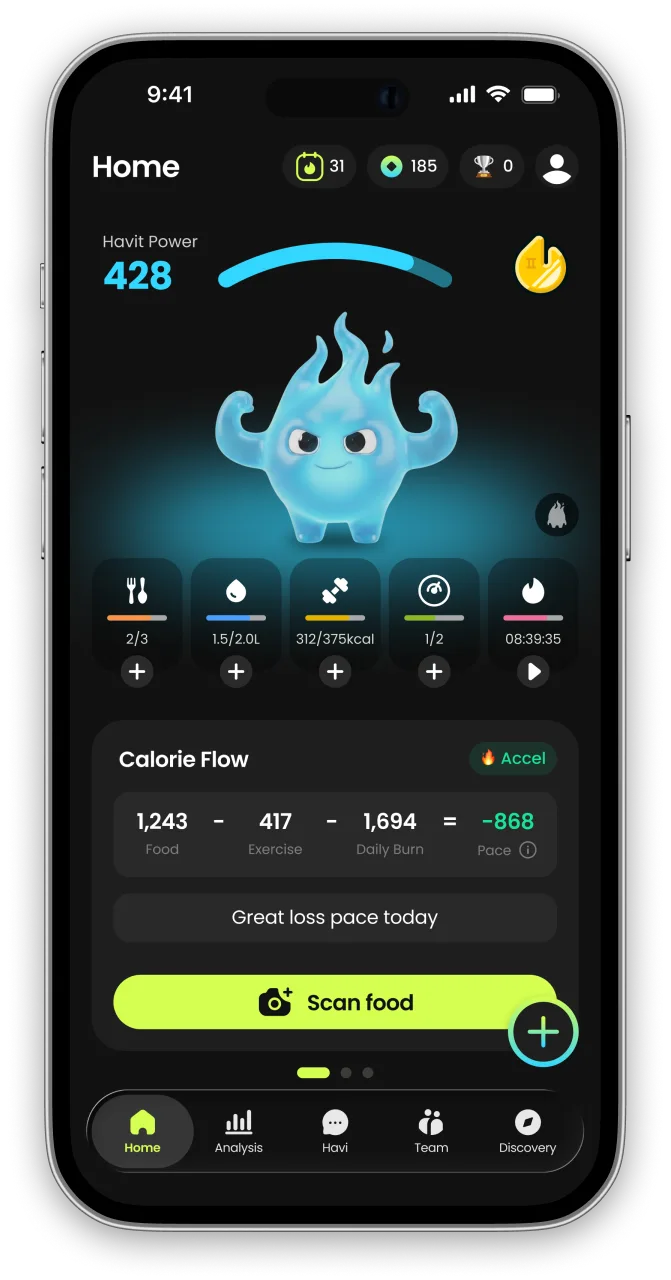
HAVIT ist genau für diesen Moment gebaut — eine App, die Medikations-Tracking, Körperzusammensetzung, Ernährung und Protein, täglichen Gewohnheitsaufbau und einen KI-Coach, der sich an Sie anpasst, vereint.
Unter unseren eigenen 1.090 GLP-1-Nutzern bauten die konsequentesten Tracker die stärksten Gewohnheiten auf (siehe den GLP-1-Gewohnheiten-Report).
Managen Sie das Medikament und den Muskel — zusammen. Starten Sie mit HAVIT →
Wichtiger Hinweis: HAVIT ist kein medizinisches Diagnosegerät. Alle Dosisanpassungen müssen mit Ihrem verschreibenden Arzt besprochen werden.

Häufige Fragen
Was ist ein GLP-1-Dosis-Tracker?
Wie unterscheidet sich ein Dosis-Tracker von einem Shot-Tracker?
Was ist Titration und warum ist sie wichtig?
Wie schnell steigt die Dosis?
Was ist eine Erhaltungsdosis?
Kann ein Dosis-Tracker mir sagen, wann ich meine Dosis erhöhen soll?
Warum sollte ich Nebenwirkungen mit der Dosis protokollieren?
Wie teile ich meine Dosishistorie bei einem Termin?
Was ist HAVIT?
HAVIT ist ein KI-Gesundheitspartner auf Basis der Stoffwechselwissenschaft – er schützt Ihre Muskeln, weckt Ihren Stoffwechsel und hilft Ihnen, langfristig einen gesunden Körper ohne Jo-Jo-Effekt zu halten.
Anders als reine Kalorien-Tracker verbindet HAVIT KI-gestützte Körperzusammensetzungs-Schätzungen mit Ernährung, Trinkmenge, Schlaf, Schritten, Zyklus, Stimmung und GLP-1-Medikation in einer täglichen Routine — Fortschritt misst sich damit an der Körperzusammensetzung, nicht nur an der Zahl auf der Waage. Tägliche Missionen übersetzen erprobte Verhaltensänderungstechniken in kleine, wiederholbare Schritte, gestützt auf die Erfahrung von Fachleuten, die zuvor bei Juvis Diet gearbeitet haben, einer der führenden Stoffwechselkliniken Koreas.
In einer eigenen Auswertung von 1.090 GLP-1-Nutzenden bei HAVIT bauten Menschen, die konsequent protokollierten, stärkere Gewohnheiten auf als die übrige Nutzerbasis. Den GLP-1-Gewohnheitsreport lesen
In der App
- KI-COACHWissen, was heute ansteht.
- ERNÄHRUNGMahlzeiten in Sekunden erfassen.
- KÖRPERANALYSEMehr sehen als nur Gewicht.
- TÄGLICHE MISSIONENGewohnheiten, die Sie durchhalten.
- TÄGLICHER CHECK-INSag HAVI, wie sich heute anfühlt.
- ALLES TRACKENVon Wasser bis GLP-1
- KOPF UND ERHOLUNGFür die Tage, an denen die Willenskraft ausgeht.


HAVIT funktioniert mit und ohne GLP-1-Medikation. Es ist eine Wellness-App und kein Medizinprodukt; Werte zur Körperzusammensetzung sind Schätzungen.
In der App weitermachen
Personalisierte Gesundheit mit Ihren eigenen Daten


Quellen
- U.S. Food & Drug Administration — WEGOVY (semaglutide) prescribing information, dosage and titration (0.25→2.4 mg). accessdata.fda.gov
- Novo Nordisk — Wegovy dosing schedule and dose-escalation guidance. wegovy.com
- Novo Nordisk — Ozempic dosing (0.25→0.5→1→2 mg) and titration. ozempic.com
- Eli Lilly — ZEPBOUND (tirzepatide) prescribing information, dosage and titration (2.5→15 mg). pi.lilly.com
- Eli Lilly — Zepbound dosage options and schedules. zepbound.lilly.com
- Cleveland Clinic — GLP-1 Agonists: dosing overview. my.clevelandclinic.org
- Alle medizinischen Angaben wurden anhand der zitierten FDA-Labels und Herstellermaterialien per Juli 2026 verifiziert. Labels werden regelmäßig aktualisiert — bestätigen Sie aktuelle Details mit Ihrem Arzt und der offiziellen Fachinformation.
- FDA approves fourth product under National Priority Voucher program, higher dose semaglutide (Wegovy HD 7.2 mg), Mar 19, 2026 fda.gov
- Novo Nordisk — European Commission approves Wegovy 7.2 mg dose, Feb 17, 2026 biospace.com


