
GLP-1减重计算器:估算你的减重效果

本文仅供一般信息参考,不能替代专业医疗建议、诊断或治疗。如有任何健康相关问题,请务必咨询合格的医疗专业人员。
简要回答
这款GLP-1减重计算器会把各药物临床试验中的平均减重百分比应用到你的体重上,估算你使用Wegovy、Ozempic、Zepbound或Mounjaro后第3、6、12个月的体重和BMI。它只是用于科普的估算,而不是预测。
如果你刚刚被开具了GLP-1类药物——司美格鲁肽(诺和泰/Ozempic、诺和盈/Wegovy)或GIP/GLP-1双受体激动剂替尔泊肽(穆峰达/Mounjaro、Zepbound)——第一个问题几乎总是一样的:我究竟能减多少体重,速度有多快? 本页为你提供一个贴近现实、以临床试验数据为依据的Ozempic和Wegovy减重计算器,帮助你建立合理预期,同时坦率说明这类估算的局限。
01
GLP-1减重计算器的工作原理
这个工具做三件简单的事。首先,它读取你的当前体重和身高(默认kg/cm,也可切换为英制单位),并计算你的初始BMI。其次,它采用你所选药物在关键临床试验中报告的平均总体重减轻比例。第三,它用剂量递增与平台期曲线把这一完整结果按时间分配,因为在剂量逐步上调期间体重下降较缓慢,之后在接近试验终点时趋于平稳。
输出结果是你在第3、6、12个月的估算体重和BMI,并提供滑块,可查看最长18个月内的任意月份。可以把它看作基于已发表平均数据的目标体重预测工具,而不是对你身体的承诺。
02
估算背后的临床数据
每一项估算都以真实的试验平均值为依据。以下是计算器在屏幕上说明的假设:
这里有两点需要注意。Ozempic和Mounjaro的数据来自2型糖尿病患者的试验,因此计算器给出的估算值低于Wegovy或Zepbound。Ozempic的剂量低于Wegovy(同一种分子),而Mounjaro与Zepbound使用相同的替尔泊肽剂量(最高15 mg),只是2型糖尿病患者的减重幅度通常较小。在Mounjaro本身也获批用于体重管理的国家和地区(如欧盟、中国),Zepbound(SURMOUNT-1)的数据是更接近的参考。另外,复方(配制)GLP-1产品在许多国家并非获批的用药途径,请不要用它来估算,并留意本国药品监管机构的警示。在中国大陆,请只使用经国家药监局(NMPA)批准、由正规医疗机构或药房凭处方提供的产品,警惕代购和来源不明的渠道。
中国大陆的情况: 上述试验数据以美国和欧盟的获批剂量为依据。在中国大陆,司美格鲁肽用于体重管理的商品名为诺和盈(2024年6月获国家药监局批准,成人长期体重管理),替尔泊肽为穆峰达(糖尿病与体重管理使用同一商品名,据媒体报道);这些均为处方药,请在医生指导下使用,实际剂量以中文说明书和医生处方为准。
价格与医保: 据2024年报道,体重管理适应症目前不在国家医保报销范围内(司美格鲁肽的医保适应症仅限2型糖尿病);实际价格因医院、药房和购买渠道而异,请咨询医生或正规药房。
逐月曲线(为什么第3个月不是第12个月的三分之一)
试验中的减重曲线并不是线性的。最初几个月,你的剂量仍在向上递增,所以早期减重幅度不大;随后曲线变陡,最后在约68–72周的终点附近进入平台期。计算器据此建模:约在第3个月达到全部减重量的35%,第6个月约62%,第12个月约90%,并在这些节点之间插值。这反映了已发表平均曲线的形状,而不是假设每周匀速减重。
| 药物(剂量类型) | 试验平均总体重减轻 | 来源试验 |
|---|---|---|
| Wegovy(司美格鲁肽 2.4 mg) | 68周时约15% | STEP-1 |
| Zepbound(替尔泊肽 10–15 mg) | 72周时约21%(最高22.5%) | SURMOUNT-1 |
| Ozempic(司美格鲁肽 1–2 mg,糖尿病剂量) | 40周时约6–7% | SUSTAIN FORTE |
| Mounjaro(替尔泊肽,2型糖尿病试验) | 40周时约12%(最高剂量) | SURPASS-2 |

03
4步使用方法
- 输入你的当前体重,如有需要可切换为英制单位。
- 输入你的身高(单位随体重单位切换),以便计算BMI。
- 从列表中选择你的药物——估算结果会随该药物的试验平均值而变化。
- 拖动目标月份滑块到你想查看的时间,然后查看估算体重和BMI卡片。
就是这样。无需注册,也不会保存任何数据——所有计算都完全在你的浏览器中运行。
04
计算器无法告诉你的事
这是一个基于平均值的司美格鲁肽减重计算器,而平均值会掩盖很大的个体差异。你的实际结果取决于计算器无法得知的因素:你的确切剂量以及递增到多高、用药是否规律、你的饮食和蛋白质摄入、活动量和抗阻训练(有助于保护肌肉)、睡眠、其他药物和疾病,以及个体对药物反应的天然生物学差异。在试验中,有些人的减重远超平均水平,也有些人减得很少甚至没有减。
有两点坦率的提醒值得重申:
- 它是参考,而不是目标。 用这个数字来建立预期、判断自己是否大致在正轨上,而不要把它当作靠少吃或过量用药去追逐的目标。
- 肌肉很重要。 快速减重可能会损失肌肉,除非你优先保证蛋白质摄入和力量训练。体重秤上的数字并不是全部,身体成分才是关键。可参考我们的7天GLP-1饮食计划,这是一份以蛋白质为主的模板。

05
把估算变成结果
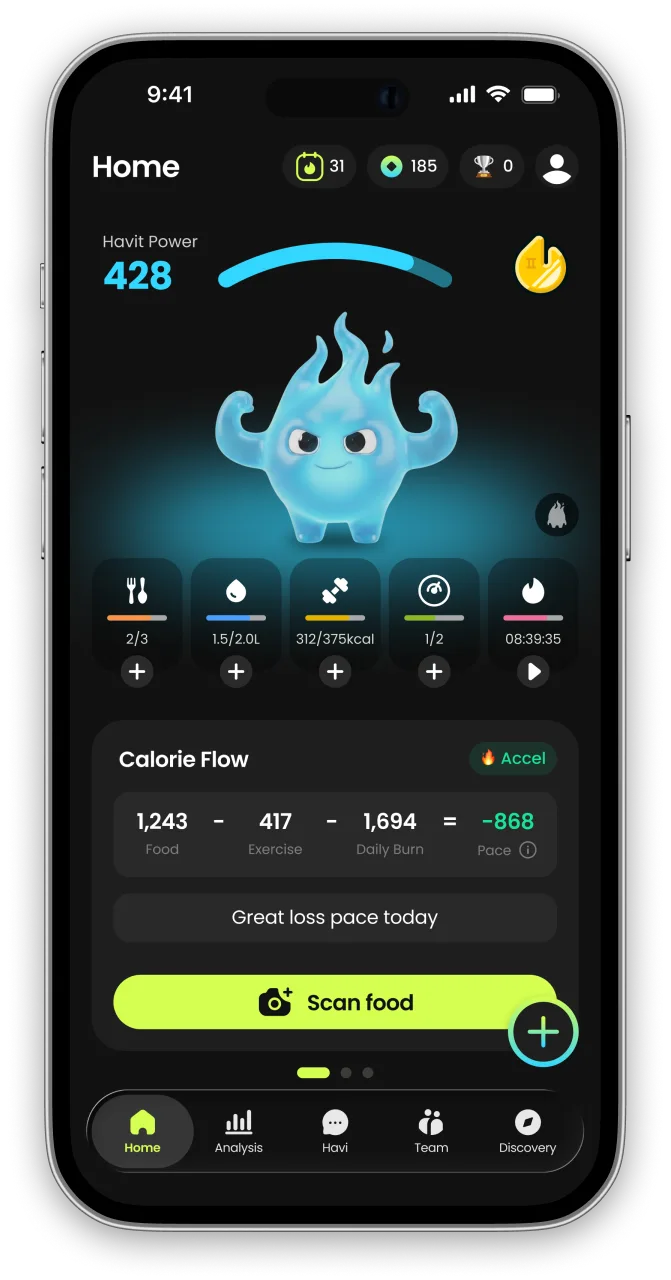
只有付诸行动并对照实际情况跟踪,估算才有意义。与达成体重和蛋白质目标关联最紧密的单一习惯是记录——知道今天的蛋白质摄入是40 g还是90 g,以及你每周的趋势是否与曲线相符。像 HAVIT应用 这样的工具,可以让你在几秒内记录体重、注射日、蛋白质、膳食纤维和饮水量,使本页的估算变成真正可调整的计划。若想深入了解该吃什么、该避免什么,请先阅读我们的GLP-1副作用指南。
06
为什么选择HAVIT——药物管理与行为改变,一个应用搞定
GLP-1类药物可以显著减轻体重——但体重秤上的数字只是故事的一部分。GLP-1治疗中减掉的体重,有相当一部分——不同试验之间差异很大——可能来自瘦组织而非脂肪(Diabetes, Obesity and Metabolism,2024),而且停药后,除非有新的习惯取而代之,效果往往会逐渐消退。这也是为什么权威指南把药物视为治疗的一部分,而不是全部:美国预防服务工作组(U.S. Preventive Services Task Force)建议为肥胖成年人提供强化的多组分行为干预(USPSTF,B级)。
HAVIT正是为这一时刻而打造——一个应用整合了用药记录、身体成分、营养与蛋白质、日常习惯养成,以及能够根据你的情况调整的AI教练。在我们自己的1,090名GLP-1用户中,记录最坚持的人养成了最牢固的习惯(查看GLP-1习惯报告)。
药物与肌肉,一并管理。从HAVIT开始 →

常见问题
GLP-1减重计算器有多准确?
使用Wegovy能减多少体重?
Ozempic减重计算器和Wegovy的不同吗?
Zepbound比Wegovy多减多少体重?
什么是目标体重预测工具?可以相信它吗?
这里的BMI是怎么计算的?
性别会改变估算结果吗?
这是医疗建议吗?
HAVIT 是什么?
HAVIT 是以代谢科学为基础的 AI 健康伙伴,帮你守住肌肉、唤醒代谢,长久保持不反弹的身体。
和只计算热量的追踪器不同,HAVIT 把 AI 身体成分估算与饮食、水分、睡眠、步数、生理周期、情绪、GLP-1 用药记录整合成同一套每日流程,因此进度看的是身体成分,而不只是体重秤上的数字。每日任务把已验证的行为改变技巧拆成小而可重复的行动,并融入韩国代表性代谢诊所 Juvis Diet 出身专家的经验。
在 HAVIT 自行分析的 1,090 位 GLP-1 使用者数据中,持续记录的人比一般用户建立了更稳固的习惯。 阅读 GLP-1 习惯报告
App 里有什么
- AI 教练知道今天该做什么。
- 营养几秒钟完成饮食记录。
- 体成分洞察看见体重以外的变化。
- 每日任务建立能坚持下去的习惯。
- 每日打卡告诉 HAVI 今天感觉如何。
- 全部都能记录从喝水到 GLP-1
- 身心与恢复为意志力见底的日子准备。


无论是否使用 GLP-1 药物都可以使用 HAVIT。这是一款健康类应用,不是医疗器械;身体成分结果为估算值。

在 App 中继续
用你自己的数据,获得个性化的健康管理


参考资料
- Once-Weekly Semaglutide in Adults with Overweight or Obesity doi.org
- Semaglutide once a week in adults with overweight or obesity, with or without type 2 diabetes in an east Asian population (STEP 6): a randomised, double-blind, double-dummy, placebo-controlled, phase 3a trial doi.org
- Tirzepatide Once Weekly for the Treatment of Obesity doi.org
- Tirzepatide as Compared with Semaglutide for the Treatment of Obesity doi.org
- Efficacy and safety of once-weekly semaglutide 2·0 mg versus 1·0 mg in patients with type 2 diabetes (SUSTAIN FORTE): a double-blind, randomised, phase 3B trial doi.org
- Tirzepatide versus Semaglutide Once Weekly in Patients with Type 2 Diabetes doi.org
- WEGOVY (semaglutide) — Prescribing Information dailymed.nlm.nih.gov
- ZEPBOUND (tirzepatide) — Prescribing Information dailymed.nlm.nih.gov
- Changes in lean body mass with glucagon-like peptide-1-based therapies and mitigation strategies doi.org
- Behavioral Weight Loss Interventions to Prevent Obesity-Related Morbidity and Mortality in Adults: US Preventive Services Task Force Recommendation Statement doi.org
- FDA approves fourth product under National Priority Voucher program, higher dose semaglutide (Wegovy HD 7.2 mg), Mar 19, 2026 fda.gov
- Novo Nordisk — European Commission approves Wegovy 7.2 mg dose, Feb 17, 2026 biospace.com
- EMA — Mounjaro EPAR product information (4.1 indications incl. weight management) ema.europa.eu
- 北京日报(经国家科技中心转载):诺和盈获 NMPA 批准用于长期体重管理,体重管理适应症不在医保范围 ncsti.gov.cn
- 华尔街见闻:替尔泊肽(穆峰达)体重管理适应症获 NMPA 批准 wallstreetcn.com


